Rhinestone
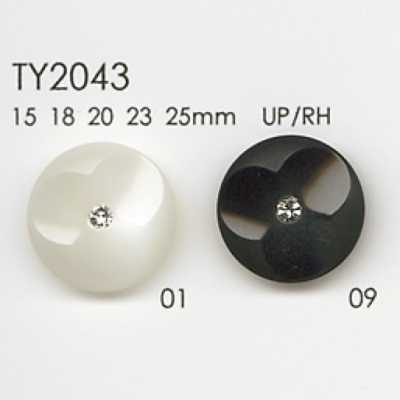
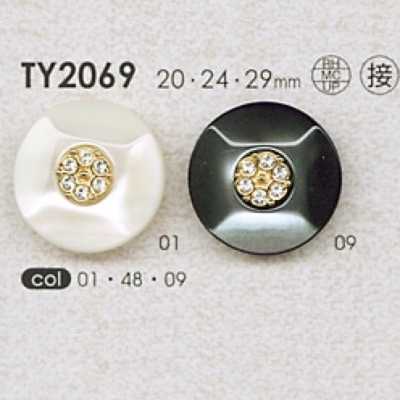
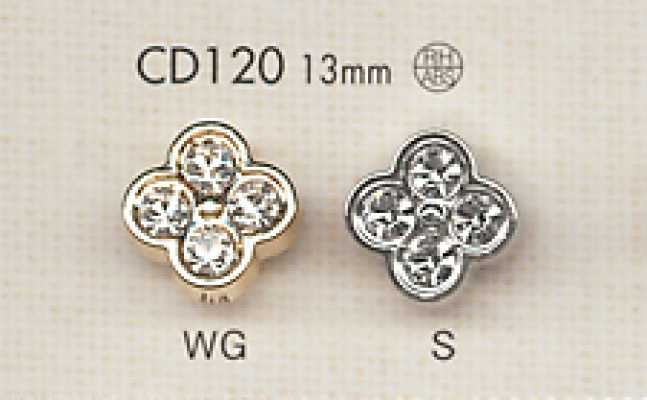
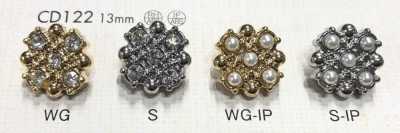
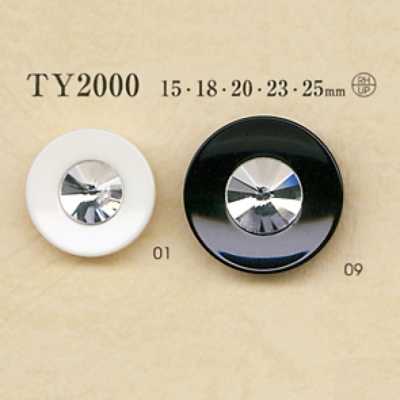
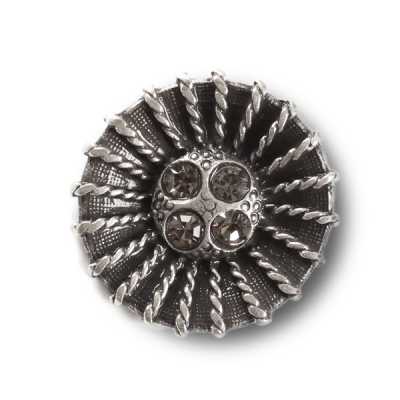
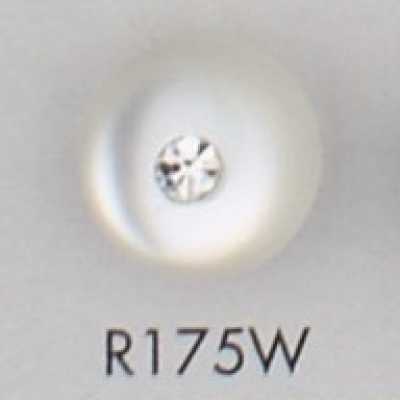
A rhinestone is a button, or a decorative material for a button, that uses imitation gemstones with faceted sparkle for decoration.
Contents6 sections
Definition and Overview
A rhinestone is a decorative stone with cuts, foil, or other finishing applied to create a jewel-like sparkle. In buttons, it refers to a design in which rhinestones are set into a base made of resin or metal, or scattered across the surface. It is used as a decorative accessory to add glamour.
This term does not refer to natural stones or precious stones themselves, but to imitation gemstones made for decorative effect. It can also refer not only to buttons that use rhinestones, but to individual decorative stones attached by sewing or adhesive.
Materials and Structure
The rhinestone section uses transparent or semi-transparent materials such as glass or acrylic. Button bodies are often made of resin, and the construction varies, including those with stones arranged on the surface and those combined with a metal-style base.
As a button, it may be made with front holes such as two-hole or four-hole styles, or with a shank on the back for threading. The shank style, which makes the decorative face easier to show from the front, is used for designs with thickness and dimension.
- Front-hole styles are used for shirts and blouses.
- Shank styles are used for dresses, jackets, and highly decorative garments.
- Stone-setting methods include adhesive and prong setting, which affect durability and appearance.
Size Notation and Applications
The size of the button is shown by diameter in millimeters, and may also be expressed in lignes. Lignes are a customary size unit for buttons, and when ordering, it is safest to confirm not only the ligne size but also the actual diameter, thickness, and shank height.
They are mainly used for front openings and cuffs on dresses, formalwear, stage costumes, cardigans, blouses, jackets, and children's clothing. In addition to functioning as fasteners, they may also be attached as decoration on collars, pockets, and other areas.
Attachment Method and Handling Notes
Front-hole styles are sewn on by passing thread through the holes, while shank styles are sewn on by catching the thread on the shank. If a suitable amount of space is kept between the button and the textile and the shank is wrapped securely, even thick textiles can be fastened more easily. For heavy buttons or thin fabrics, a support button may be attached on the reverse side to distribute the load on the textile.
Rhinestones may crack, chip, or come off due to impact or friction. Resistance to washing, dry cleaning, and ironing varies depending on the stone material, adhesive, base, and button body material, so testing should be performed on both the button itself and the finished product.
- When washing, turn the garment inside out and use a laundry net to avoid strong friction with other garments or hardware.
- Do not apply a hot iron or steam directly to the decorative surface.
- Bleach, solvents, sweat, cosmetics, and similar substances may cause adhesive deterioration or discoloration.
- Before mass production, conduct practical tests for washing, dry cleaning, abrasion, and ironing.
Differences from Similar Terms
A glass button refers to a button whose body is made primarily of glass. A rhinestone button, on the other hand, does not limit the body material and is characterized by decorative imitation gemstones.
A pearl button is a button with a pearl-like sheen, and its appearance differs from rhinestones, which produce sparkle through reflected light from cut facets. Also, decorative use of rhinestones attached individually to clothing and rhinestone buttons with opening and closing functionality should be distinguished by application.
Frequently Asked Questions
Can rhinestone buttons be machine washed at home?
Whether home washing is possible depends on the rhinestone material, attachment method, adhesive, and button body material. Even for washable specifications, it is common to turn the garment inside out and use a laundry net to reduce friction and impact. Before adoption, washing tests should be confirmed on the actual product.
Can rhinestone buttons be ironed?
As a rule, direct ironing on the decorative surface should be avoided. Heat may cause the stone to deform, reduce adhesive strength, or discolor the foil on the reverse side. If ironing is necessary, avoid the button and follow the handling conditions for the selected button, such as using a pressing cloth.
How should the size of a rhinestone button be specified?
In general, specify the diameter in millimeters or lignes. However, even with the same diameter, the appearance and how easily it passes through the buttonhole can change depending on the stone height, shank height, and outer decoration. In the specification sheet, list the diameter, thickness, structure, color, and attachment position.