Screw-type Hook
A screw-type hook is a type of hook that opens and closes by interlocking the raised and recessed sides, with the parts fixed to the fabric by a screw structure.
Contents6 sections
Definition and Overview
A screw-type hook is a type of hook that fastens by pressing the raised and recessed sides together, and uses screw-type parts to secure it to the fabric. Its mounting structure differs from that of a standard press fastener, which is fixed by flattening the legs with a setting tool.
In catalogs and other materials, it may also be described as “screw-type fastening.” In such cases, it may refer not to the hook itself but to the attachment method using screws, so the part configuration and mounting method should be checked.
Materials and Component Structure
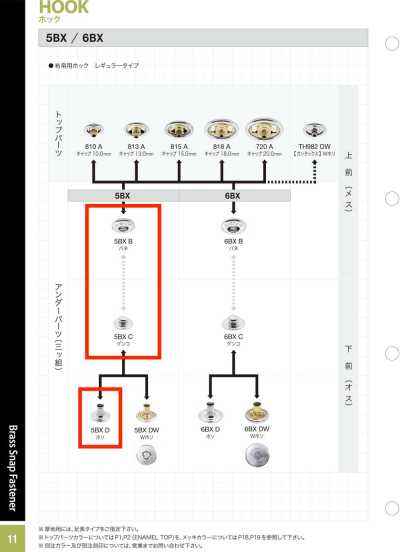
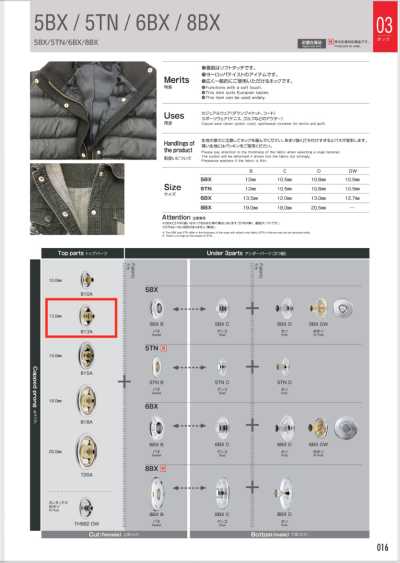
In many cases, it consists of the raised and recessed sides that open and close, plus screw parts used to clamp the fabric and secure the piece. The shape of the decorative head, screw shaft, and receiving part varies by product, and the appearance on the front and back also affects the specifications.
For metal products, brass or other materials may be used as the base metal, with plating or coating applied to the surface. The material, surface treatment, and whether nickel is used vary by product, so for applications that come into contact with skin, check the specifications sheet and test documents.
- Raised and recessed sides: the opening and closing parts that press together and engage.
- Screw shaft and receiving part: the parts that clamp the fabric and secure the component.
- Head: the decorative surface-visible part, whose diameter and finish affect the appearance.
Size Indication and Selection
Sizes are often indicated by the diameter of the head or the hook body, and the screw length of the mounting part, compatible fabric thickness, and fastening strength should also be checked. Even with the same indicated diameter, the required fabric thickness and feel in use will differ if the part shape or application differs.
If the fabric is thin, the screw part or component outline may show through the surface, or the fabric may tear. In thick fabrics or layered areas, if the screw length is insufficient, the piece cannot be secured properly. Make prototypes using the actual fabric, interlining, and seam allowance in the layered state.
How to Attach and Applications
A screw-type hook is attached by placing the specified parts in the correct front-to-back orientation and tightening the screw section to secure them. Unlike press fasteners that are crimped with a setting tool, some types generally do not require a dedicated setting tool or press machine, but the necessary tools and tightening method must be checked for each component.
Because it can be removed and reattached easily and is convenient to install, it is used for garment openings, decorative accessory areas, and bags. However, in areas subject to repeated heavy loads, strength verification under actual use conditions is essential.
- Before installation, check the front and back, the raised/recessed combination, and the mounting position.
- Overtightening the screw may compress the fabric or deform the parts.
- Before mass production, check opening and closing performance, lateral pull load, and condition after washing using the actual fabric.
Points to Note and Differences from Similar Terms
Press fasteners, spring snaps, and jumper hooks are types of snaps that are mainly installed by a crimping method that flattens the legs. A screw-type hook differs in that, even if the opening and closing mechanism is similar, the method of securing it to the fabric uses screws.
Depending on humidity, sweat, detergent, storage conditions, and other factors, rust, discoloration, or verdigris may occur on metal parts. For products intended for washing or exposure to water, confirm the durability of the surface treatment. For products that go through a needle detection process, also align in advance on whether metal detection is possible and the operating conditions.
Frequently Asked Questions
Can a screw-type hook be attached without a setting tool or press machine?
With a type that is secured by tightening screws, it may be possible to install it without using a standard setting tool or press for crimp-style fasteners. However, the required tools, tightening method, and installation sequence differ by component. Check the specified requirements and perform trial installation before mass production.
Can a screw-type hook be used on thin fabrics?
If it is attached directly to a thin fabric, the fabric may fail against the screw section and tear, or the shape of the parts may show through the surface. If necessary, use interlining, a pressing cloth, or reinforcing parts together, and confirm the appropriate screw length and part diameter for the fabric thickness and structure through prototyping.
What should be considered when using a screw-type hook on children’s clothing?
Consider catching during wear and repeated opening and closing, and check for looseness, detachment, and the presence of sharp corners. If nickel must be considered, confirm a nickel-free specification as well. Evaluate according to internal standards and related safety requirements based on the target age and product application.