


Shirt Grip Tape
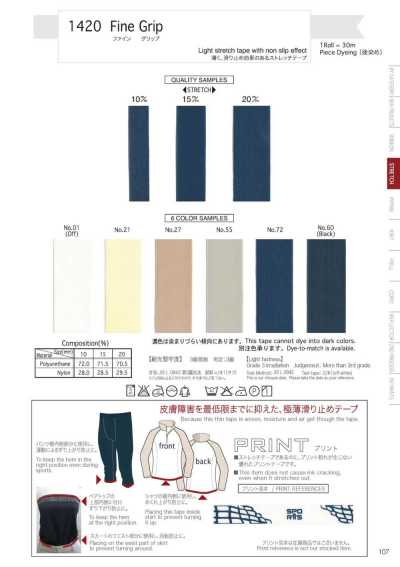
Shirt grip tape is a narrow non-slip tape attached to the inside of the waist of pants or skirts to prevent the hem of a shirt or blouse from riding up or coming untucked.
Contents6 sections
Definition and Overview
Shirt grip tape is a sewing accessory attached to the inside of the waist where it contacts the hem of a shirt when worn. Its surface texture and gripping properties increase friction with the fabric, making it easier to keep a tucked-in shirt in place. It is also called shirt grip tape.
It may be used in the same area as the waistband interlining used on the inside of pants, but waistband interlining is a tape used to cover seam allowances around the waist and shape the garment. Shirt grip tape differs in that it mainly serves to prevent the shirt from shifting.
Application Areas and Function
The main attachment position is on the inside of the waist belt or waistband lining of pants, skirts, uniforms, and similar items. It is placed where it is less likely to touch the wearer’s skin directly and so that it contacts the hem of the shirt. In addition to being applied around the entire waist, it can also be specified only for the necessary areas, such as the front panel side.
Because it makes the shirt hem less likely to move, it helps reduce the need to adjust your appearance after bending, raising your arms, or walking. On the other hand, if the holding force is too strong, it may feel like it catches during putting on and taking off or while moving.
Materials and Types
Shirt grip tape includes types made from woven or knitted tape with non-slip sections made of rubber, silicone, or similar materials. The non-slip sections may be applied in dot, line, or wave patterns, and the wearing comfort and ease of sewing vary depending on the thickness, firmness, and whether the base material stretches.
Types that emphasize grip make it easier to prevent the shirt from shifting, but on thin or delicate fabric, the effects of friction need to be checked. If skin comfort is a priority, it is important to check the height of the texture and the firmness of the tape edges using an actual sample, and to perform wear testing.
- Types with little stretch make it easier to stabilize the shape of the waistband lining or belt.
- Stretchable types follow waist movement more easily.
- The pattern and density of the non-slip surface change both grip and skin feel.
Main Applications
It is often used for clothing worn with a shirt tucked into pants, such as suits, slacks, uniforms, and workwear. In applications involving standing work or a lot of movement, it is used to help prevent the shirt hem from coming out. It may also be used on the inside of skirt waists.
When considering applications, the shirt fabric, hem thickness, and wearing method should be taken into account. Brushed materials and thick shirts tend to catch relatively easily, while smooth thin fabrics feel different in terms of grip, so confirmation using the actual shirt is necessary.
Selection and Sewing Considerations
When selecting, check the tape width, thickness, stretch, non-slip surface, and compatibility with the waist specification. Because thickness increases due to seam allowance finishing on the waistband lining and overlap with the belt interfacing, confirm with samples before mass production whether there will be any impressions on the outside or waviness in the seams.
During sewing, set the direction of the non-slip surface correctly toward the shirt side. For stretchable types, do not pull them more than necessary; it is important to sew with the same feed amount as the fabric. Check for needle holes, seam breakage, and lifting at the tape edge, and also evaluate the condition after washing.
Frequently Asked Questions
What is the difference between shirt grip tape and waistband interlining?
Waistband interlining is a sewing accessory mainly used on the inside of pants to cover seam allowances and shape the waist area. Shirt grip tape is centered on increasing friction with the shirt hem to help keep the tucked-in state. There are also specifications that combine both functions.
Which side should shirt grip tape be attached on?
Generally, the non-slip treated or textured side is attached facing the shirt hem, that is, toward the wearer’s body. However, the structure and recommended direction vary by product, so it is necessary to check the tape specification and perform a wear test with the actual shirt.
What should be noted when sewing shirt grip tape?
It is important not to stretch stretchable tape and to sew it with the same feed amount as the waist fabric. Excessive tension can cause waviness and tightness during wear. Also check the direction of the non-slip surface, the thickness of the seam allowance area, impressions on the outside, and peeling or deformation after washing.





