Knit Tape
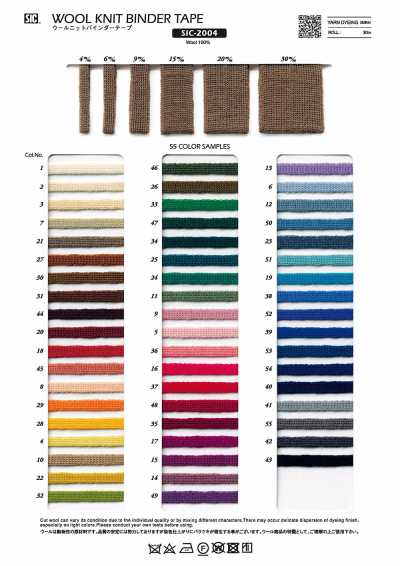
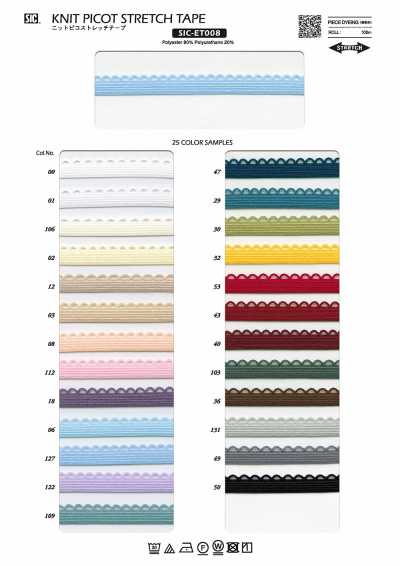
Knit tape is a narrow strip made by knitting yarn into a garment material, used for edging, panel seams, and decoration in clothing.

Contents6 sections
Definition and Overview
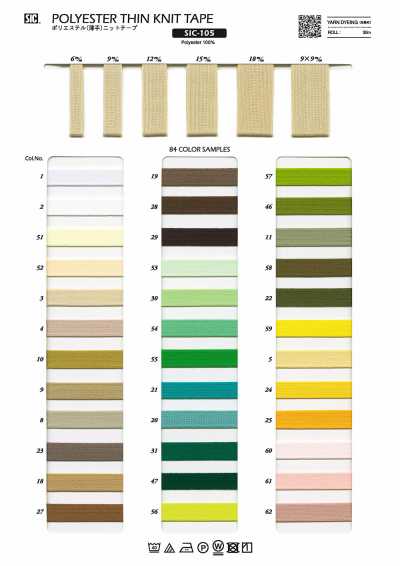
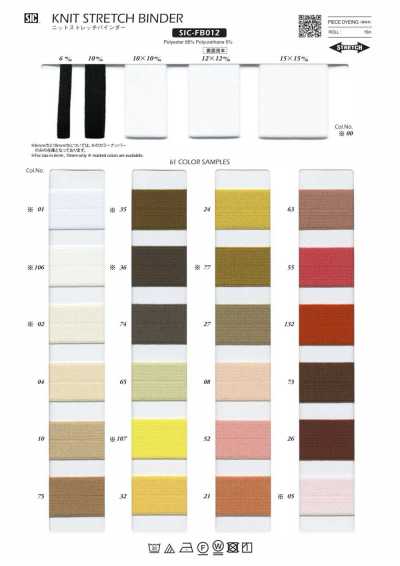
Knit tape is a narrow strip made using a knit structure. Compared with woven tape, it is softer and is characterized by the ease with which it can have the look and elasticity created by stitches. Depending on the material, knitting method, and finish, its thinness, thickness, stretch, and texture vary.
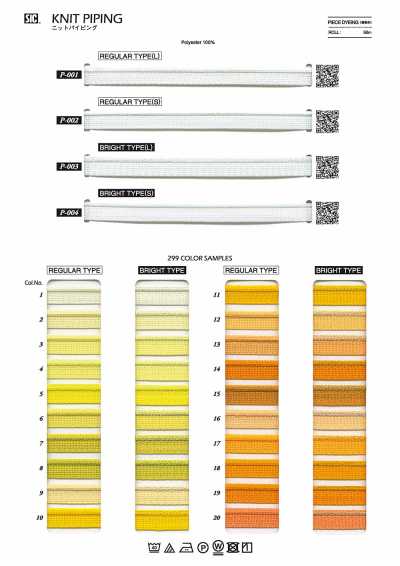
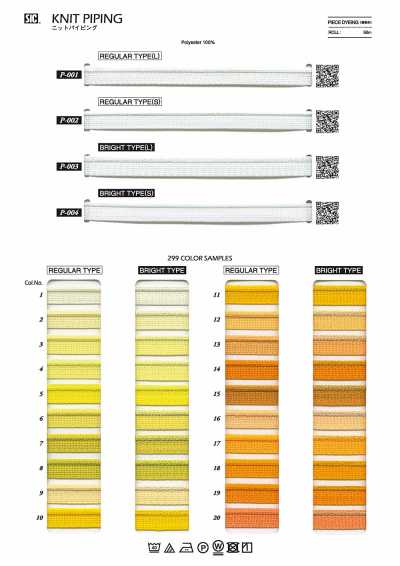
In product names, it may be called knit piping to indicate use for wrapping or decorating edges. However, it does not always refer to piping cord with a core wrapped inside it and formed into a raised shape; it is also used to refer to flat knit tape, so check the cross-sectional shape.
Materials and Structure
Many are made of polyester, but depending on the application, cotton, nylon, rayon, and other materials may also be used. Polyester is a relatively easy-to-handle material, and it is easy to create a range of colors and patterns. Some products also have functions such as deodorizing.
Knit tape does not make a right angle between warp and weft threads like woven fabric; instead, it is knitted across the width by continuously looping yarn. Its structure also differs from round cord and square cord made by braiding multiple yarns, and it is generally centered on flat-finished types.
- Woven tape: Made with a woven structure, so it is generally dimensionally stable.
- Braided cord: A cord-like material made by braiding yarn, available in round and square forms.
- Piping: A specification for decorating seams and edges, or the material used for it in general.
Width and Dimension Checks
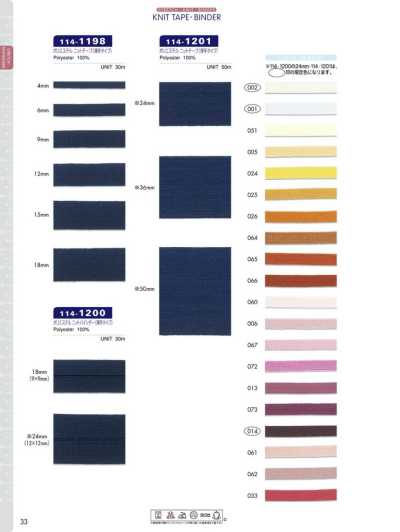
Knit tape is generally specified by width. The visible width after sewing changes depending on how much is taken into the seam allowance, whether it is folded, and how much it is stretched during sewing, so it is important not to judge the finished result by the nominal width alone.
For piping applications, confirm whether it is flat tape, something that is folded for use, or something with a core that gives it a raised look. For specifications that require roundness or thickness, checking the cross section and a finished sample in addition to the width helps prevent differences in appearance after sewing.
Main Applications
In garments, it is used for edging and accents around the neckline, front opening, cuffs, pocket openings, and seam lines. Patterned types such as stripes are used as sporty design elements and color accents. It is also used for edging bags and accessories.
Unlike bias tape, which wraps the edge of the outer fabric, knit tape is not necessarily a material intended to fully enclose a raw edge. It should be selected according to whether it is meant to be a visible decoration, a finish that covers the seam allowance, or a specification that allows stretch.
Selection and Handling Notes
Elasticity varies depending on the knit structure, yarn type, and knitting density. When sewing it to stretchy areas such as the neckline of knit fabric, avoid pulling either the tape or the textile too much. If necessary, make a sample and check for waviness, puckering, and recovery.
The cut edge may unravel at the stitches or fray at the yarn ends. Because edge-finishing methods differ by product, confirm in advance whether folding, stitching in, or heat treatment is acceptable. For heat-sensitive materials, iron temperature also needs attention.
After washing, stretching and shrinking, shape changes, and color fading may occur depending on the material and finish. Perform washing tests with the main textile, check shrinkage, color transfer, and waviness in the seam, and then determine the mass-production specification.
Frequently Asked Questions
What is the difference between knit tape and woven tape?
Knit tape is a knitted tape made of yarn loops, and its characteristics are that it is easy to achieve softness and stretch. Woven tape is made of warp and weft yarns and generally tends to be dimensionally stable. Choose according to the required stretch, thickness, edge finishing, and sewing location.
Is knit piping the same as ordinary piping?
Knit piping is used as a term for using knit tape as edging. On the other hand, piping also includes specifications in which a raised cord wrapped around a core is sewn in. Because the sewing method and finished appearance change depending on whether it is flat tape or core-filled, please check the cross-sectional shape.
Why does knit tape wave when sewn?
The main cause is that the tape or textile is pulled during sewing and the amount of stretch of the two does not match. Presser-foot pressure, feeding, and stitch length also have an effect. Perform test sewing before sewing and adjust the conditions so the tape can be fed in a natural state.