Silk Ribbon
A silk ribbon is a narrow ribbon made primarily from silk, a garment material used for decoration and tie sections, taking advantage of its distinctive sheen, smooth hand feel, and supple drape.
Contents6 sections
Definition and Overview
Silk ribbon is a narrow apparel material made with silk yarn. It has an elegant sheen and a soft texture, and because it drapes easily around knots and gathers, it is used for garment decoration, accessories, and gift wrapping ties.
In general, ribbon refers to a flat strip material and is distinguished from cords with a round cross section. However, the product name alone does not determine the silk blend ratio or structure, so it is necessary to check the care tag and specifications.
Material and Structure
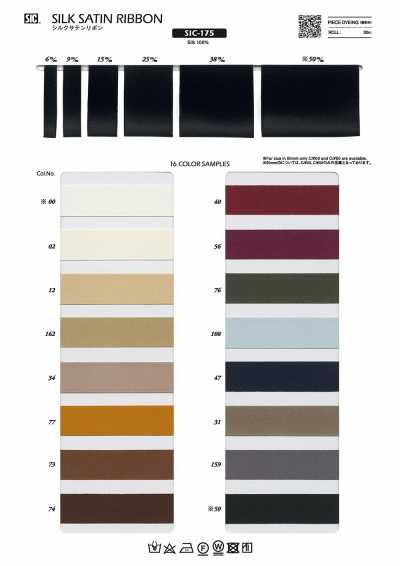
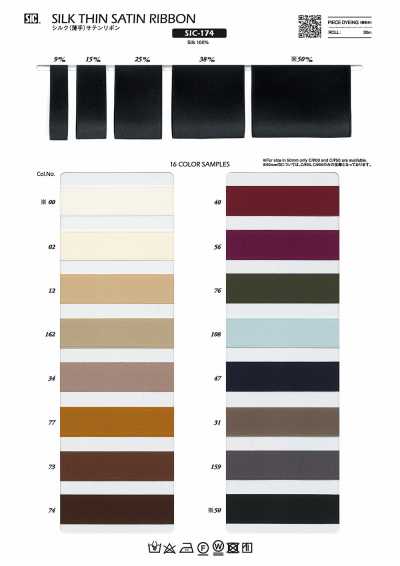
In many cases, silk ribbon is a narrow woven fabric made with warp and weft yarns. Plain weave gives a relatively subdued appearance, while satin weave creates a smooth sheen from the floating yarns. Depending on the weave structure, yarn thickness, and density, thickness, firmness, and sheerness vary.
Silk is a natural fiber with moisture absorbency and an easy-to-achieve smooth hand feel. On the other hand, it may be affected by friction, ultraviolet light, and chemicals. Ribbons blended with polyester may look similar, but their durability, reaction to heat, and changes after washing differ.
- Plain weave: A fabric with a relatively restrained luster and a natural appearance.
- Satin weave: A structure with a smooth surface and an easy-to-develop sheen.
- Edge: The presence or absence of selvedge and the finishing method change fraying tendency and appearance.
How Width Is Expressed and Applications
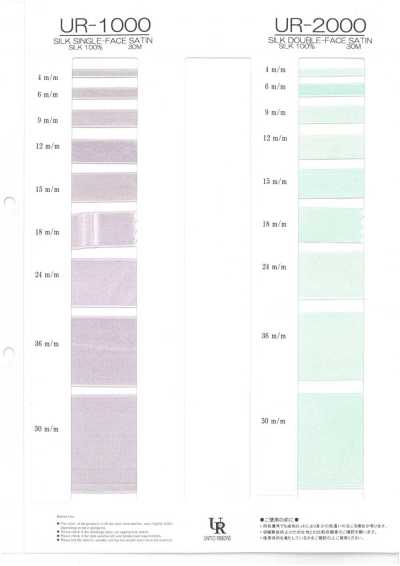
Width is generally expressed in millimeters. Narrow widths are suited to delicate bows and tag decoration, while wider widths are suitable for waist marks, neck bows, and decoration for dresses and hats. Set the required length including the bow shape, the length of the hanging ends, and the seam allowance.
Main applications include bows for blouses and dresses, lingerie design, hats and hair accessories, corsages, and wrapping. When sewn in, the ribbon itself affects the visual design, so also check the front and back, the direction of the sheen, and how the edges are shown.
Selection and Handling Notes
When selecting, check the silk blend ratio, weave structure, width, thickness, sheen, color, and edge specification according to the intended use. For tying applications, prioritize suppleness; for sewn-in applications, prioritize stability during sewing and resistance to fraying at the edges. Before mass production, combine it with the actual fabric and check color differences and how it appears around the seams.
Silk may change in size and texture with moisture and heat. Follow the washing instructions indicated for each product, and avoid strong friction, long soaking, and exposure to strong sunlight. Cut edges may fray, so consider folding, stitching down, or edge finishing according to the specification.
- Before sewing, check edge fraying and whether needle holes will be noticeable.
- When using fusible interlining or heat-adhesive tape together, test whether there is discoloration, shrinkage, or a change in sheen even at low temperature.
- For products that will be washed with water, check in advance how the base fabric and ribbon shrink and whether color transfer occurs.
Differences from Similar Terms
Satin ribbon is a name that mainly refers to the smooth surface and sheen created by satin weave, and the material is not necessarily silk. Silk ribbon is a name focused on the material, and includes items with different weave structures such as plain weave and satin weave.
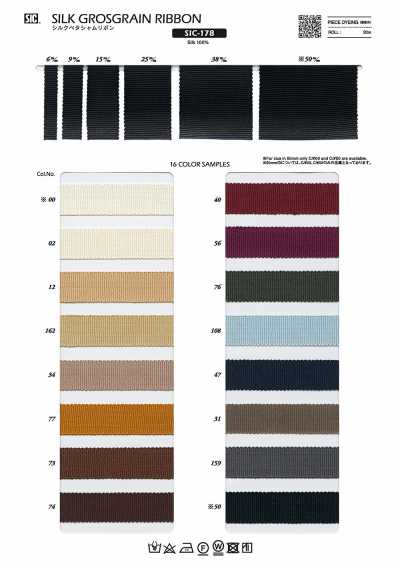
Grosgrain ribbon is a ribbon characterized by horizontal ribs. Silk ribbon can also be woven with ribs, but the two are distinguished by whether the name refers to the material or to the structure and surface texture. Organza ribbon refers to a sheer, lightweight ribbon, and it may also be made from materials other than silk.
Frequently Asked Questions
Are silk ribbon and satin ribbon the same?
No, they are not the same. Silk ribbon refers to a ribbon made with silk, whereas satin ribbon is usually a name that refers to the smooth sheen created by satin weave or similar structures. There are silk satin ribbons, but there are also polyester versions, so check the material label and the structure separately.
Do the cut edges of silk ribbon fray?
Woven silk ribbon may fray as yarns pull out from the cut edges. The tendency to fray varies depending on the weave structure, density, width, and edge specification. For visible edges, it is important to test in a sample whether folding and stitching, edge finishing, or other treatments suited to the application are necessary.
Can silk ribbon be washed at home?
Whether it can be washed should be judged not by the ribbon alone, but by the washing instructions for the entire product and the specifications, including dyeing and post-processing. Silk may change in texture and size due to moisture, friction, and heat. Before full production, check for shrinkage differences with the base fabric, color transfer, and changes in sheen.