Skirt Hook
A skirt hook is a fastening made by combining a hook-shaped part and a receiving part, used to secure the waistband opening of a skirt or pants and to assist the opening and closing of a zipper or similar closure.
Contents6 sections
Definition and Overview
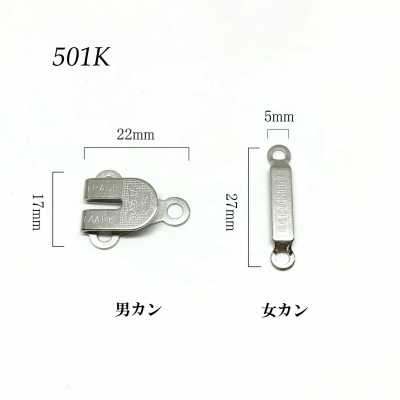
A skirt hook is a metal fastener used at the end of a waistband or front opening. It is generally used as a pair of a hook-shaped convex part and a concave part or bar-shaped receiving part that catches the hook, and is fastened by hooking them together. It is an accessory often used together at the top of a zipper.
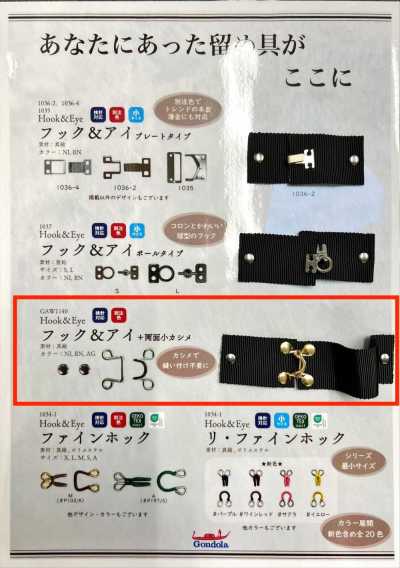
It is sometimes called a hook and eye closure, but the terminology varies by manufacturer and workplace. In specifications, it is important to clearly state the shape, left-right orientation, attachment method, color, and surface finish so the intended part is specified.
Materials and Structure
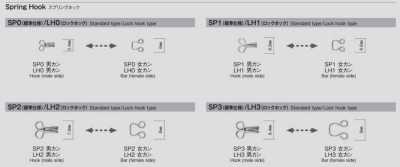
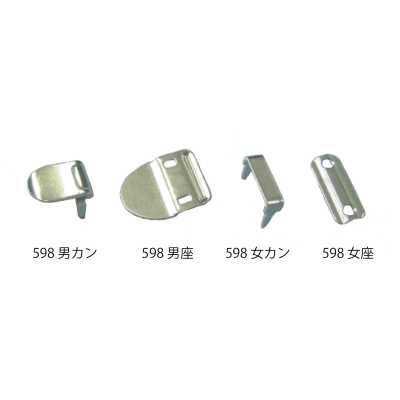
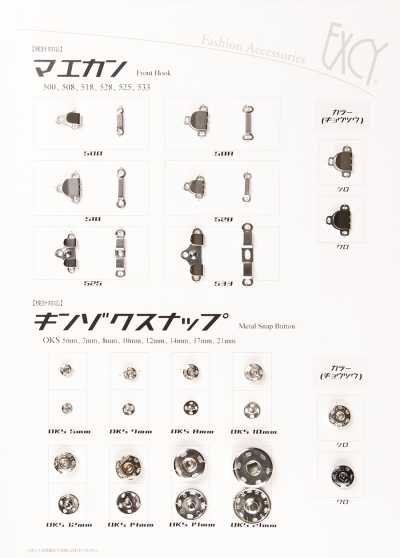
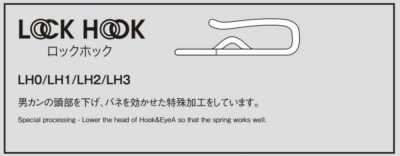
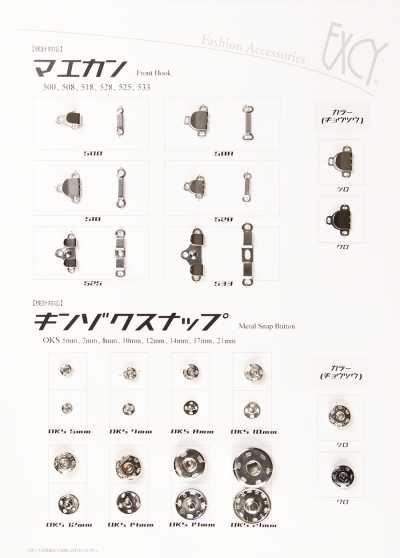
Most are made of metal and consist of two parts, the hook side and the receiving side. There are types with holes for sewing on, and types that are fixed by passing legs or prongs through the fabric and securing them. The flat surface, thickness, and shape of the receiving part also differ by product.
Sew-on types are fixed with yarn, so they are less likely to damage the outer fabric and are easier to repair. The prongs of a press-in type are flattened and secured with a dedicated setter or press. In either case, choose a part that matches the thickness of the outer fabric, the waistband interfacing, and whether there is a lining.
- Hook side: The part that hooks onto the corresponding receiving part to keep the opening closed.
- Receiving side: The hole, ring, or bar-shaped part that receives the hook.
- Attachment section: The part used to secure it to the fabric, such as sewing holes, legs, or prongs.
How to Attach It
For sew-on types, determine the position where the hook and receiver overlap naturally when the waistband edge is closed, and sew both parts firmly in place. Considering the direction of pull, pass the thread through each attachment hole and secure the start and end of the stitching properly.
For press-in types, use the specified setter and either a press machine or hand tools. For specifications that require pre-punched holes in the fabric, match the hole position and diameter to the part. After setting, check how the legs have flattened, whether there is any wobble, and whether the outer fabric is damaged or faded.
Main Applications
It is mainly used at the back center or side opening of skirts, and at the front opening of pants. In cases where a zipper alone would place too much load on the waistband edge, it serves to hold the opening first with a hook. It is also used for opening specifications on dresses, uniforms, and formalwear.
It is usually attached where it is not easily seen from the outside, but depending on the design it may also be visible on the surface. Depending on the application, check ease of putting on and taking off, holding strength under tension, contact with the skin, and durability during washing or cleaning.
Selection and Precautions
If you choose a part that is too small for the force acting on the waist, it can lead to deformation, coming loose, or tearing at the sewn area. If the fabric is thin or highly stretchable, consider reinforcement with interfacing, securing enough sewing area, and selecting a structure better suited to the load.
If the positions of the hook and receiver are misaligned, it can cause difficulty fastening, twisting at the opening edge, and gapping at the top of the zipper. Before mass production, confirm fit and opening/closing in a sample, and standardize the specification including the left-right orientation. Since metal parts are subject to needle detection, prevent them from falling or being mixed in during sewing and manage needle detection for the product.
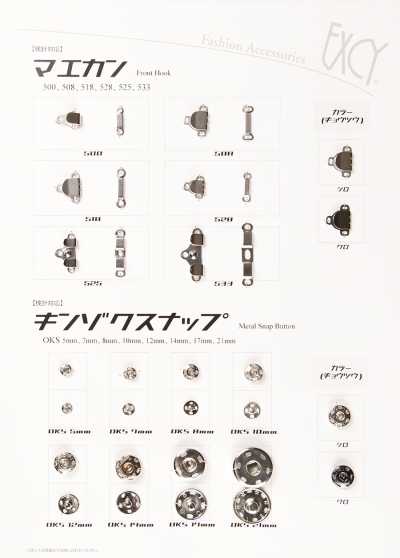
A skirt hook has a structure different from a snap, which fits together with raised and recessed parts by spring force. Also, while hook and eye closure may refer to a skirt hook, it can sometimes refer more broadly to a hook-shaped fastener for a front opening, so check the shape rather than judging by the name alone.
Frequently Asked Questions
What is the difference between a skirt hook and a snap button?
A skirt hook is a fastener that holds by hooking onto the receiving part. A snap button is fixed by pressing the convex and concave sides together so they interlock, using spring force. Choose according to the required holding strength, opening and closing feel, appearance from the outside, and attachment method.
Can a skirt hook be used without a zipper?
It can be used if the specification allows enough opening width and ease of dressing and undressing. However, hooks are mainly parts for holding the opening edge, and may not be suitable for applications that require a large opening and closing range. It is necessary to confirm the dressing and removal motion and the load in a sample.
What should be checked during inspection of a press-in skirt hook?
After setting, confirm that the hook and receiver engage securely, that the part has no wobble or deformation, and that the fabric has not been damaged by the leg treatment. Also check for looseness when opening and closing, damage to the outer fabric, and any metal contamination during the process.