Thai Silk
Thai silk is a name for silk fabrics produced, woven, or processed in Thailand, and may refer to fabric characterized by handwoven slubs, luster, and vivid dyeing or pattern expression.



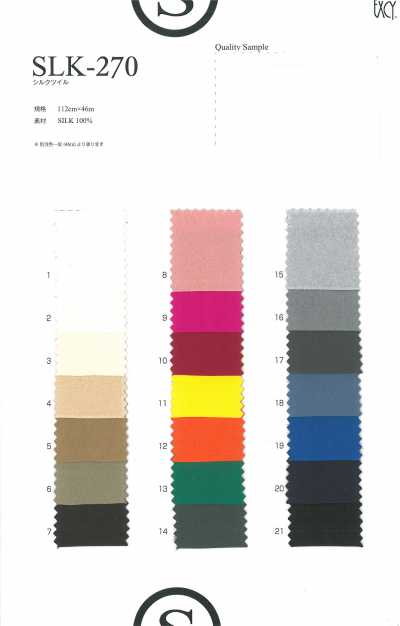
Contents6 sections
Definition and place-of-origin labeling
Thai silk is a general term for silk fabrics originating in Thailand. However, the raw silk used as fiber, the weaving location, and the dyeing and finishing location are not necessarily all in Thailand. It is not a fabric name, but a term that indicates place of origin and production background, and it is not a name that indicates structure or material grade.
Even when labeled "Thai silk," whether it is handwoven or machine-woven, or whether it is 100% silk or includes blended materials, varies by item. In planning documents and care tags, it is important to confirm the blend ratio and the basis for the country-of-origin indication separately.
History and technical features
In Thailand, sericulture, silk reeling, and dyeing and weaving have been handed down by region, and handwoven silk fabrics have also developed. Textured fabrics made with slub yarns in the weft, and techniques that dye yarns first and weave patterns into the fabric, are known as representative images of Thai silk.
In fabrics derived from handweaving, uneven textures may appear in the yarn slubs, weave density, and color appearance. Whether this is regarded as a characteristic of the material or judged to be unevenness beyond the acceptable range for the product is determined in advance through samples and inspection standards.
- Weft ikat is a technique that expresses patterns by dyeing the weft yarns in advance.
- Based on plain weave or satin weave, there are a variety of expressions such as solid, checks, stripes, ikat, and patterns.
- Luster, firmness, and drape vary greatly depending on yarn use, weave structure, scouring, and dyeing.
Typical fabrics and applications
Solid fabrics that make use of the natural unevenness created by slub yarns are used for jackets, dresses, skirts, bags, and decorative cloth. Depending on weave density and finishing, some fabrics hold their shape well, while others drape softly.
Fabrics using ikat or patterns are used not only for ethnic clothing, but also for design-oriented applications such as dresses, stage costumes, accessories, and interior items. For patterned goods, consider pattern placement and matching when cutting, and allow extra yardage as needed.
Points to confirm when purchasing
When purchasing with emphasis on place of origin, confirm with the supplier whether "Thai silk" refers to the raw material, raw silk, weaving, or dyeing and finishing process. Also confirm the handwoven or machine-woven status, blend ratio, weave structure, width, fabric weight, roll length, and color number from the specification sheet or actual sample before placing an order.
Because it is a natural fiber and production may involve handwork, even the same color number may differ by lot in tone, slubs, density, and texture. Confirm whether additional production is possible, the minimum lot size, the acceptable difference from the sample roll, delivery time, and the lead time including transportation, and retain a approval sample before mass production.
- The place of origin for each stage of raw silk, weaving, and dyeing/finishing, and the basis that may be used for labeling
- Silk blend ratio, whether handwoven or machine-woven, weave structure, and finish
- Acceptable range for width, length, tone, slubs, and weave irregularity by roll
- Minimum lot size for additional production, reproducibility, and delivery and transportation conditions
- Fastness appropriate to the application, such as washing, rubbing, perspiration, and light resistance
Differences from similar terms
Silk refers to the fiber itself obtained from silkworm cocoons. In contrast, Thai silk is a term for fabrics mainly associated with Thailand as the place of origin and production background. Therefore, Thai silk alone does not specify weave structure, thickness, application, or quality.
Shantung is the name of a fabric characterized by horizontal striations and texture created by slub yarns. Some Thai silk has a slub-like texture similar to Shantung, but not all of it is Shantung. Ikat is the international term for patterned resist-dye fabrics, and includes ikat from countries other than Thailand.
Frequently asked questions
Is all Thai silk handwoven?
No. Thai silk is a term for silk fabrics associated with Thailand, and does not mean only handwoven items. Whether it is handwoven or machine-woven, or whether it is 100% silk or a blend, varies by item. When ordering, confirm with the specification sheet, sample, and supplier explanation.
Is Thai silk the same as Shantung?
What should be noted for additional production?
Check lot differences in tone, yarn slubs, weave density, width, and roll length. In particular, handwoven or yarn-dyed patterned goods may not be completely identical to the sample. It is easier to manage if the minimum lot size for additional orders, reproducible color number, and delivery time are determined at the time of the initial order.