Water-soluble Sewing Thread
Water-soluble sewing thread is a sewing thread with the property of dissolving in water or warm water, used to remove temporary fastening stitches and auxiliary stitching threads after sewing.
Contents6 sections
Definition and Overview
Water-soluble sewing thread is a functional sewing thread made from a resin that dissolves when it comes into contact with water. It is used for temporary stitching, basting, and auxiliary stitching because it allows these processes without leaving thread on the product, and is used in processes where it is difficult to remove stitching with ordinary thread.
The conditions under which it dissolves in water differ by material and product. Some dissolve in room-temperature water, while others dissolve more easily in warm water. Even though it is water-soluble, it does not necessarily dissolve immediately in the same way from humidity or water droplets.
Material and Thread Structure
Many water-soluble sewing threads use synthetic resin that dissolves in water. Rather than being intended to remain permanently in garments like ordinary polyester thread or nylon thread, they are designed on the premise that they will be removed after supporting the necessary process.
The thread is supplied in a single yarn or a structure made by twisting together multiple yarns. The twist and surface condition affect thread breakage, thread tension, and seam stability during sewing, so they are checked to match the target material and sewing machine conditions.
How Thickness Is Expressed
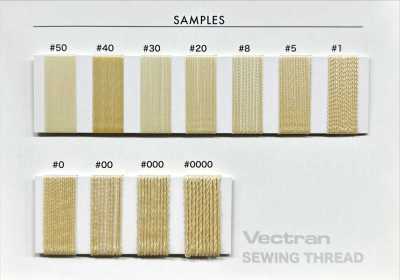
The thickness of water-soluble sewing thread may be indicated by thread count or nominal thread count, just like sewing thread. However, because the numbering system and the perceived thickness vary by product, it is important not to simply compare it with ordinary sewing thread based on the number alone.
When selecting it, in addition to the indicated thread count, check the recommended needle, compatible sewing method, target fabric, and required temporary holding strength. Also check in trial sewing whether the seam pulls the fabric and whether needle holes or seam marks remain noticeable after removal.
- Thread count is one way to express thread thickness. In some systems, a larger number means a finer thread, while in others the opposite is true.
- Nominal thread count is an indication that makes it easier to choose sewing thread thickness for each application.
Main Applications and Sewing Precautions
Main applications include auxiliary stitching for lace and embroidery, temporary fixing of hard-to-sew overlapping areas, and temporary tacking around openings left for turning. It may reduce the need for unpicking and lower the risk of damaging fabric or decoration when removing thread.
In the process of dissolving in water, confirm in advance the water resistance, color bleeding, and effect on adhesive areas of the product itself and accessories. If water-soluble thread remains, unintended changes may occur in later processes or during wear, so the specification should allow sufficient dissolution and removal, including from inside the seam.
Avoid moisture and high humidity during storage. Adjust the combination of top and bobbin thread, thread tension, needle size, and sewing speed through trial sewing, and keep process instructions that specify conditions with no thread breakage, skipped stitches, or puckering.
Differences from Similar Terms
Basting thread is a general thread used for temporary fixing during cutting or sewing, and it is usually removed by pulling it out. Water-soluble sewing thread, by contrast, is removed by dissolving it in water.
Water-soluble resin interlining is an interlining that can be removed with water and is used as an aid for embroidery and sewing. Water-soluble sewing thread is the thread itself, while water-soluble resin interlining is a sheet-like or nonwoven auxiliary material, and their shape and purpose differ.
Frequently Asked Questions
Does water-soluble sewing thread dissolve completely in home laundry?
The dissolution temperature, time, water volume, and need for agitation vary by product. Do not assume removal will be achieved through home laundering alone; test under specified conditions before adoption. It is also necessary to confirm that no residue remains deep in the seam or in overlapping areas.
Can water-soluble sewing thread be used in place of ordinary sewing thread?
It is not suitable for seams that must retain strength permanently. Water-soluble sewing thread is for temporary fixing and auxiliary stitching. Check the required holding power, water processing in later steps, and the effect on fabric and accessories, and use it separately from ordinary sewing thread.