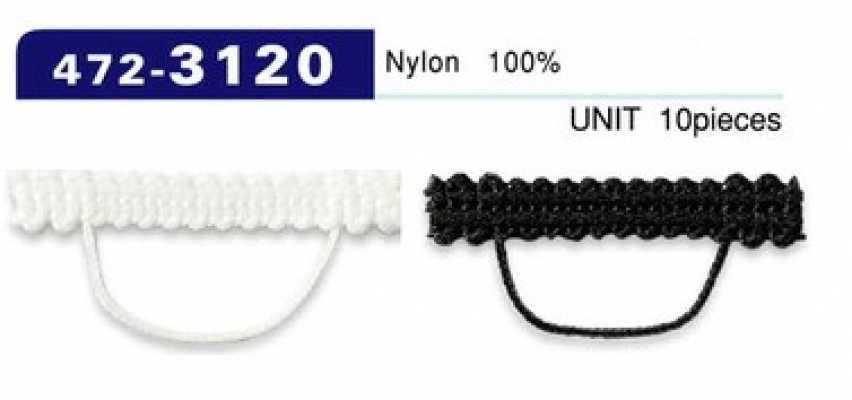
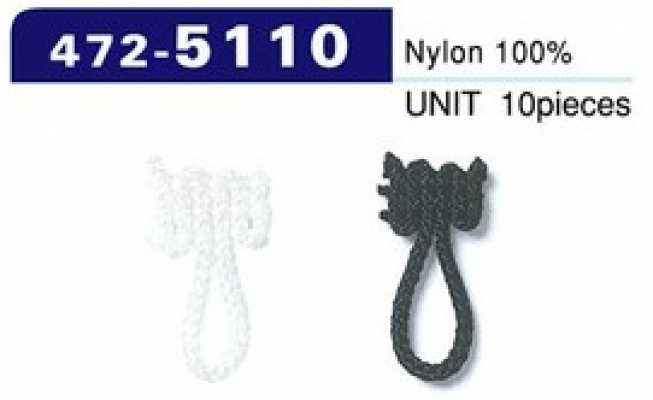
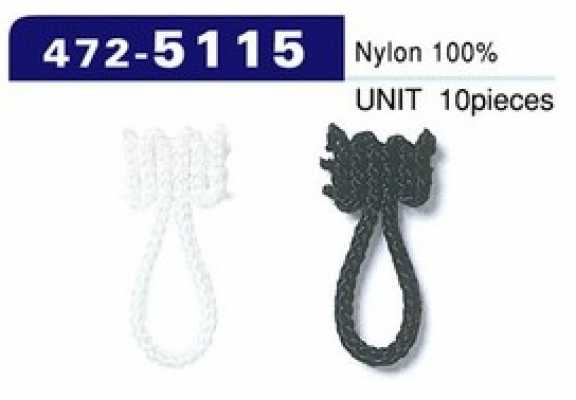
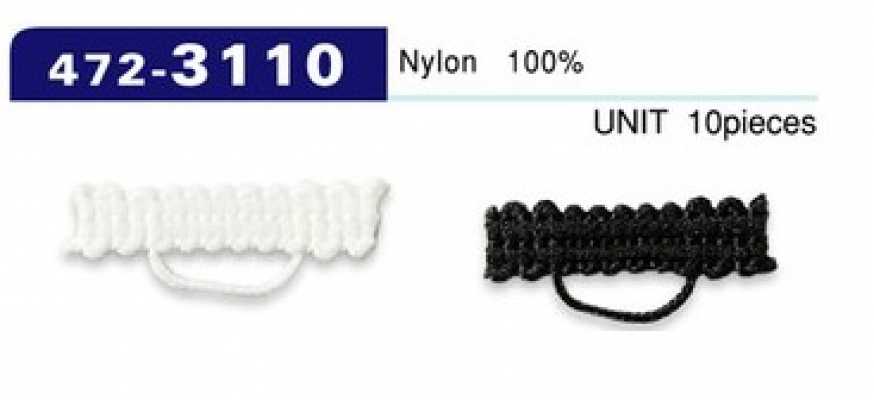
Braided Button
A braided button is a button made by weaving together narrow strips of leather or similar material to create a design. It has a three-dimensional look created by the weave and the natural texture of the material, and is mainly used as a fastening with decorative appeal.
Contents6 sections
Definition and Overview
A braided button is a button made by weaving together leather cords or thin leather strips so that the knots and weave are visible. Unlike standard molded buttons, its woven appearance and thickness tend to vary from piece to piece.
Materials and Structure
It is mainly made from genuine leather, but some are woven from leather-like synthetic materials. Because the color, grain, and firmness of genuine leather vary depending on the part and finish, it is important to check the texture with the actual item during mass production.
The front side is made up of a woven pattern, and for sewing attachment there are specifications with holes on the back, loop-shaped shanks for thread to pass through, or tunnel-shaped shanks. The position and thickness of the holes or shanks vary by product number, so do not judge the attachment method by appearance alone.
- In hole-type specifications, thread is passed through the holes and sewn directly to the fabric.
- In shank-type specifications, thread is looped around the shank to attach it, so the surface weave is less likely to be held down by the thread.
- Depending on the thickness and unevenness of the weave, marks or lifting at the front edge may appear on thin fabrics.
How Sizes Are Expressed
The size of a button is shown by its outer diameter in mm, or sometimes in lignes. A ligne is a unit used for button diameter, and 1 ligne is approx. 2.54 mm. In orders and specifications, both units are listed to avoid misunderstandings.
In addition to round shapes, braided buttons also come in knot-like, oval, and square shapes. Check not only the overall dimensions but also the height, thickness including the shank, and the hole diameter or inner dimensions of the shank, and consider compatibility with the buttonhole length and the thread to be used.
Main Uses and Attachment
They pair well with natural, craft, and ethnic styles, and are used for front openings or decoration on cardigans, vests, jackets, coats, dresses, blouses, and similar items. When used as fasteners, consider how often they will be opened and closed and the thickness of the fabric.
When sewing them on, pass the thread through the hole or shank so as not to damage the weave or the leather itself with the needle. For shank types, wrapping the root of the shank to create a suitable gap between the button and the fabric makes it easier to fasten even on thick fabrics. If necessary, attach a backing button on the reverse side to distribute stress on the fabric.
Handling and Differences from Similar Terms
Braided buttons made of genuine leather may harden, crack, fade, or discolor due to moisture, friction, heat, or ultraviolet light. Whether they can be washed or dry-cleaned, and the ironing temperature and whether a pressing cloth is needed, should be checked in advance not only for the button itself but for the finished product as well.
A leather button refers broadly to any button made from leather, while a braided button is one whose design is based on a woven structure or woven pattern. A covered button has a structure in which a core is wrapped with fabric or similar material, so even if leather is used, its structure differs from that of a braided button.
- For water washing, be careful of hardening, color transfer, and distortion caused by moisture.
- For dry cleaning, check the effect of the solvent on the surface finish.
- When ironing, do not apply direct heat; avoid the button or use a pressing cloth and check from low temperature.
- For storage, avoid high temperature and humidity and direct sunlight, and be careful of color transfer to other materials.
Frequently Asked Questions
Can braided buttons be machine-washed at home?
It cannot be judged uniformly because it depends on the material, surface finish, and weaving method. Those made with genuine leather may harden, deform, or lose color when wet. In addition to the product care label, carry out washing tests before adoption, and consider a removable specification if necessary.
How do you determine the buttonhole for a braided button?
Do not decide based only on the outer diameter; check the actual item to confirm the thickness caused by the weave, the shape, and how easily it passes when compressed. In particular, knot-like or thick shapes become hard to pass through if the hole size is too small. Before mass production, it is important to conduct opening and closing tests using the actual fabric and interfacing.
Can braided buttons be attached with a sewing machine?
It depends on the hole position and shape, the thickness of the button, and how well it fits into the machine presser foot or jig. For three-dimensional, irregular shapes, hand attachment may be preferable to avoid crushing the weave or hitting the needle against the button. Determine the production method by checking strength and appearance with a sewn sample.