Pattern CAD
Pattern CAD is a design support system for creating and modifying garment patterns on a computer, and for handling grading, marking, and the creation of output data.


Contents6 sections
Definition and Overview
Pattern CAD is a system for creating digital data for parts such as bodices, sleeves, and collars based on a base pattern, design sketch, and specifications. It allows line editing, seam allowance addition, notch placement, and dimension checking on screen.
Compared with making paper patterns by hand, it makes it easier to save and share data and to manage revision history. It is also used in the process of exchanging data in specified formats with factories and business partners.
Processes and Roles
It is mainly used in processes from planning and design through to cutting preparation. Pattern makers create and revise patterns, while production control and sewing factories check the data together with the specifications to align understanding of dimensions and sewing requirements for mass production.
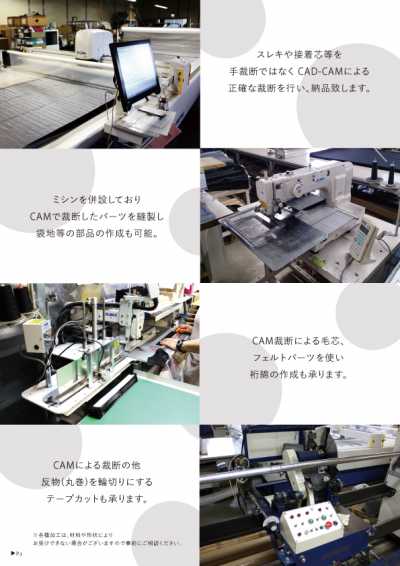
In size expansion, grading is performed based on the base size pattern. It is also used for marking, which efficiently arranges each part within the fabric width, leading to the creation of cutting data.
- Pattern drafting, revision, and setting seam allowances and notches
- Grading patterns by size
- Creating marking data for cutting
- Creating plotter output or data for cutting machines
Types and Related Data
Pattern CAD includes systems that create patterns on a flat plane as well as systems linked with 3D virtual samples that let you check the appearance when worn in a raised form. Depending on the purpose, you use drafting, grading, marking, and 3D checking functions as needed.
Inputs include data read from paper patterns with a digitizer, data drafted by entering numerical values, and data received from other companies. Compatibility and exchange formats may differ between software applications.
Selection and Operational Notes
When introducing or using it, check the data formats required by your company and contractors, linkage with plotters and automatic cutting machines, and how size expansion and marking are handled. Even if you do not use the same environment as your business partners, it is important to decide in advance on a format that can be exchanged.
Even after digitization, settings such as seam allowance direction, notches, grain line, pattern direction, and shrinkage rate directly affect pattern quality. Before output, compare against the specification sheet and dimensions table, and confirm that there are no problems in prototypes or sewing.
Differences from Similar Terms
A pattern refers to the template used to cut and sew a garment, or the design data itself, while Pattern CAD is the system for creating and editing it. A pattern base is the basic template from which each design pattern is developed.
Grading is the process of developing patterns by size, and marking is the process of determining their placement on the fabric during cutting. A 3D virtual sample is a mechanism for virtually checking the shape of a garment and how it will look when worn based on the pattern.
Frequently Asked Questions
What is the difference between Pattern CAD and a 3D virtual sample?
Pattern CAD is mainly a system for accurately creating, revising, and developing flat patterns and connecting them to cutting data. A 3D virtual sample is used to dress the pattern in a raised form and check the silhouette, ease, and appearance of the pattern. The two are sometimes used together.
Can mass production proceed with only Pattern CAD data?
The data forms the basis for mass production preparation, but usually specifications, dimension tables, sewing instructions, and fabric information are also necessary. In addition, the pattern for mass production is finalized after reflecting fabric shrinkage rate, stretch, pattern direction, and ease of handling during sewing, and after prototypes and checks.