


Ballistic Nylon
Ballistic nylon is a thick woven fabric made by densely weaving thick, strong nylon yarns, and it tends to have thickness, firmness, and abrasion resistance.
Contents6 sections
Definition and Overview
Ballistic nylon is a thick woven fabric made by densely weaving mainly thick-gauge nylon filament yarns. Rather than referring strictly to the material name, the term is used to describe the fabric’s tough properties and applications. Commercial products vary in specification depending on denier, weave structure, and surface finish.
Typically, structures such as basket weave, in which yarns are interlaced in multiple ends, are known, but in distribution the term is also used for high-density nylon with different weaves. For that reason, it is important not to judge the weave structure or performance from the name alone, but to check the specifications.
Features
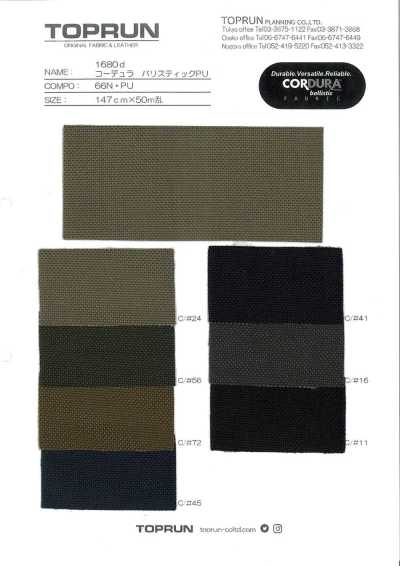
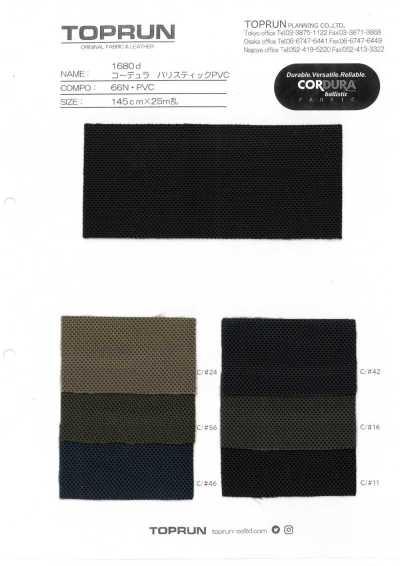
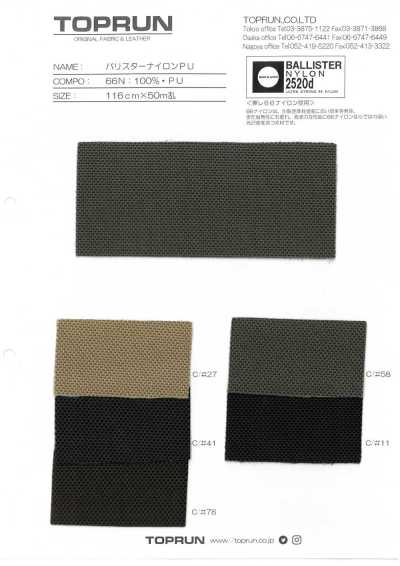
It is characterized by a thick, firm hand with substantial body and resilience, and it tends to have a heavy, rigid feel. The surface may show a grid-like or textured appearance from the weave, giving it a rugged, functional look.
It can offer nylon’s tensile strength and abrasion resistance, making it suitable for areas that are likely to bear load or friction. On the other hand, tear strength, flexibility, and water resistance vary greatly depending on thickness, yarn thickness, density, and whether there is a backing coating.
- Fabric without water-repellent treatment or coating is not necessarily waterproof.
- The denser and thicker the fabric, the lower its breathability and drape tend to be.
- Nylon is sensitive to heat, so care is needed with high-temperature irons and dryers.
Main Applications
It is widely used for bags, backpacks, cases, pouches, and similar items where durability and structure are required. It is also suitable for areas that are subject to friction or load, such as bottoms, reinforcement panels, and around handles.
In apparel, it is used for workwear, uniforms, outdoor outerwear and bottoms, and reinforcement parts. Items for fall and winter that make use of its thickness and firmness are common, but depending on the lining or partial use, it can be adopted in any season.
Selection and Handling Notes
When selecting, check not only denier but also fabric weight, thickness, weave structure, backing treatment, and surface water repellency. For bags, consider the required self-supporting structure and abrasion resistance; for apparel, also consider stiffness in moving parts, weight during wear, and the design of areas that touch the skin.
Nylon is generally not prone to major shrinkage, but dimensional change varies depending on heat treatment, coating, and whether it is a blended material. Before mass production, conduct tests assuming washing, drying, and ironing processes to check shrinkage rate and appearance changes.
For sewing, choose a needle for thick fabrics and sewing thread with sufficient strength, and check needle holes, skipped stitches, and puckering in test sewing. Overlapped areas tend to become thick, so adjust seam allowance design, step handling, and feeding conditions. Coated products can allow water to seep through needle holes, so for areas that require complete waterproofing, consider treatments such as seam tape.
Differences from Similar Terms
Nylon is the general term for a fiber material, while ballistic nylon is the name for thick, high-density fabric made from that nylon. Not all nylon woven fabrics are ballistic nylon.
Canvas is also a durable thick woven fabric used for bags and similar items, but its material can vary, including cotton and synthetics. Ballistic nylon is distinguished by its relatively smooth surface typical of nylon and its hard, dense texture. Ripstop is a weave structure that suppresses the spread of tears using grid-like reinforcement yarns, and its structural standard and designation differ from those of ballistic nylon.
Frequently Asked Questions
Is ballistic nylon waterproof?
The name ballistic nylon alone does not determine waterproofness. High-density fabrics tend to resist water, but water may enter through seams and weave openings. If waterproofing is required, check for backing coating, lamination, and waterproof sewing specifications.
Can ballistic nylon be washed at home?
Whether it can be washed should be judged not by the fabric alone, but by including the coating, lamination, accessories, and product structure. In general, nylon requires caution with heat, and strong friction or dryers may damage the surface or finish. Prioritize the product care label and test results for any attached fabrics.





