Biodegradability
Biodegradability is the property of a material to be broken down by microorganisms under specific environmental conditions, eventually changing into water, carbon dioxide, and other substances.
Contents6 sections
Definition and Overview
Biodegradability refers to the property of fibers, resins, and other materials to be broken down by microorganisms. However, how decomposition progresses is not determined by the material alone; it is affected by environmental conditions such as temperature, moisture, the presence or absence of oxygen, and the types of microorganisms present.
In apparel, it is used for fibers containing plant-derived raw materials, regenerated cellulose fibers, and some biodegradable polyester materials. Biodegradability is an environmental property of the material and is not a weave, knit, or pattern name.
Characteristics and Impact on Appearance
Biodegradability itself is not a performance characteristic that directly determines hand feel or appearance such as softness, luster, thickness, or drape. Hand feel and appearance vary greatly depending on the type of fiber, yarn structure, weave or knit structure, dyeing and finishing, and blend ratio.
Even materials described as biodegradable may differ in strength, fuzziness, moisture absorption, and heat response depending on whether they use filament yarn or spun yarn, or whether they are single-material or composite materials. When planning, confirm the required wearing performance separately from biodegradability.
Main Applications
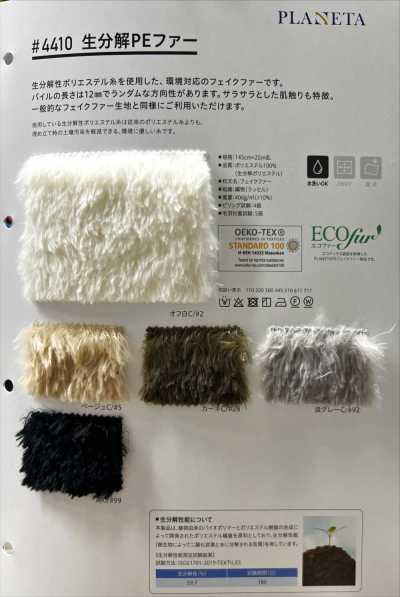
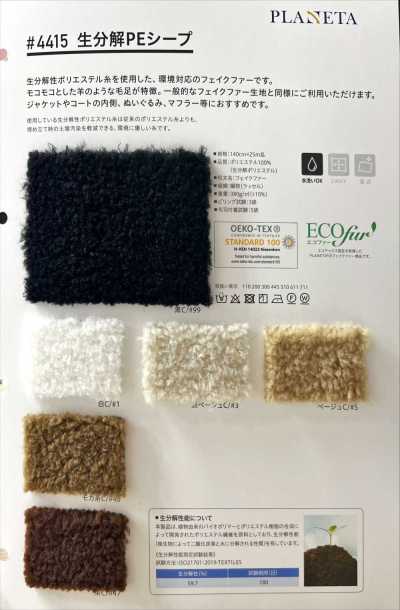
Materials with biodegradability are considered for garments, linings, fleece, faux fur, and other fashion applications where environmental consideration is one of the design requirements. Their applications range from lightweight to heavyweight materials, and they are not limited to specific items or seasons.
When considering biodegradability for the entire product, it is necessary to check not only the outer fabric but also sewing thread, interlining, lining, zippers, buttons, prints, and coatings. If there are accessories or finishing processes made from different materials, evaluating the entire product is not straightforward.
Selection and Handling Notes
When selecting materials, confirm with the supplier in which environment and under what conditions degradability is being evaluated. Conditions differ for soil, seawater, household compost, industrial compost, and other environments, so actual disposal methods cannot be determined from the biodegradability label alone.
Even biodegradable materials do not decompose immediately during normal storage or while being worn. Washing methods, drying temperatures, ironing temperatures, and whether dry cleaning is allowed should follow the care label according to the fiber composition and finishing.
Before sewing, check shrinkage rate, heat shrinkage, visible needle holes, and seam puckering through trial sewing. For heat-sensitive materials, pressing conditions and fusible interlining bonding conditions may lead to changes in hand feel or shrinkage, so confirmation before mass production is important.
- Confirm the decomposition conditions and collection method at disposal.
- Confirm the product composition, including blend ratio and accessories.
- Perform washing tests and pressing tests to check dimensional change.
Differences from Similar Terms
Biodegradability is a property indicating the possibility of decomposition by microorganisms. Recycled materials, which use recycled raw materials, are centered on the concept of circulating raw materials and are a different concept from biodegradability. Being plant-derived does not necessarily mean biodegradable.
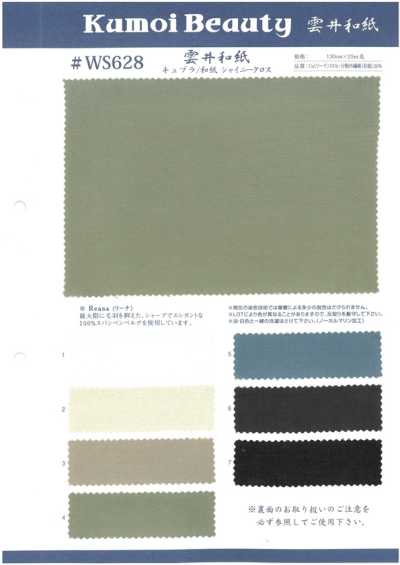
Polylactic acid fibers are sometimes treated as biodegradable materials, but the required decomposition conditions vary depending on the material and evaluation method. Regenerated cellulose fibers such as cupro may also be described together with biodegradability, but the handling conditions for each material should be confirmed.
Frequently Asked Questions
Will biodegradable materials decompose if buried in household soil?
Not necessarily. Biodegradation depends on conditions such as temperature, moisture, oxygen, and microorganisms, and some materials require a specific environment such as a controlled composting facility. Dispose of them according to municipal sorting rules and the guidance of the business operator.
Does biodegradability mean the same thing as recycled material?
No, it does not. Biodegradability refers to the property of being able to break down through the action of microorganisms, while recycled materials is a term focused on a system that reuses collected raw materials. A material may have both characteristics, but they must be checked separately.
Are biodegradable materials more likely to be damaged by washing?
Washing durability cannot be determined from biodegradability alone. Depending on the type of fiber, blend ratio, weave or knit structure, and dyeing and finishing, resistance to shrinkage and heat differs. Perform washing tests before mass production, and set the washing care label, drying conditions, and ironing conditions for each material.