Bobbin Lace
Bobbin lace is a lace-making technique in which multiple bobbins wound with yarn are crossed and twisted, and pinned in place along a pattern to create the lace.
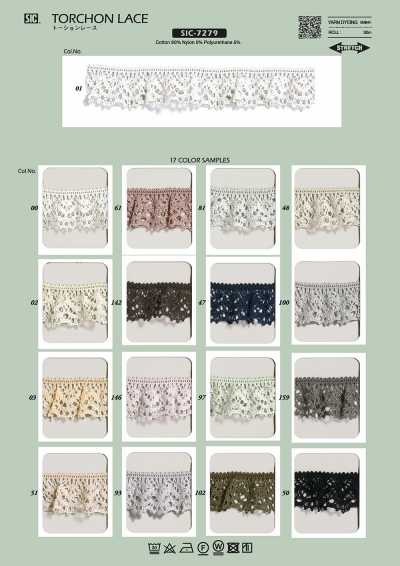
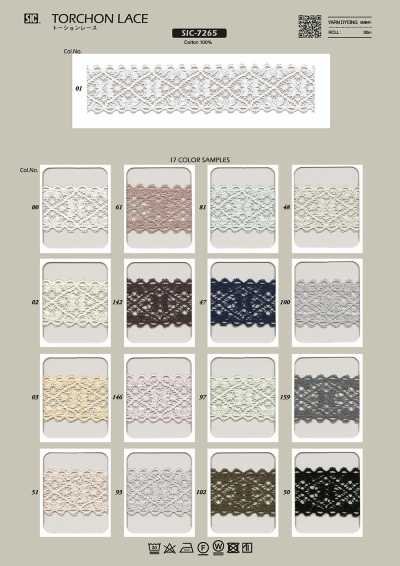
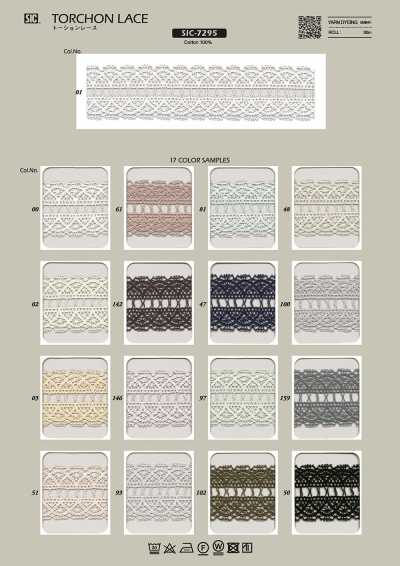
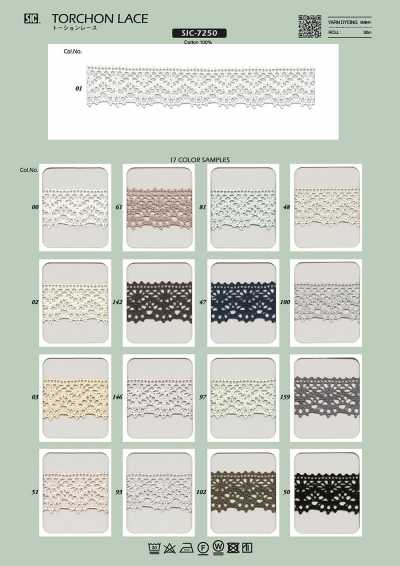
Contents6 sections
Definition and Overview
Bobbin lace is a type of lace made by placing a pattern on a pillow, a cushion-like base, and rearranging yarn wound on bobbins while driving pins as markers. Because it uses a pillow, it is also called pillow lace.
Unlike ordinary knitting, it is not a technique that forms stitches with a crochet hook or knitting needles. It is characterized by continuously crossing and twisting multiple strands of yarn to form the ground structure and the pattern at the same time.
How It Is Made and Materials
In production, pins are placed at key points in the pattern, and pairs of bobbins are used to cross and twist the yarn. The pins serve to hold the position during work and are removed after completion. The number of bobbins used and the way the yarn is moved vary greatly depending on the design.
Materials include cotton, linen, and silk yarn, and synthetic fiber yarn is also used depending on the application. The thickness, twist, sheen, and amount of fuzz on the yarn affect the clarity of the outline, sheerness, and delicacy.
- Ground structure: The part that connects the spaces between the motifs and forms the sheer background.
- Outline yarn: The part where relatively thick yarn may be used to emphasize the outer edges of the motif.
Visual Characteristics
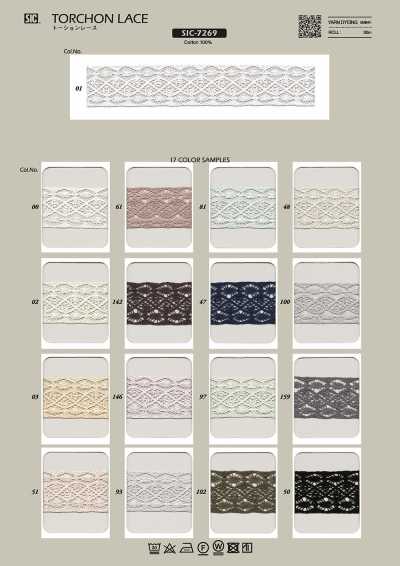
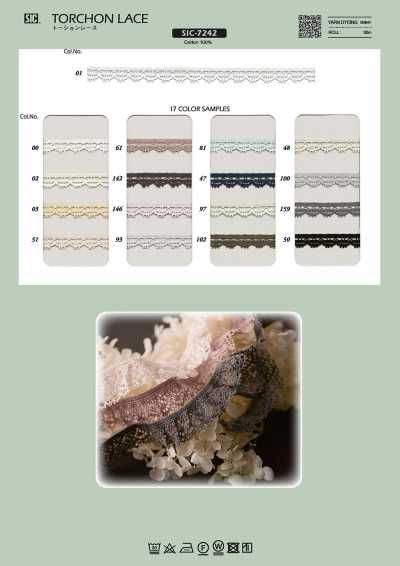
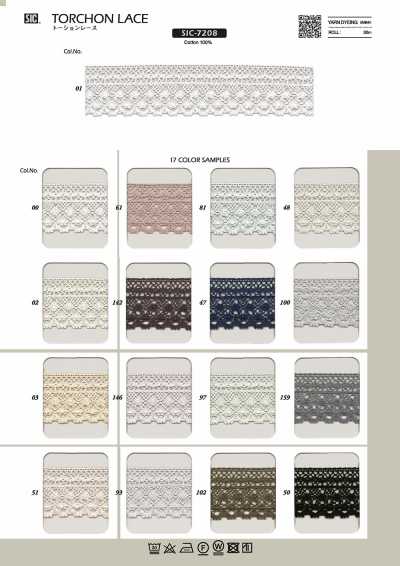
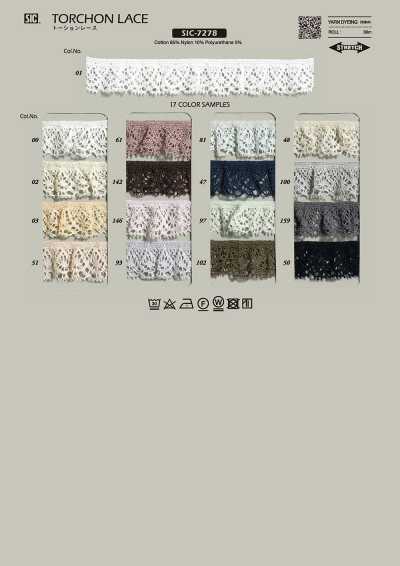
Its defining feature is a delicate appearance in which flowers, leaves, geometric patterns, and similar designs emerge on a fine mesh-like ground. Depending on the pattern and yarn usage, it can express a wide range of looks, from designs with bold outlines made with thicker yarn to those that contrast dense sections with sheer sections.
Because bobbin lace is made by combining yarn, it can be constructed from regular continuous patterns to complex curved patterns. On the other hand, the overall stretch, firmness, and edge stability of the lace vary depending on the structure and material.
Main Applications
In apparel, it is used for decoration on dresses, blouses, lingerie, and stage costumes, as well as for trimming collars, cuffs, and hems. When making use of sheerness or patterns, the color and texture of the fabric layered underneath also affect the final impression.
Outside of clothing, it is also used for table decor and interior decoration. Narrow lace is suitable for edging, while wider lace and motif-shaped pieces are suitable for partial use, and the pattern size and ease of handling are chosen according to the product application.
Selection and Handling Precautions
When selecting, check the material, yarn thickness, width, pattern direction, and edge finishing. If cutting and using the lace, the yarn ends may loosen from the cut edges, so it is important to secure enough seam allowance and, if necessary, include edge finishing in the specification.
Depending on the structure and material, bobbin lace may stretch easily in the bias direction or in open sections, and waviness or dimensional changes may occur during sewing. Before cutting, confirm stability, and during sewing, do not pull too hard; use a base fabric or stay tape as needed.
Washing methods depend on the yarn used and the finish. Fine structures are prone to fraying and distortion from catching or friction, so it is important to follow the product care label and reduce physical stress, such as using a laundry net when machine washing.
Frequently Asked Questions
What is the difference between bobbin lace and needle lace?
Bobbin lace is made by crossing and twisting yarn wound on multiple bobbins, while holding the position with pins. Needle lace is constructed by making stitches and loops with a needle and yarn. Both are hand-made lace techniques, but the method of manipulating the yarn and the tools used are different.
Does bobbin lace stretch?
The way it stretches depends on the material, structure, and arrangement of the pattern. Open sections and diagonal directions may deform more easily, and pulling too hard may distort the pattern. In mass production sewing, perform test sewing in the intended direction of use, and if necessary, stabilize it with a base fabric or stay tape.
What should be noted when washing bobbin lace?
Whether it can be washed depends on the yarn material, dyeing, and whether it has decorations, and the product care label takes priority. Fine yarn and sheer structures are prone to catching, so it is important to avoid friction and twisting. If using a washing machine, place it in a laundry net and dry it after reshaping it.