Bridle Tape
Bridle Tape is a narrow stretch-stabilizing tape used along shoulder seams, necklines, front openings, and similar areas to prevent seams and cut edges from stretching or losing shape.
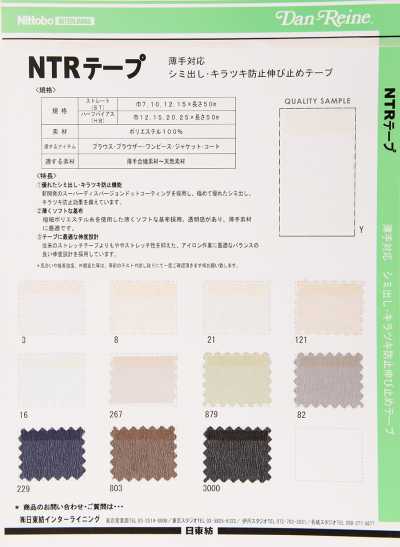
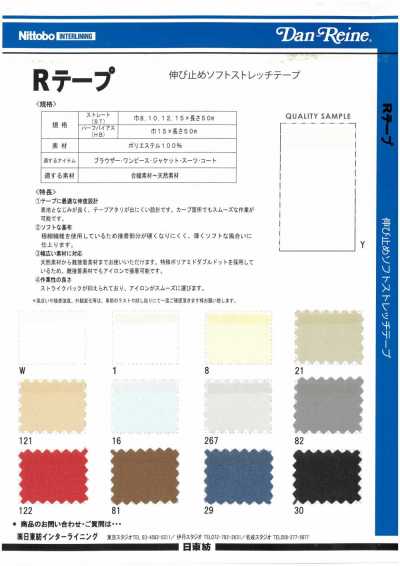
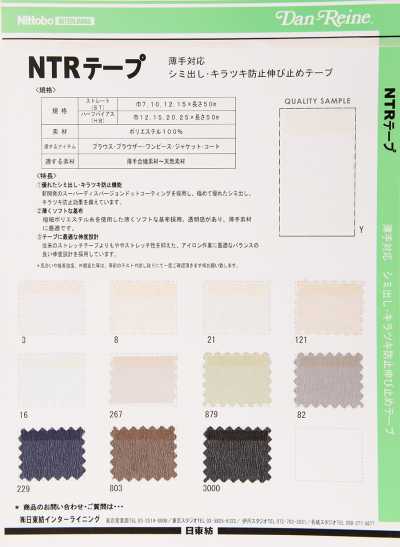
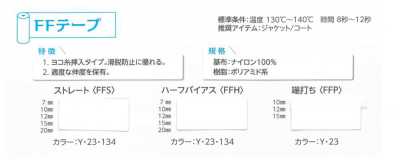
Contents6 sections
Definition and Overview
Bridle tape is a narrow tape sewn along areas of a garment that are prone to stretching, to suppress dimensional growth and waviness. It is used to stabilize the grain of the fabric and help maintain shape during sewing and wear.
It is generally treated as a type of stay tape, but with bridle tape, it is important to choose how much the tape itself stretches and whether it is fusible, because it is applied to follow the line of the part.
Where It Is Used and Its Role
It is mainly used in places that tend to stretch through pulling or sewing operations, such as shoulder seams, necklines, armholes, front openings, and pocket openings. In lightweight fabrics, knits, and parts cut on the bias, it helps prevent sewing distortion and loss of shape.
At the shoulder seam, it prevents the shoulder from stretching down. At the neckline and armhole, it controls stretching in curved areas. At the front opening, it suppresses stretch caused by buttoning and zipping, helping stabilize the left and right lengths and overall appearance.
- Shoulder seam: prevents shoulder stretch and sewing distortion.
- Neckline and armhole: prevents waviness and stretch in curved areas.
- Front opening and facing: suppresses stretch from opening and closing or wear, and prevents the front opening from twisting.
- Pocket opening: suppresses opening stretch caused by pulling during use.
Types and Cutting Direction
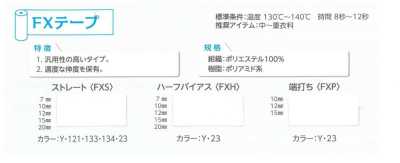
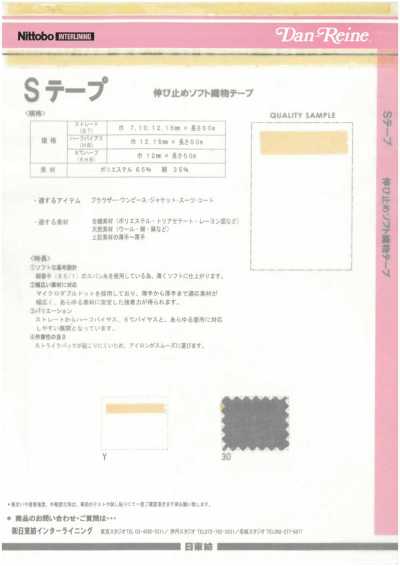
Bridle tape cut in the straight grain direction is suitable for straight areas where strong stretch control is needed. It is often used in areas where the length should not change, such as shoulder seams and front openings.
For curved areas or parts that need a slight amount of ease, a type cut on the bias or half-bias is used. Bias-cut tape conforms more easily to curves, but stretches more than straight-grain tape, so the balance with the required holding power must be checked.
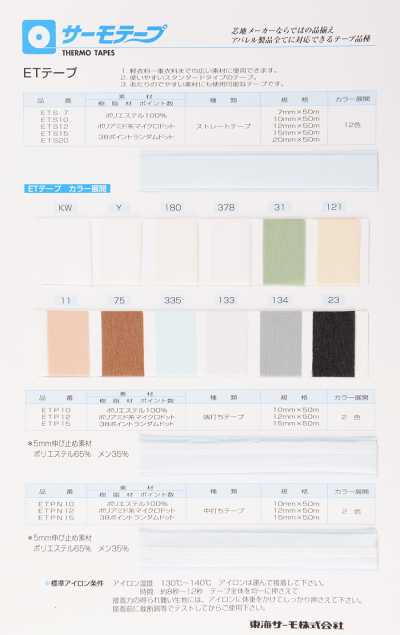
In addition to non-fusible types that are sewn in place, there are fusible types that are bonded to the fabric with heat. Fusible types are easier to work with because they also serve as temporary fixation, but they require attention to fabric compatibility and bonding conditions.
Selection and Notes on Fusible Bonding and Sewing
Select the width based on the seam allowance width, the sewing position, and how likely it is to show through on the right side. If the tape is too wide, stiffness and ridges are more likely to appear; if it is too narrow, it may not provide enough stretch prevention.
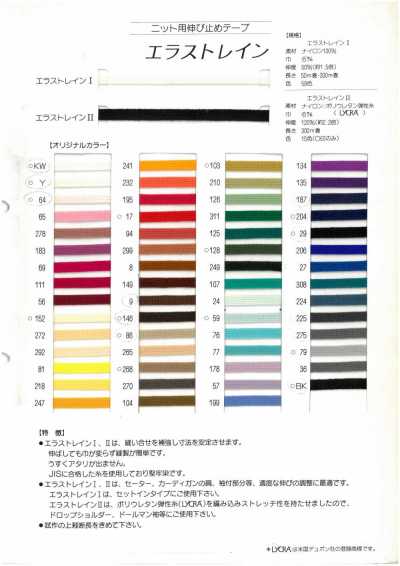
Choosing a tape that does not stretch more than necessary can reduce conformity in curved areas and mobility when worn. Check the stretch of the outer fabric, the direction of the part, and the amount of stretch that is acceptable in the finished product, and use straight, half-bias, or full bias as appropriate.
For fusible types, test them with the outer fabric before full production and confirm temperature, time, and pressure. Check for hardening after pressing, bleed-through, surface impressions, and peeling after washing. When sewing, do not stretch either the tape or the fabric, and prevent puckering caused by differences in feed.
Differences from Similar Terms
Stay tape is a broad term for tapes that suppress stretch. Bridle tape refers to the narrow tape used for that purpose, but in some workplaces and products, it is used almost interchangeably with stay tape.
Bias tape is also used for binding cut edges and for a decorative finish. In contrast, bridle tape differs in that it is used on the inside mainly to control stretch and loss of shape in specific areas.
Frequently Asked Questions
How is bridle tape attached to a shoulder seam?
In general, it is layered on the seam allowance side of the shoulder seam and stitched in without stretching the outer fabric. The tape length is matched to the shoulder seam on the pattern, and whether it is attached to the front shoulder or back shoulder, or placed within the seam allowance, is standardized in the specification sheet and sewing process.
Which should I choose, fusible or sewn-in?
If work efficiency is the priority and compatibility with the outer fabric can be confirmed, fusible type is an option. If the fabric is sensitive to heat, if surface change is a concern, or if wash durability needs to be checked carefully, consider a sewn-in type.
Can bridle tape be used on knits?
Yes, but if the tape stops stretch too much, it can hinder movement when worn. For areas where stretch should be controlled, such as shoulder seams, use a straight type; for necklines and similar areas, choose a bias type that conforms well, and check the balance of stretch before sewing.