Calico
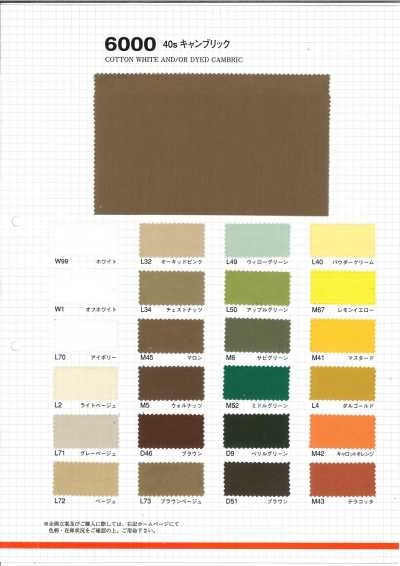
Calico is generally a thin to medium-thin woven fabric made from cotton yarn in plain weave, and is used for clothing, handicrafts, and trial fabrics by taking advantage of its simple texture and ease of handling.
Contents6 sections
Definition and Overview
Calico is a woven fabric made mainly from cotton in plain weave. Plain weave is the basic structure in which warp and weft threads cross alternately, creating little difference between the face and back and giving a clean appearance. Its appearance changes greatly depending on the finish, such as natural, bleached, dyed, or printed.
The scope of the term calico varies by country and distribution sector. In Japan, it often refers to a cotton plain weave fabric, while overseas it may refer to unbleached cotton cloth or printed cotton cloth. When ordering, do not judge by the name alone; check the fiber blend ratio, fabric weight, and finish.
Characteristics
Calico made with cotton is characterized by a natural softness and tends to have good absorbency and breathability. Depending on yarn thickness and weave density, it ranges from thin and light to relatively firm, so the texture is not uniform.
The surface is flat, making patterns and prints stand out easily, and it is generally easy to cut and sew. However, thin or low-density types are prone to sheerness, and durability should be considered in areas subject to strong force. Since stretch is generally limited, ease of movement when worn is ensured through ease allowance and specification design.
Main Applications
It is used for light apparel such as blouses, shirts, dresses, skirts, and children's clothing. It is also easy to use as a base fabric for printing or embroidery and may be adopted for spring and summer items. Depending on the thickness of the fabric, it can also be used as a lining substitute or as a component material year-round.
Outside apparel, it is used for handicraft projects, the underside of bags, interior accessories, and trial muslins for prototypes. A muslin is a fabric used for temporary sewing to check the pattern and silhouette. It is selected based on the strength, sheerness, and washing frequency required for the application.
- Thin types are suitable for blouses and designs using gathers.
- Slightly denser types are used for shirts, children's clothing, and prototypes.
- For printing applications, the surface fuzz and dyeability are also checked.
How to Choose and Handling Notes
When selecting, in addition to the fiber blend ratio, check the fabric weight, density, fabric width, sheerness, and whether any finishing has been applied. Even with the same calico name, firmness, thickness, hand feel, and ease of sewing differ depending on yarn thickness, bleaching, and softening treatment. It is important to check samples under conditions close to the intended product application.
Items made mainly from cotton may shrink through washing or pre-washing. If necessary, perform pre-washing before cutting, and in mass production, confirm the shrinkage rate in advance and reflect it in the pattern. For dark-colored or printed items, also check for color transfer caused by friction or washing.
Thin fabrics are prone to shifting during sewing and wavy seams, so choose a fine needle and a sewing thread of suitable thickness for the fabric, and adjust the feed amount and thread tension. Align the grain properly when cutting, and take care not to stretch the fabric with excessive iron pressure.
Differences from Similar Terms
Sheeting is also treated as a cotton plain weave fabric, but it may generally refer to a coarser, more practical fabric than calico. However, the scope of these names overlaps in distribution, so specification comparison is necessary.
Broadcloth often refers to a smooth, refined plain weave made with fine yarns and high density, and its surface tends to be finer and more even than calico. Poplin is a plain weave fabric with ribs visible in the warp direction, and its appearance differs from calico, which tends to have a flatter look.
Frequently Asked Questions
Are calico and sheeting the same fabric?
Although both are often treated as cotton plain weave fabrics, they are not completely synonymous. Sheeting generally tends to refer to a coarser, more practical cloth, but the names used in distribution may overlap. Compare them by checking the fiber blend ratio, fabric weight, density, finish, and application.
Does calico shrink when washed?
Calico made mainly from cotton may shrink when washed or exposed to moisture and heat. The degree of shrinkage varies depending on the yarn, density, finishing treatment, and washing conditions. Before productization, it is important to confirm the shrinkage rate of the fabric specification and, if necessary, perform pre-washing or test washing.
Is calico an easy fabric to sew?
Fabrics with plain weave and a relatively stable surface tend to be easy to handle. However, thin fabrics may shift during cutting, ripple during sewing, and leave noticeable needle holes. Choose a needle and thread that match the fabric thickness, and adjust thread tension and feed through test stitching.