Chantilly Lace
Chantilly lace is a type of lightweight lace with a sheer look, featuring delicate floral patterns and other designs on a fine mesh ground.
Contents6 sections
Definition and Overview
Chantilly lace is a type of lace with floral and curvilinear patterns arranged on a fine net-like ground structure. It is characterized by its light sheerness and intricate patterning, and is used for apparel fabrics, partial applications, and decorative lace.
The name may refer to the lace’s design or texture, and products currently on the market do not have a uniform material, construction, or pattern expression. For that reason, it is important not to determine the structure or performance from the name alone, but to check the actual sample and specifications.
Construction and Materials
Traditional Chantilly lace belongs to the bobbin lace lineage. Bobbin lace refers to a technique that creates the pattern and ground by crossing many yarns. Today, depending on productivity and applications, it is also expressed as machine-made knitted lace.
Materials used include silk, as well as nylon, polyester, and cotton. There are also stretch products combined with polyurethane, but the name Chantilly lace itself does not imply elasticity.
Appearance Characteristics
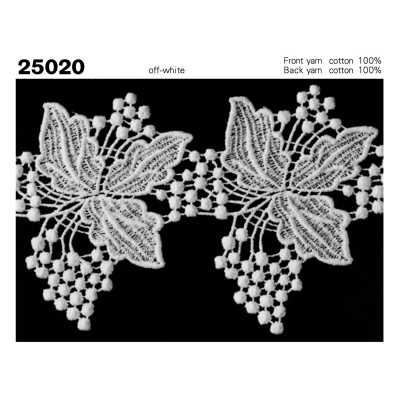
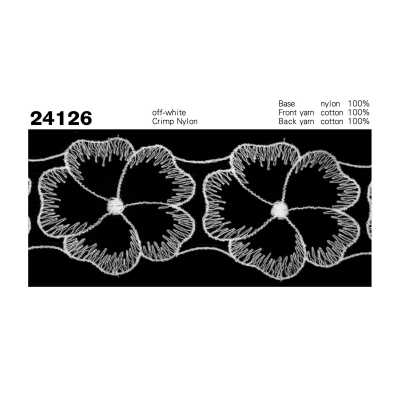
Many styles feature continuous floral, leaf, and arabesque-like motifs against a background of small hexagonal mesh and similar openwork. The outlines of the motifs are fine and delicate, and the sheerness of the ground creates a sense of lightness and shadow.
Some designs include wave-shaped scallops at the hem or selvedge side. The motif direction, motif repeat, and presence or absence of scallops differ by product, so check the motif placement and required yardage before cutting.
Main Applications
It is used for lingerie, innerwear, blouses, one-piece dresses, and dresses, as well as for decoration on collars, cuffs, hems, and yokes. When taking advantage of sheerness, design also takes into account how the skin shows through and the color contrast with the fabric layered underneath.
In formal wear, it is used as a material that adds elegance. On the other hand, some items are thin and prone to snagging, so for areas where strong friction occurs or where load is applied, consider whether backing or reinforcement is necessary.
- For full-pattern use, consider motif matching and scallop placement.
- For partial applications, check differences in stretch and thickness from the base fabric.
- To reduce sheerness, confirm the layering method with lining or a separate fabric through a sample trial.
How to Choose and Handling Notes
When selecting, check the material composition, stretch, width, motif width, presence or absence of scallops, and edge stability. Stretch lace may show differences in elongation depending on direction, so align the grain and pattern direction, and handle it so it is not pulled during cutting.
Lace with an open mesh may fray at the cut edge or snag yarns. In sewing, choose a fine needle and appropriate thread, and test for seam puckering and visible needle holes in advance. If necessary, finish the edges or add backing.
Washing methods vary depending on blended materials, dyeing, decoration, and sewing specifications. Even if home washing is possible, consider using a laundry net, washing with gentle action, and sorting to avoid snagging, and follow the product’s care label.
Frequently Asked Questions
What is the difference between Chantilly lace and Leavers lace?
Chantilly lace is a term for a design lineage that expresses delicate floral patterns and the like on a fine net ground. Leavers lace refers mainly to lace made on a Leavers machine. The two do not mean the same thing, and some products may have characteristics of both, so the structure and manufacturing method should be checked individually.
Does Chantilly lace stretch?
This cannot be determined from the name alone. Stretch products containing polyurethane do stretch, but there are also many non-stretch items. In addition, in the diagonal direction, the structure may make it feel as though it stretches. When purchasing, check the stretch and recovery in both length and width directions, and perform sewing tests.
Does Chantilly lace fray at the edges?
The tendency to fray varies depending on the material, knitted structure, cutting direction, and motif density. For the open mesh ground, caution is also needed for yarn pullout caused by snagging. For specifications that use cut edges, confirm whether edge finishing is necessary through a sample, and decide on seam allowance and reinforcement methods for peace of mind.
- Search products for "Chantilly lace"
- Products with material "Cotton"
- Products with material "Polyester"
- Products with material "Nylon"
- Products with material "Silk"
- Products for style "For Innerwear"
- Products for style "For Lingerie"
- Products for style "For Shirts/blouses"
- Products for style "For Skirts And Dresses"
- Products for style "For Formal Wear"
- Products for style "For Costumes/dresses"
- Browse Lace products