Pagoda Shoulder
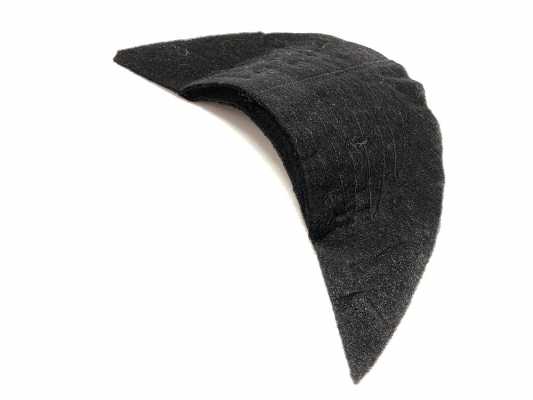
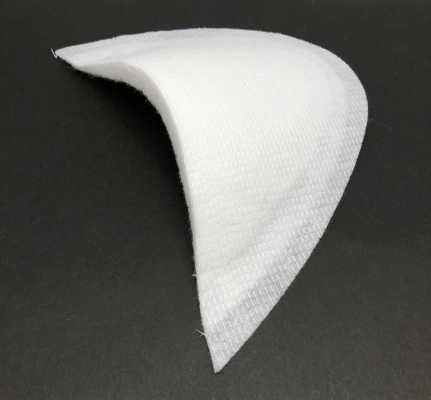
Pagoda shoulder is a shoulder pad, or a shoulder design, that lifts the shoulder point and emphasizes it in a peaked shape to create a shoulder silhouette that projects like a tower.
Contents6 sections
Definition and Overview
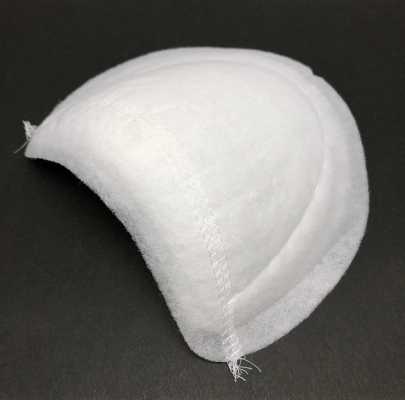
Pagoda shoulder is a shoulder design that adds height and angle at the shoulder point, giving the outline from the shoulder line to the sleeve cap a peaked shape. The name comes from the shape of a tower that narrows and rises toward the top. As a material, it may refer to a shaped shoulder pad that supports this form.
When used as the name of a shoulder pad, its defining feature is not only thickness and firmness, but also a raised, three-dimensional shape that lifts the shoulder point. It balances the left and right shoulders and gives the upper body a structured, sharp impression.
Where It Is Used and Its Role
It is mainly used at the shoulder points of jackets, coats, dresses, and similar garments, and is built into the construction between the outer fabric and lining, or between the outer fabric and the facing side. By supporting the area from the shoulder line to around the armhole, it corrects the shoulder slope and maintains the intended silhouette.
Because it emphasizes the shoulder point, the finished look differs from a natural shoulder, which creates a gentle shoulder line. It is also related to a roped shoulder, which makes the sleeve cap appear high and rounded, but pagoda shoulder places greater emphasis on the outward projection at the shoulder point and the peaked outline.
Materials and Types
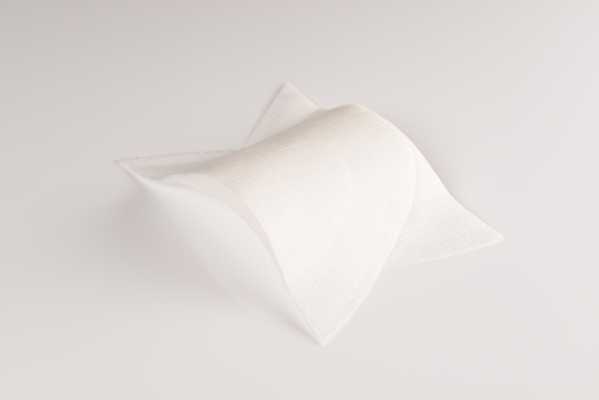
In addition to types made with urethane foam, which is easy to shape and recover, there are shoulder pads layered with nonwoven fabric, batting, felt-like materials, and similar materials. Some specifications also layer a thin covering material on the surface to soften the impression against the outer fabric.
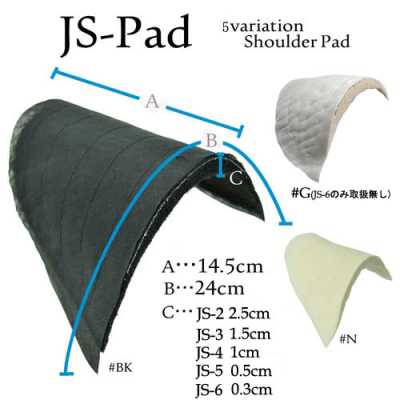
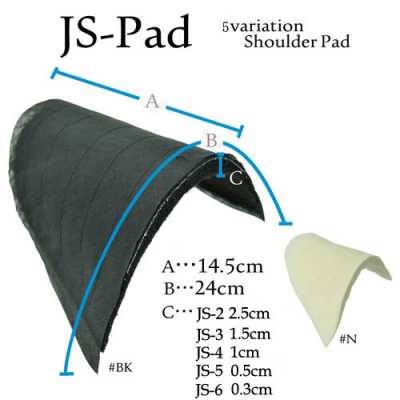
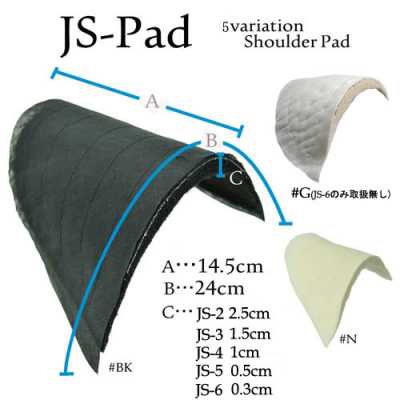
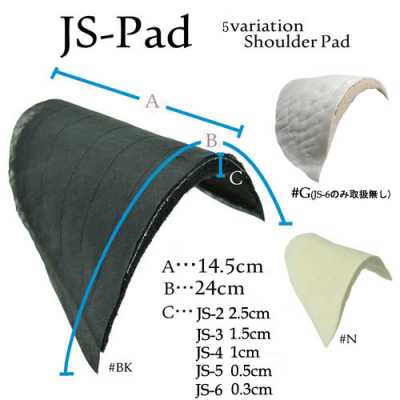
The impression changes greatly depending on thickness, shoulder-point height, length in the shoulder-line direction, and the amount of projection toward the sleeve side. There are forms that emphasize only the shoulder point and forms that add thickness across the entire shoulder, so it is important to choose a shape that matches the garment pattern and sleeve design.
- Thin pads are specifications focused on correcting the shoulder shape.
- Pads with thickness and angle are specifications that make the outline appear clearly.
- Shaped products made specifically for the left and right sides make it easier to stabilize the shoulder-point shape.
Main Applications
It is used in tailored jackets, formalwear, stage costumes, and coats with strong design character. It is also suitable for designs that want to emphasize shoulder width and the presence of the shoulder point while creating contrast with the waist.
In fabrics with body, the outline shows clearly, while in lightweight fabrics or fabrics with strong drape, the edges or steps of the pad may show through the surface. Consider not only the product application, but also the thickness, stretch, and drape of the outer fabric.
How to Choose and Sewing Notes
When selecting it, check the shoulder height, shoulder-point angle, pad thickness, and compatibility with the outer fabric on a toile or actual sample. If you try to create the shape with the pad alone, it can easily look unnatural, so design it together with the shoulder line, armhole, and sleeve cap easing.
In sewing, align the left-right orientation and attachment position, and baste first so the shoulder point does not shift before stitching it in place. Check whether fading or uneven steps appear on the outer fabric, and add a thin auxiliary material if necessary. During pressing, use a temperature suitable for the material and a pressing cloth, and take care not to crush the pad.
Frequently Asked Questions
What is the difference between pagoda shoulder and roped shoulder?
Both are designs that give the shoulder area a three-dimensional look, but pagoda shoulder focuses on a peaked outline that projects outward at the shoulder point. Roped shoulder often refers to tailoring that creates a rounded swell at the sleeve cap, so the emphasized position and appearance are different.
What kind of fabric is suitable for pagoda shoulder?
In general, fabrics with a certain amount of thickness and body that can hold the shoulder-point shape are suitable. It can also be made with thin or soft fabrics, but because the pad outline can show through more easily, it is important to confirm the pad thickness and edge treatment on a sample.