Cord Lace
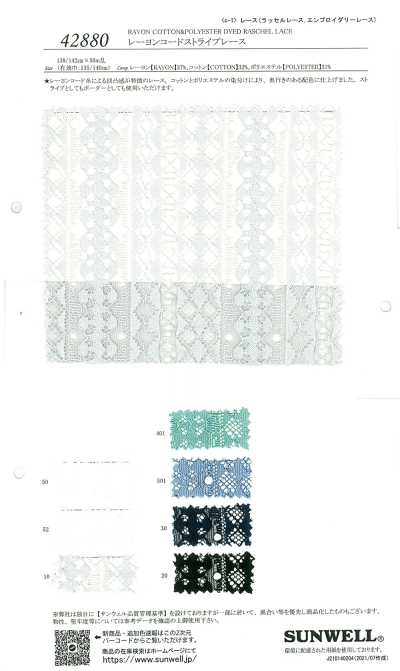
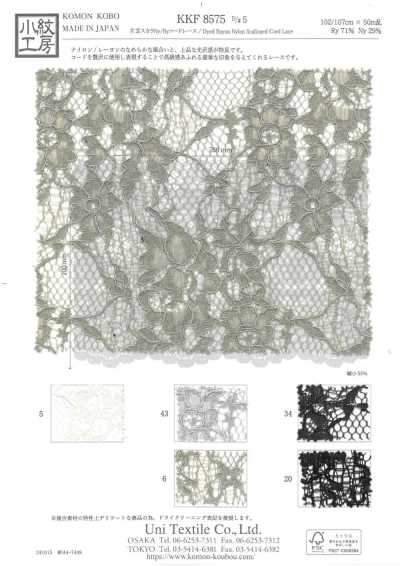
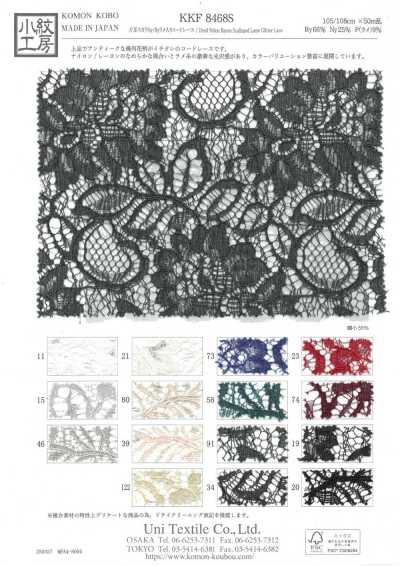
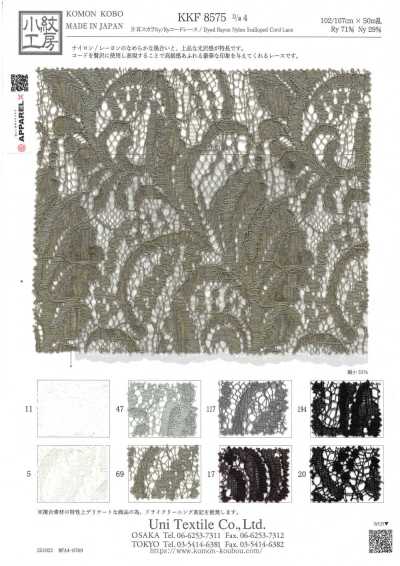
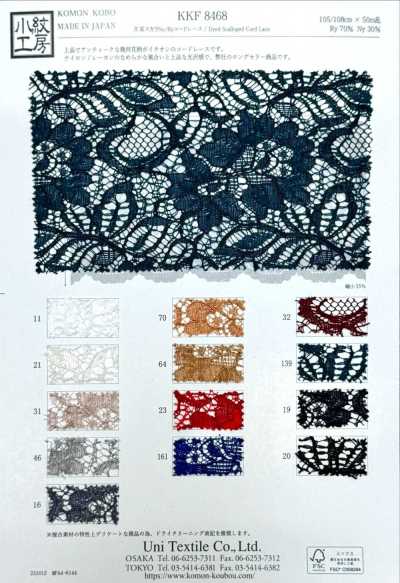
Cord lace is a highly decorative lace with shadow and depth, created by adding thicker yarn or cord along the floral pattern and outlines of the lace.
Contents6 sections
Definition and Overview
Cord lace is a lace that stands out visually by placing cord-like yarn that is thicker than ordinary embroidery thread along the outlines and parts of patterns such as flowers, plants, and geometric motifs. The raised cord makes the pattern appear to stand out.
The base fabric may be a sheer net fabric such as tulle, or it may use embroidered fabric or a water-soluble base material. The term cord lace does not refer to the material itself, but to the design and construction method that emphasizes the pattern with cord.
How It Is Made and Materials
In general, after the pattern is expressed by embroidery on the base fabric, or at the same time as embroidery, cord is sewn down along the pattern lines. Depending on the thickness, sheen, color, and fastening method of the cord, the finish can range from delicate to substantial.
Cotton, rayon, polyester, nylon, and similar materials are used for the base fabric, embroidery thread, and cord. Some versions use stretch base fabric containing polyurethane, but because the cord section may not stretch well, the composition and structure should be checked.
Visual Features and Main Applications
A characteristic feature is that the edges of the pattern look thick, and unevenness and shadows appear depending on how light falls. Compared with flat embroidered lace, the outlines are clearer, making it a material that easily creates an antique, glamorous, or raised impression.
In addition to dresses, formal wear, blouses, skirts, and stage costumes, it is also used for collars, sleeves, yokes, hem transitions, and partial applications. For pieces with a sheer base fabric, the appearance changes greatly depending on how they are layered with lining or another fabric.
- For full-piece use, check the size and placement of the pattern.
- For partial use, consider a placement that will not cut the pattern off midway after cutting.
- If you want to reduce sheerness, confirm the combination with lining or a pressing cloth through prototyping.
Selection and Sewing Notes
When selecting, check the type of base fabric, cord thickness, pattern width, sheerness, stretch, and how the edges are finished. Patterned lace may require more yardage, so if necessary, consider pattern matching and review placement on the pattern before cutting.
For items with net fabric as the base, seam allowances and cut edges may fray easily. Choose an edge finish that suits the product specifications, such as an overlock machine, narrow seam finishing, or encasing with facings or lining. Areas with thick cord tend to create steps, so check the sewing direction and presser foot pressure as well.
Even if it appears to have stretch, the direction with cord may have limited stretch. To prevent rippling from stretch stitching or shifting of the cord, check the grainline and stretch direction, and adjust stretch control or sewing conditions as needed.
Washing and Differences from Similar Terms
The washing method varies depending on the composition, base fabric, cord, and dyeing conditions, so follow the product care label. Because the cord may lift or break due to snagging or friction, using a laundry net and turning the item inside out are considered for home washing. To avoid crushing the cord or deformation from heat, use a pressing cloth when ironing and test on an inconspicuous area first.
Embroidered lace refers broadly to lace that shows a pattern through embroidery and does not necessarily use cord. Chemical lace is lace made by embroidering onto a water-soluble base material and then dissolving the base material to leave the pattern behind. Cord lace is a term focused on the raised outline expression created by cord, and the method or base fabric is not limited to a single type.
Frequently Asked Questions
Does cord lace stretch?
How cord lace stretches depends on the structure of the base fabric and the cord. Even if the base fabric such as tulle stretches, the pattern area with cord may not stretch easily. Differences are especially noticeable depending on the cutting direction, so it is important to test-stretch it in the direction of use and check it before sewing.
Do the cut edges of cord lace fray?
In cord lace with net fabric as the base, the threads at the cut edge may unravel, or the cord ends may lift. On the other hand, in constructions that dissolve the base fabric to leave the pattern, the edge properties are different. Cut a sample and check suitable finishing methods such as overlocking, encasing with lining, or hand stitching.
What is the difference between cord lace and chemical lace?
Cord lace is lace in which cord-like yarn is added to the pattern to emphasize the outline and three-dimensional effect. Chemical lace refers to a method in which embroidery is made on a water-soluble base material and then the base material is removed to leave the pattern. Since the same fabric can have features of both, check whether there is a base fabric and whether cord is used.