Crazy Pattern
Crazy Pattern is a design in which multiple fabrics with different patterns, colors, and textures are combined irregularly or intentionally to create a varied look.

Contents6 sections
Definition and Overview
Crazy pattern is an expression in which fabrics and patterns with different characteristics, such as checks, stripes, solid, and floral prints, are combined within a single garment. It creates intentional irregularity and rhythm through switching across the left and right sides, front and back, sleeves, yokes, and other parts.
It is not the name of the fabric itself or of a weave structure, but a design term that indicates how colors, patterns, and materials are combined. It may use the same material with only the pattern changed, or combine different materials.
Pattern Formation and Types
In addition to constructions in which multiple fabrics are actually cut and sewn together, there are also printed fabrics that express a patchwork look on a single fabric. In the former, seams and material differences create character; in the latter, a complex appearance can be achieved without increasing the sewing process.
The combination is not limited to arrangements that simply look random. Depending on the design intent, it may be given a sense of order, such as using asymmetry on the left and right, changing the scale of the pattern with similar colors, or intersecting checks and stripes.
- A construction that switches between patterns and solid areas
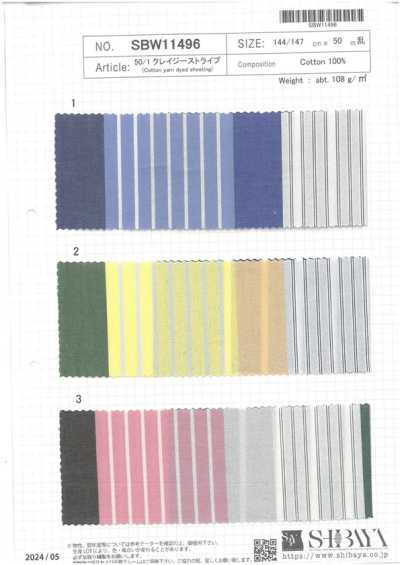
- A construction that combines multiple checks or stripes
- A construction that switches between fabrics with different materials or structures
- A construction expressed as a patchwork look through printing
Main Applications and Seasonality
It is used for shirts, blouses, cut-and-sew tops, dresses, skirts, jackets, blousons, and more. If the switched area is small, it can be used as an accent; if large, it can become the main feature of the garment.
In spring and summer, there are many examples using lightweight woven fabrics or cut-and-sew materials to show the lightness of colors and patterns. In autumn and winter, constructions that emphasize material texture by combining brushed materials, tweed-like fabrics, corduroy, and the like are often considered. Seasonality is determined not by the pattern name, but by the thickness and hand of the fabrics used.
Points to Note When Choosing and Cutting Fabric
When actually switching fabrics, choosing fabrics with similar thickness, stretch, shrinkage rate, and appearance changes after washing makes it easier to prevent seam misalignment and waviness in the seams. For combinations with large differences, interfacing and sewing specifications need to be considered.
For fabrics with a directional pattern or an up-and-down orientation, the direction of each part should be specified in advance. When joining checks or stripes, clarify in the specification sheet and pattern whether the pattern should be intentionally offset or matched at the seam.
When using multiple kinds of fabric, in addition to the required amount for each color and pattern, it is necessary to account for pattern matching, grain direction, and cutting loss. Large patterns and one-way patterns in particular tend to reduce cutting efficiency, so the required yardage should be checked with markings during prototyping.
Differences from Similar Terms
Patchwork generally refers to a technique or expression in which multiple fabric pieces are sewn together to form a single cloth-like piece. Crazy pattern is a broader term for designs that combine different patterns and materials throughout a garment, and is not limited to such a technique.
All-over pattern means the same pattern is repeated across the entire fabric, which differs from crazy pattern, where different patterns are switched. Panel print refers to a design motif arranged prominently at a specific location on the fabric, and is not necessarily a combination of multiple fabrics.
Frequently Asked Questions
What is the difference between crazy pattern and patchwork?
Patchwork generally refers to a technique of sewing multiple pieces of fabric together, or to that appearance. Crazy pattern is a term for the overall design that freely combines multiple patterns and materials, and it also includes printed expressions.
Is pattern matching necessary when cutting a crazy pattern?
It depends on the design intent. If the pattern is to continue seamlessly, the positions are managed in the same way as normal pattern matching. On the other hand, even when intentionally making it look uneven, the direction of the pattern, the appearance at the switch lines, and the balance between the left and right sides need to be checked before cutting.
What should be noted when using different materials in a crazy pattern?
Fabrics with major differences in thickness, stretch, shrinkage, and post-wash changes can lead to waviness in seams and loss of shape. It is important to confirm the condition of the joining areas in a prototype, including seam finishing, whether interfacing is used, and sewing conditions.