Tracing Paper
Tracing paper is paper coated with coloring material used to transfer seam lines, dart positions, and marks to textile by tracing the lines of a pattern or design with a tracing wheel or similar tool.
Contents6 sections
Definition and Overview
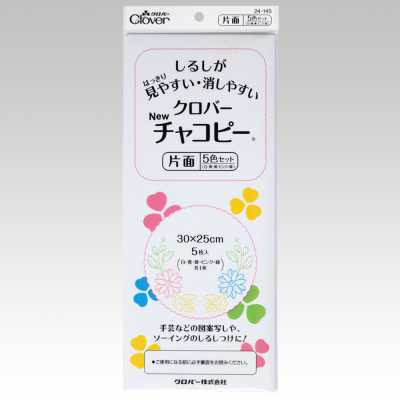
Tracing paper is a marking supply with coloring material applied to one side or both sides of the paper. It is placed between the pattern and the textile, and when the required lines are traced with a tracing wheel or similar tool, the color transfers to the areas under pressure, making it possible to mark cutting and sewing lines.
How to Use
Check the side to be transferred, turn the coloring side of the tracing paper toward the textile, and place it under the pattern or design so it does not shift. Trace along the lines with a tracing wheel using moderate pressure, and transfer only the areas where marks are needed.
- Use it for marking seam allowances, darts, pocket positions, match points, and similar marks.
- When marking both the front and back sides at the same time, place the tracing paper between the layers of textile.
- Before using it on the actual textile, test the color development and how easily it can be removed on a matching piece.
- Be careful not to trace too strongly, as this may damage the textile or leave the marks too dark.
Types and How to Choose
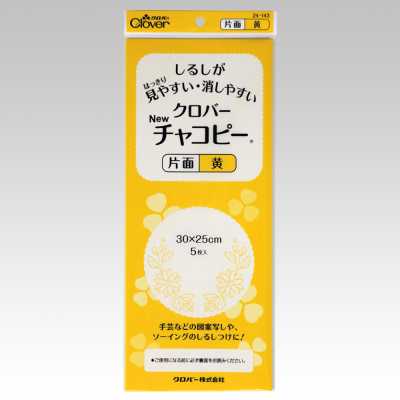
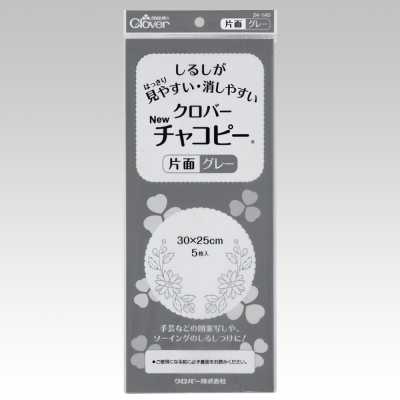
Tracing paper comes in one-sided and double-sided types, and you choose according to how many sides you want to transfer marks to. One-sided types are suited to transferring marks to either the front or back side, while double-sided types are suited to marking both sides of layered textile.
- Choose white, yellow, or other light colors for dark textile, and blue, red, or other easy-to-see colors for light-colored textile.
- Water-removable types are easy to use for garments on which you do not want to leave marks after finishing, but they may fade unintentionally due to humidity or moisture.
- For brushed materials, textile with an uneven surface, or coated textile, be sure to check how the marks appear and how easily they can be removed.
- For delicate thin fabrics and light-colored textile, compare other marking methods such as tailor's chalk.
Care and Safety Precautions
Store tracing paper flat to prevent bending and contamination of the coloring surface. Avoid high temperatures, humidity, and direct sunlight, and keep it in a bag or similar container so the color does not transfer to other textile or paper. After use, check that no unnecessary marks remain on the textile.
How the coloring material is removed differs by product. Even products described as water-removable may be difficult to remove depending on the textile and finishing treatment. Before washing, ironing, or dry cleaning, it is important to check removability on an inconspicuous area or on a matching piece.
Differences from Similar Terms
Tailor's chalk is a solid or powder marking supply used to draw lines directly on the textile surface. Tracing paper transfers the lines of the pattern by pressure, so it is suitable for accurately transferring darts and sewing lines.
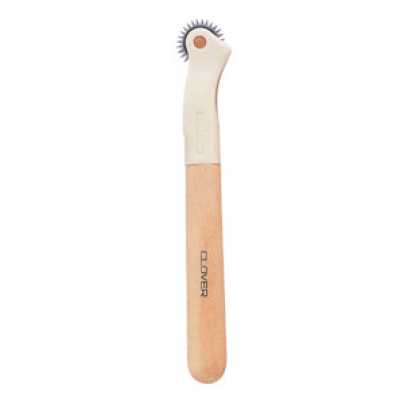
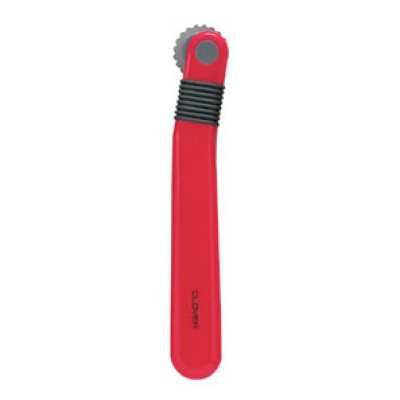
A tracing wheel is a gear-like tool used together with tracing paper to transfer lines, and it is not tracing paper itself. Tracing paper alone is difficult to transfer, and it is generally used by applying pressure with a tracing wheel or similar tool.
Frequently Asked Questions
How do you remove the marks from tracing paper?
Water-removable types may be removed with a damp cloth or spray, but the method differs by product. Because marks may remain depending on the textile material, dyeing, and finishing, always test on a matching piece or an inconspicuous area before use.
Can tracing paper be used with anything other than a tracing wheel?
It may be usable with a round-tipped awl or similar tool that does not easily damage the paper and textile and can apply pressure. However, a tracing wheel is convenient for transferring lines continuously and evenly. Sharp tools may create holes or damage the textile.