Pinking Shears
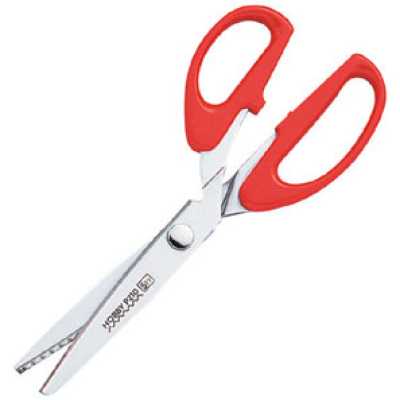
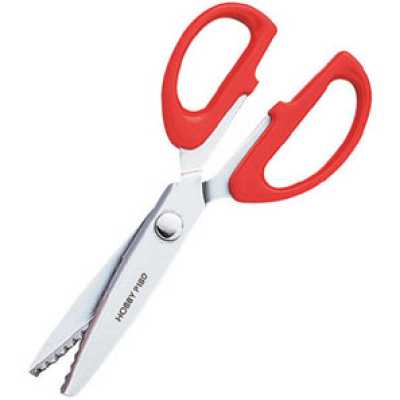
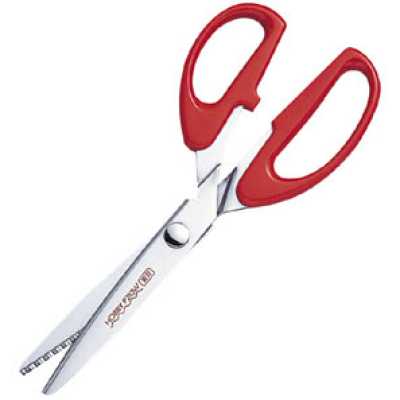
Pinking shears are scissors with continuously zigzag-shaped blades that cut textile edges into a wavy or serrated finish.
Contents5 sections
Definition and Overview
Pinking shears are cutting scissors with serrated blade edges on two interlocking blades. The cut edge is not straight but becomes a continuous wavy or zigzag finish, adding a decorative look to the fabric edge.
They are also used when cutting the edges of fray-prone woven fabrics, but their anti-fraying effect varies depending on the fiber, structure, and usage conditions. For edge finishing where garment durability is required, seam allowance finishing or overlock sewing is used together.
How to Use
Place the textile on a flat work surface and cut little by little, opening and closing the blades widely along the cutting line. If you try to cut with only the blade tips at once, missed spots and unevenness are likely to occur, so it is important to insert the textile deep into the blades before cutting.
They are used for decorative edges, appliqué parts, and temporary anti-fray measures. Before cutting, perform a test cut on the edge of the textile or on scrap fabric to check the shape of the cut edge and how well it blends with the textile.
- For straight lines and gentle curves, cut slowly so the blade peaks come out evenly.
- Sharp curves and small corners can easily make the cut edge uneven, so use them differently from regular scissors.
- For fused interlining sections or thick layered areas, check the cutting performance before cutting.
Types and How to Choose
There are different blade peak sizes and spacing, blade length, and handle shapes. If you want the pattern of the cut edge to stand out, focus on the peak size; if your main purpose is edge finishing, check ease of cutting and cut-edge stability.
For light to medium-weight textiles, those whose blades move smoothly with little force are easy to use. Thick textiles, stiff textiles, and layered cutting can leave uncut sections or place stress on the blades, so confirm the textile thickness they can handle and avoid forcing them.
Dressmaker's shears are tools used for straight, precise cutting, and their purpose differs from pinking shears. Also, thread snips are small scissors for cutting sewing thread and are not suitable for cutting textile.
Care and Safety Notes
After use, wipe off lint and dirt on the blades with a dry soft cloth, and store them away from moisture. Using them while the blade alignment or sharpness has deteriorated can crush the textile or damage the cut edge.
Cutting paper, cardboard, materials containing metal, or items with adhesive on them may damage the fabric blades. Limit use to fabric, close the blades and attach the cover when carrying or storing them, and keep them out of reach of children.
Frequently Asked Questions
Can pinking shears alone prevent fraying at the fabric edge?
Making the edge of a woven fabric wavy may make it harder for threads to pull out than a straight cut edge. However, it does not completely prevent fraying. For products that will be stressed by washing or wear, consider edge finishing such as overlock sewing, flat-felled seams, or a rolled hem.
Can thick fabric be cut with pinking shears?
On thick fabric or multiple layered pieces, the blades can be subjected to heavy load, which may cause missed cuts or chipped blades. The fabric thickness they can handle differs by product, so test on a scrap piece, and if there is strong resistance, cut with regular dressmaker's shears.