High-multi
High-multi refers to a long-fiber yarn made up of fine filaments, with a greater number of filaments in a yarn of the same thickness than in ordinary multifilament yarn.
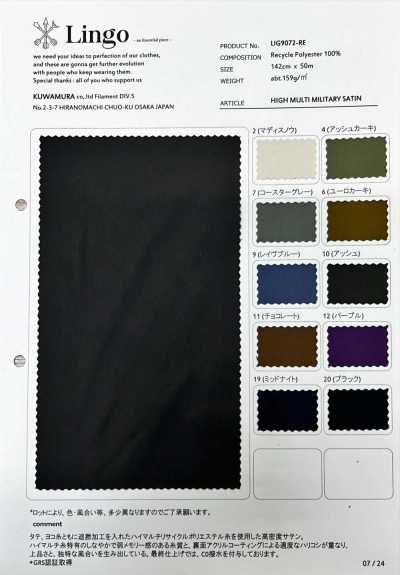
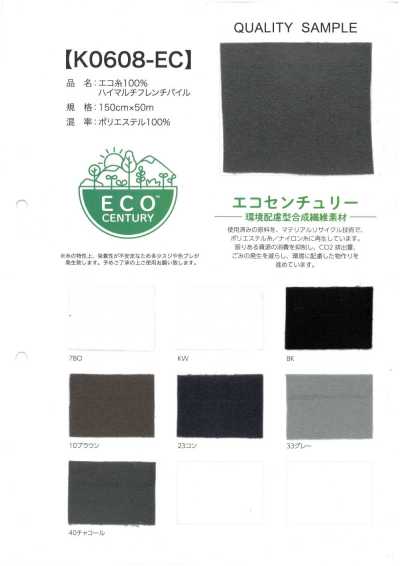
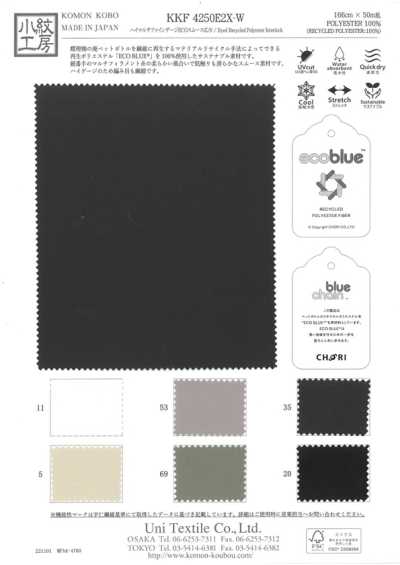
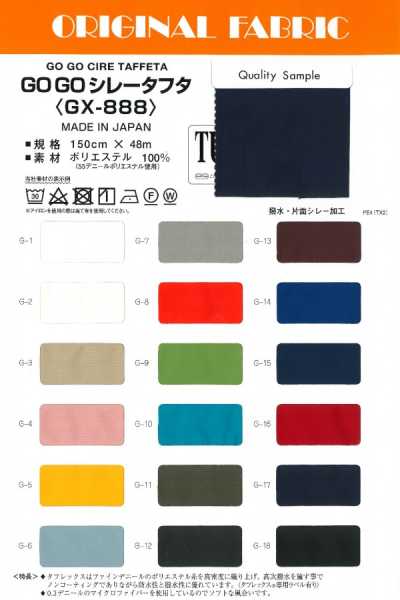
Contents6 sections
Definition and Overview
High-multi refers to a multifilament yarn made up of multiple continuous filaments, where the number of filaments is high relative to the yarn thickness. Because the individual filaments are finer, the yarn surface is smooth and it is easier to achieve a delicate texture.
It is not a specific material name or fabric name, but rather a term that describes the structure of long-fiber yarns, mainly polyester and nylon. The filament count that qualifies as high-multi varies depending on the yarn thickness, material, and the supplier’s notation.
Texture and Appearance Characteristics
Because the individual filaments are finer and more numerous, the yarn generally has a softer, more supple feel. In woven fabrics, the surface grain is fine, and even when density is increased, it is easier to keep the fabric from feeling stiff, so it is used to create expressions that combine lightness and flexibility.
Its luster varies greatly depending on the cross-sectional shape of the raw yarn, whether it is dull, the weave structure, and the dyeing and finishing processes. When combined with low-luster raw yarns such as fully dull yarn, it can create a calm matte appearance.
By weaving at high density, it is used for tightly woven taffeta and similar fabrics. However, water resistance, breathability, and quick-drying performance are not determined by high-multi alone; they must be checked together with density, material, and post-processing.
Main Applications
Because it is suitable for high-density, supple woven fabrics, it is used for outer fabrics in blousons, coats, jackets, pants, and skirts. In light to medium-weight materials, it is also used for shirts, blouses, dresses, and linings that take advantage of its lightweight feel.
High-multi yarns made of nylon or polyester are also seen in lightweight woven fabrics for sportswear and outdoor applications. Whether they are suitable for spring/summer or autumn/winter depends on yarn thickness, weave structure, fabric weight, and backing or quilt batting, so seasonality cannot be judged by high-multi alone.
Selection and Handling Notes
When selecting a fabric, in addition to the high-multi designation, check the material, yarn thickness, filament count, weave structure, density, fabric weight, and finishing processes. It is important to evaluate the desired softness, firmness, matte feel, and durability using actual fabric samples.
Fabrics made of fine filaments may show needle holes or seam puckering more noticeably during sewing. For thin or high-density materials, choose an appropriate fine needle and thread, and test the seam conditions in advance.
Shrinkage, dimensional change, wrinkling, and surface changes caused by friction vary depending on the material and processing conditions. Follow the care instructions for each fabric and the test results for washing methods and ironing temperatures, and before mass production confirm the appearance, dimensions, and seam condition after washing.
Differences from Similar Terms
Multifilament refers to long-fiber yarn in general that is made up of multiple filaments. High-multi, by contrast, emphasizes that the number of filaments is greater than in yarns of a similar thickness.
Microfiber refers to fibers whose individual filaments are extremely fine. High-multi may use fine filaments, but it is an expression focused on filament count, so the two are not synonymous. Fully dull describes a property of raw yarn that suppresses luster, and it is a separate factor from high-multi.
Frequently Asked Questions
What is different about high-multi yarn?
Compared with multifilament yarn of a similar thickness, the difference is that it has a greater number of constituent filaments. Because the filaments are finer, it generally gives the surface a smooth feel and makes it easier to achieve a soft, supple texture.
Does high-multi mean the fabric is waterproof?
Can high-multi fabric be washed at home?
Whether it can be washed depends not on whether it is high-multi, but on the material, dyeing, post-processing, and the product’s accessories and construction. Follow the care instructions for the fabric or product, and during planning and production confirm shrinkage, wrinkling, and appearance changes after washing in advance.