Jacquard Ribbon
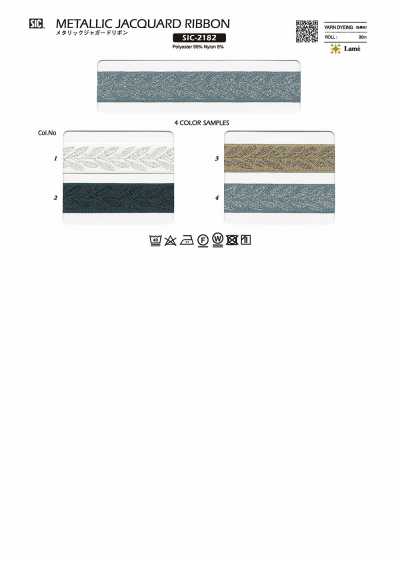
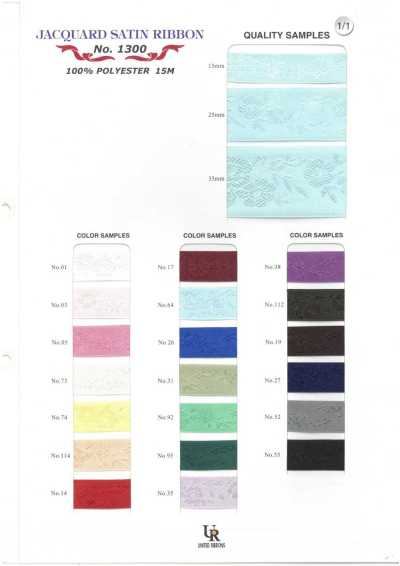
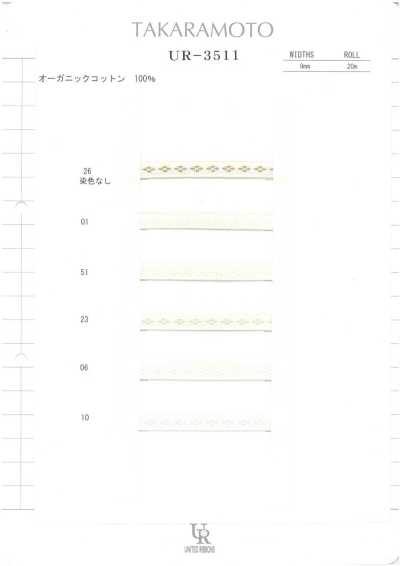
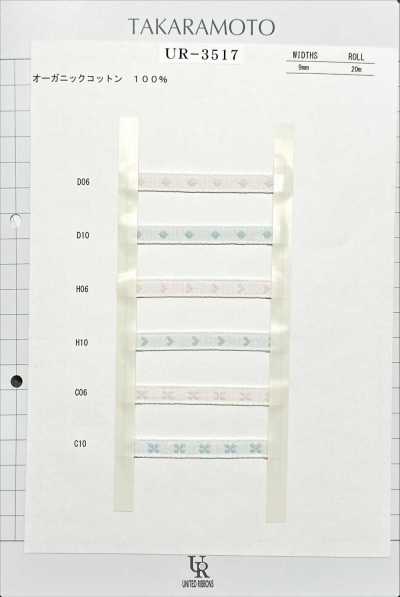
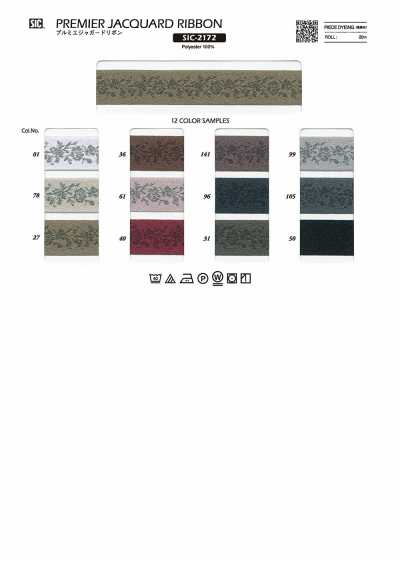
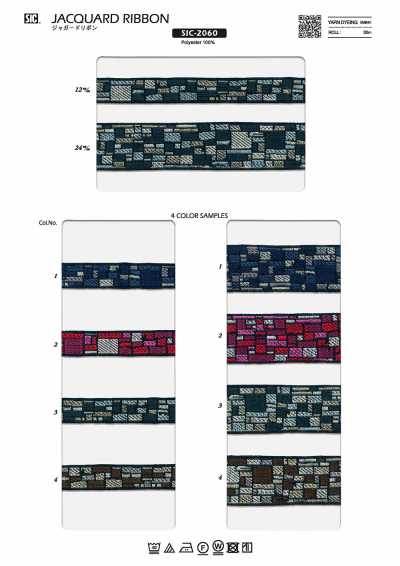
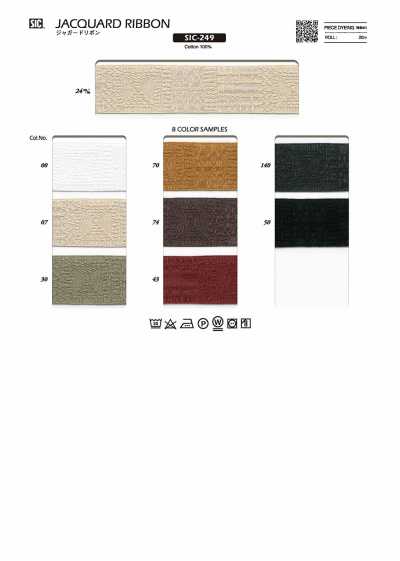
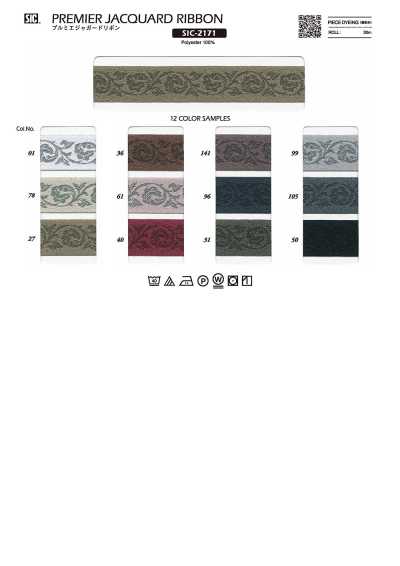
Jacquard ribbon is a narrow woven fabric that expresses patterns, lettering, and shading by weaving multiple yarns separately, and is used as ribbon for decoration and accents on clothing and fashion accessories.
Contents6 sections
Definition and Overview
Jacquard ribbon is a narrow woven fabric made with Jacquard weaving, which finely controls the raising and lowering of warp yarns according to the pattern. Rather than applying a pattern to the surface like a print, it expresses the design through the structure and color combination of the yarns.
It can express floral patterns, geometric patterns, lettering, continuous patterns, and more, and the sheen of the yarn and the shading created by the weave structure are also characteristic. Ribbon and tape are sometimes used almost interchangeably in sales, but the name used varies depending on the application and design.
Materials and Structure
It is mostly a woven fabric, combining yarns that create the ground structure with yarns that express the pattern. Materials include cotton, polyester, nylon, and rayon, and the sheen, softness, strength, and behavior during washing vary depending on the material and yarn thickness.
Jacquard refers to the weaving method and loom control method used to create patterns, and is not a material name. Its basic structure also differs from knit tape made from knitted fabric and braided cord made by intertwining yarns.
How to Read Width and Specifications
Because it is a narrow material, dimensions are generally checked by width. Even with the same pattern, a different width changes the appearance of the pattern, the repeat interval, and how easy it is to sew on, so the pattern size and attachment position should be considered together with the finished product.
For products with repeating patterns, if necessary, check the length of one pattern unit and how it looks depending on the cutting position. Since width may have manufacturing tolerances, it is important to check the actual product before mass production.
- Decide the effective width to be shown, taking into account the part hidden in the seam allowance.
- When continuity is needed on the left and right sides or front and back, check the direction and position of the pattern.
- The weave density and thickness at the tape edge affect the finish when sewing layers together.
Main Applications
In apparel, it is used for decoration at necklines, front openings, cuffs, hems, pocket openings, belt loops, and more. Adding it to a solid textile allows color and pattern to stand out as a design accent, and it also helps create impressions such as ethnic, classic, and casual.
It is also used for bags, hats, shoe accessories, accessories, wrapping, and interior items. When used for handles or other parts that are subjected to continuous load, check separately whether the specification meets the required strength, not only for decorative use.
Selection and Handling Notes
When selecting, check the material, width, thickness, pattern, ground color, and sheen, as well as compatibility with the fabric to be sewn. Although many are relatively less stretchy along the grain direction, stretchiness varies depending on the material and weave, so prototypes are necessary for curved sections and areas that are pulled.
Cut edges may fray, so process them according to the specification, such as placing them in the seam allowance, folding them back, or applying edge finishing. Shrinkage from washing, color fading, and fuzzing or snagging due to friction differ depending on the material, dyeing, and weave, so conduct advance testing together with the base fabric.
When ironing, use a pressing cloth at a temperature suitable for the material, and avoid pressing the patterned surface down too hard. Since it may contain heat-sensitive yarns or glossy yarns, determine mass production conditions only after checking the care label and material handling information.
Frequently Asked Questions
What is the difference between Jacquard ribbon and printed ribbon?
Jacquard ribbon forms the pattern by weaving the yarns separately, so the texture creates raised and recessed areas, sheen, and shading. Printed ribbon is made by printing a pattern onto the surface of the fabric or tape. The ease of fine multicolor expression, the appearance of the reverse side, and resistance to friction vary by product, so compare actual samples.
Does Jacquard ribbon shrink when washed?
Whether it shrinks and to what extent depends on the material, such as cotton, as well as weave density, dyeing, and finishing. When used in products that will be washed in water, it is important to test washing with the base fabric and ribbon combined, and check for shrinkage, waviness, color fading, and seam distortion.
What should I do if the edge of Jacquard ribbon frays?
Because it is a woven fabric, yarns may pull out from the cut edge and fray. Process it according to the application, such as tucking the edge into the seam allowance, folding and sewing it, or applying anti-fray treatment. Methods that melt the edge with heat are limited to materials that can melt, and there is a risk of discoloration or hardening, so advance confirmation is necessary.