Mabe Shell
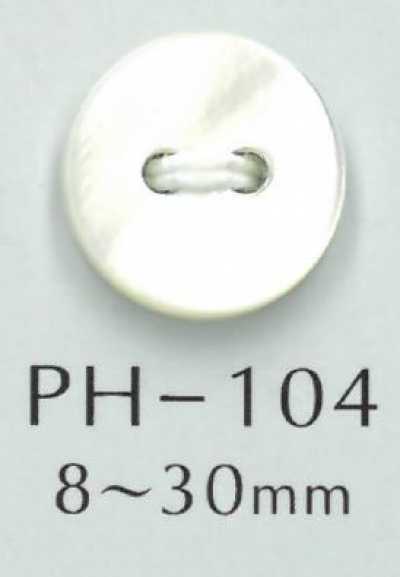
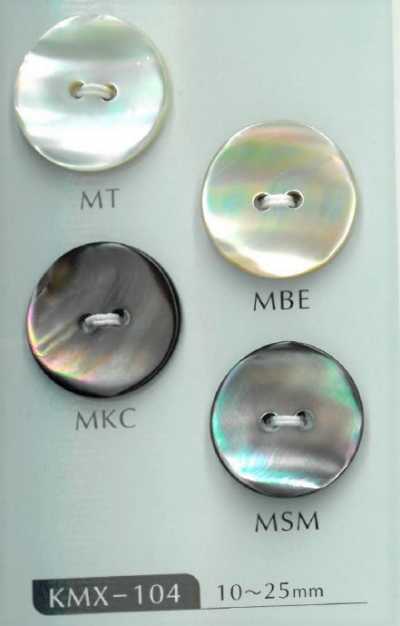
Mabe shell is a natural shell material for shell buttons, made by using the nacre of the Mabe shell and characterized by iridescent luster and unique colors and patterns that vary from piece to piece.
Contents6 sections
Definition and Overview
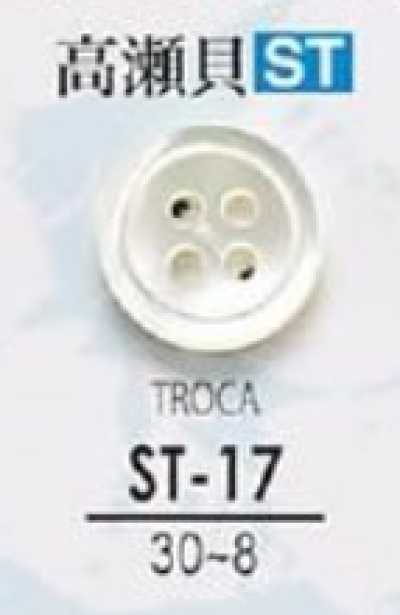
Mabe shell is a shell material processed into buttons using the luster created by its nacre. Depending on the viewing angle and how the light hits it, the appearance can shift between white, silver, bluish, and greenish tones, giving it the unique look of a natural material.
“Mabe pearl” sometimes refers to a half-round cultured pearl made using Mabe shell as the mother shell. Mabe shell buttons, on the other hand, are buttons made by cutting and processing the shell, and the term does not refer to the pearl itself.
Material and Structure
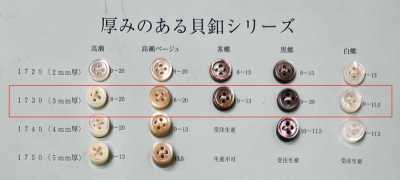
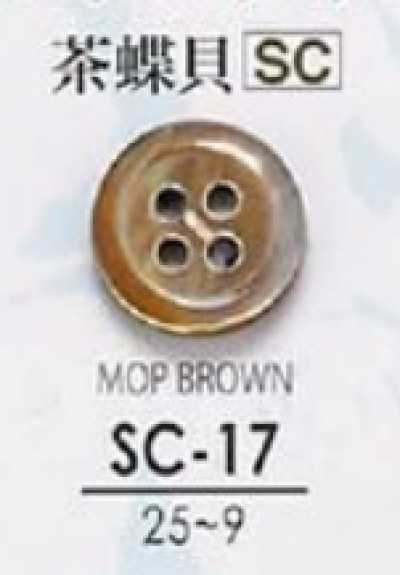
Mabe shell buttons are made by cutting out the part of the shell that contains the nacre layer and polishing it. Because they are a natural material, they may show uneven coloration, layer patterns, small spots, and differences in luster, so no two products are exactly alike. These variations are accepted as design features, or confirmed in advance using samples.
They are often made as flat sew-through buttons, with hole types such as two-hole, four-hole, and cat-eye holes. Shank styles are also available when you want a look that is less visible from the face side and gives more dimension, but the number of holes, hole diameter, and whether a shank is included must be confirmed for each type.
- A sew-through style is a shape sewn on by passing thread through the holes.
- A shank style is a shape sewn on by looping thread around the shank on the back side.
- Thickness and the finish on the back side vary depending on the part of the shell and the processing method.
How Sizes Are Expressed
Button sizes are shown in diameter in mm, and also in lignes. Lignes are a customary unit used for buttons, and generally 1 ligne is approx. 2.54 mm. For non-round shapes, the height and width dimensions, thickness, and shank height are also listed in the specifications.
When selecting, check not only the stated dimensions but also the combination with the buttonhole length, hole position, and fabric thickness. Because shell buttons vary in appearance from lot to lot and piece to piece, it is important to confirm the size and appearance using actual samples before mass production.
Main Applications
Using their luster and natural color tones, they are used on front openings and cuffs for shirts, blouses, cardigans, dresses, jackets, and similar items. They tend to create a light, refined impression and are often used for items made from lightweight to medium-weight fabrics.
When deciding on applications, consider not only the design but also impact during wear, how often the garment will be opened and closed, and the washing method. For coats and other heavy items, or areas that are under continuous strong load, consider the button thickness, sewing strength, and whether a backing button is needed.
Attachment Method and Handling Precautions
For sew-through styles, sew them on by passing button-sewing thread through the holes. Making a slight thread shank between the button and the fabric improves ease of fastening and unfastening, even on thick fabrics. For shank styles, loop the thread around the base of the shank and check strength in positions where snagging is likely.
Although shell is hard, strong impact, excessive tightening, or dropping can cause chipping or cracking. Whether washing, dry cleaning, or ironing is allowed should be decided based on the specifications of the product as a whole and prior testing, not on the button alone. As a basic rule, avoid applying a hot iron directly to the button or exposing it to strong chemicals for long periods.
The luster and color tone of natural shell may be affected by the usage environment, sweat and sebum, detergents, and storage conditions. In mass production, washing tests, dry-cleaning tests, and button-sewing strength tests are performed to confirm whether the product is suitable for the intended care method.
Frequently Asked Questions
What is the difference between Mabe shell buttons and white mother-of-pearl shell buttons?
Both are shell buttons that make use of the luster of nacre, but they come from different shells. The color tone, appearance of luster, layer patterns, and available sizes and thicknesses differ by type, so do not substitute based on the name alone; confirm with actual samples when selecting.
Can Mabe shell buttons be machine washed at home?
Whether home washing is possible is determined not only by the shell buttons themselves but also by the garment fabric, sewing specifications, detergent, and washing conditions. Because shell can chip from impact, consider methods that reduce physical shock, such as turning the garment inside out and using a laundry net.
Can Mabe shell buttons be ironed?
Avoid applying a hot iron directly to shell buttons. To reduce the effects of heat and pressure, use a pressing cloth around the buttons or avoid them with the tip of the iron. The final handling should follow the results of product-specific quality testing.