Jacquard Card
A jacquard card is a perforated card used on a Jacquard loom to control the woven pattern and weave structure by instructing the raising and lowering of the warp yarns. It is a weaving material used for this purpose.
Contents6 sections
Definition and Overview
A jacquard card is a perforated card attached to a Jacquard loom. The position and arrangement of the holes tell the machine which warp yarns to raise and lower, allowing complex patterns and structures to be woven. It is not the name of the fabric itself or of the woven structure.
A set of jacquard cards is created based on the design drawing and weave draft. By linking the cards in sequence and cycling them, the pattern repeat, which is the basic unit of the design, is repeated. Today, electronically controlled Jacquard looms are also widely used, and there are weaving methods that do not use jacquard cards.
Appearance and Role
The jacquard card itself is a weaving information medium made by punching holes in paper or similar material, and it is not a material with the texture, comfort, or washability required for clothing. The luster, three-dimensional effect, thickness, and drape of the woven fabric are determined not only by the jacquard card but also by the combination of yarn, density, weave structure, and finishing.
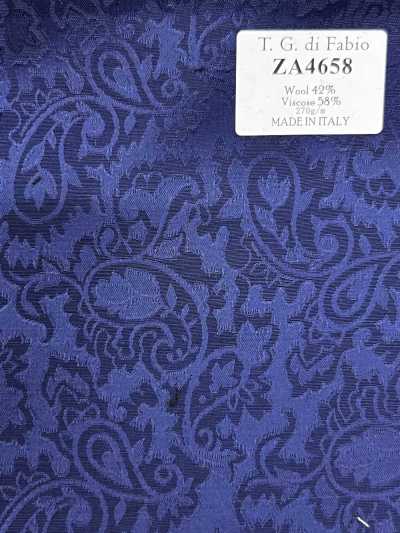
Jacquard card control is characterized by the ability to move many warp yarns individually. It is used in Jacquard weaving to express floral patterns, geometric patterns, ground patterns, lettering patterns, and more, allowing woven patterns to be designed differently from prints.
Main Applications
Jacquard cards are used in the process of weaving Jacquard fabrics for apparel, fashion materials, and interior use. They are involved in applications that emphasize woven patterns, such as outer fabric, lining, necktie fabric, dress fabric, obi fabric, curtain fabric, and upholstery fabric.
There is no seasonality inherent to the jacquard card itself. From lightweight fabrics for spring and summer to heavier fabrics for autumn and winter, a wide range of fabric designs can be achieved by changing the fiber used, yarn thickness, weave structure, and density.
Selection and Handling Notes
In weaving operations that handle jacquard cards, the specification of the target loom, the number of needles, card dimensions, hole standards, and pattern repeat are confirmed in advance. Because changes to the design drawing may require remaking the jacquard cards, it is important to check the pattern, weave structure, color arrangement, and repeat position with a woven sample before mass production.
Jacquard cards may suffer reading errors due to moisture, water exposure, bending, or chipped holes. Store them flat in a dry place and manage them so that the order is not disturbed. Shrinkage and washing methods for the fabric are confirmed based on the material composition and finishing of the finished fabric, not the jacquard cards.
When cutting and sewing Jacquard fabric, check the pattern direction, repeat, front and back, and alignment of symmetrical patterns. In structures with long floating yarns, care must also be taken to prevent snagging and yarn pulls.
- Confirm compatibility with the loom specifications.
- Check the pattern and weave structure with a woven sample before mass production.
- Manage the card order, missing cards, bending, and moisture.
- Set the fabric consumption for the finished fabric with pattern matching in mind.
Differences from Similar Terms
Jacquard refers to a method of weaving complex patterns and structures by selecting many warp yarns, or to the fabric woven by that method. A jacquard card is the card used to instruct that selection in a conventional Jacquard loom. In other words, Jacquard refers to the weaving technique or the fabric, while a jacquard card is the material used for control.
Patterned woven fabric is a general term for woven fabrics that express designs through changes in weave structure. A jacquard card is one of the means used to realize Jacquard weaving, including patterned woven fabrics, and the presence of a jacquard card does not in itself indicate the material, thickness, or type of pattern of the fabric.
Frequently Asked Questions
Is a jacquard card a type of fabric?
A jacquard card is not a type of fabric; it is a perforated card that instructs warp movement in a Jacquard loom. Fabrics woven using jacquard cards are called Jacquard fabric or patterned woven fabric. Material, texture, and washability are judged by the yarn, weave structure, and finishing of the woven fabric.
What is the difference between woven fabric using jacquard cards and print?
In woven fabric using jacquard cards, patterns are expressed by changing how the warp yarns and weft yarns interlace. Print, on the other hand, is a finishing process that adds color or patterns to the surface of the fabric. Woven patterns may show different appearances depending on the front and back or the viewing angle due to the weave structure, and their formation differs from that of prints.
Are jacquard cards necessary even for electronically controlled Jacquard looms?
On electronically controlled Jacquard looms, pattern data can be read electronically and warp yarns can be controlled without using jacquard cards. However, the term jacquard card is sometimes used in conventional weaving technology, documentation, and workplace conversations. Please check the specifications of the equipment in use.