Needle Punching
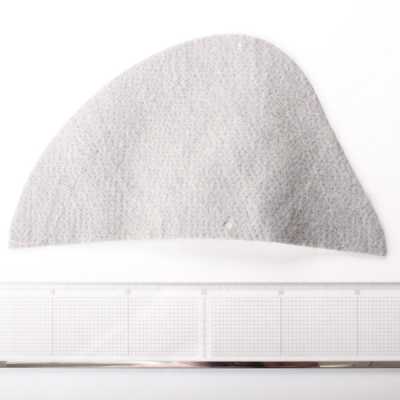
Needle punching is a nonwoven fabric manufacturing method in which numerous needles are repeatedly inserted into fiber batt or fiber layers to entangle the fibers and bond them into a single sheet without using adhesives or weaving or knitting.
Contents6 sections
Definition and Overview
Needle punching is a process that physically entangles fibers by repeatedly inserting special needles with barbs on the surface into the fibers. The fabric formed in this process is generally called needle-punched nonwoven fabric, or needle felt.
Raw materials include polyester, wool, nylon, and others, and it is not limited to a single material. Therefore, needle punching is not a material name, but a term that primarily indicates a method of bonding fibers.
Texture and Function
Because the fibers are entangled in a three-dimensional way, it is generally bulky and has an easy-to-create sense of thickness and warmth. Depending on the type of fiber, fabric weight, needle punching conditions, and surface finish, the texture can range from a soft felt-like feel to a firm, tightly compacted feel.
Those finished with a brushed surface can express a warm appearance similar to wool knit. On the other hand, they do not have warp and weft like woven fabrics, nor the regular structure of knit stitches.
- In thick fabrics, it is easy to achieve volume and cushioning.
- Depending on how the fibers are entangled and the surface fuzz, pilling may occur easily at the edges.
- Breathability, abrasion resistance, and warmth retention vary greatly depending on the material composition and processing.
Main Applications
In apparel, it is used for coats, jackets, vests, bottoms, bags, and more. Because its thickness and warmth are easy to take advantage of, it is often adopted in fall and winter collections.
It is also used for interiors, interlinings, cushioning materials, sound-absorbing materials, and more. However, the strength, flame retardancy, wash durability, and other requirements differ by product, so it is important not to judge performance based on the material name alone.
Selection and Handling Precautions
When selecting, check the blend ratio, fabric weight, thickness, surface fuzz, stretch, and tendency of the edges to fray using an actual sample. For apparel use, checking irritation on the skin-facing side, seam thickness, and the effect on the silhouette makes it easier to choose a material that matches the intended design.
Shrinkage, pilling, and surface changes caused by washing vary depending on the type of fiber and processing conditions. Follow the care label, and before mass production, conduct a test wash to confirm dimensional changes and appearance changes. Texture may also change due to heat or strong friction.
During cutting, fuzz may shed, and during sewing, adjust the needle, thread, presser foot pressure, and seam finishing according to the thickness. Because some materials are prone to seam sinking or stretching during feeding, confirm the appearance and strength of the seams with a prototype.
Differences from Similar Terms
Felt broadly refers to sheet-like materials made by entangling fibers. Needle punching is one such method of entanglement, a process that mechanically interlocks fibers with needles. It differs from felt made by shrinking wool through heat, moisture, or friction.
Punch needle refers to a handicraft technique or tool in which thread is inserted into a base fabric to create looped patterns. Although the names are similar, the purpose and process differ from needle punching, which manufactures nonwoven fabric, so it is necessary to distinguish them when searching for materials.
Frequently Asked Questions
Does needle punching shrink when washed?
The degree of shrinkage and appearance change depends on the type of fiber, blend ratio, needle punching condition, and post-processing. It is not always washable, so check the care label. When turning it into a product, confirm dimensional changes, pilling, and changes in firmness through a test wash.
What is the difference between needle punching and fleece?
Needle punching is mainly a nonwoven manufacturing method that entangles fibers with needles. Fleece generally refers to a material made by brushing a knit fabric. Both may appear to have a warm surface, but the base structure, stretch, edge behavior, and handling during sewing are different.
Is needle punching the same as punch needle handicraft?
No, they are not the same. Needle punching is a process of entangling fiber layers with needles to make nonwoven fabric. Punch needle, on the other hand, is a handicraft technique that uses a special needle to insert thread into a base fabric and create decorations such as loops. When searching or placing orders, confirm the intended use.