Enamel Leather
Enamel leather is a material made by applying a glossy resin layer to the surface of a leather or leather-like base, giving it a mirror-like appearance and a relatively easy-to-clean surface.
Contents6 sections
Definition and Overview
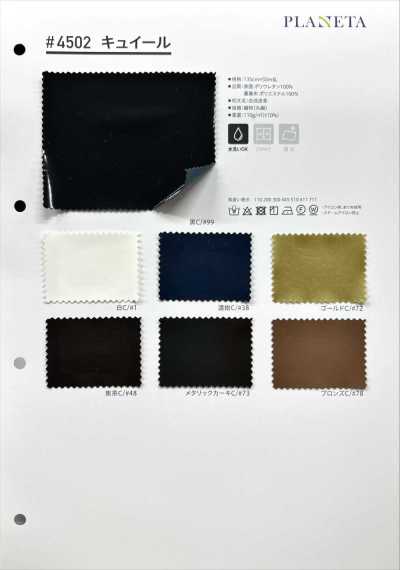
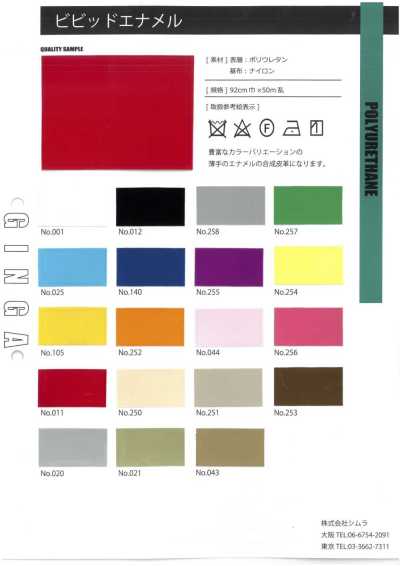
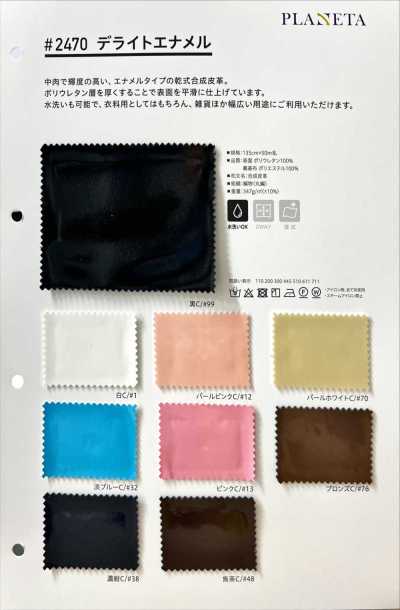
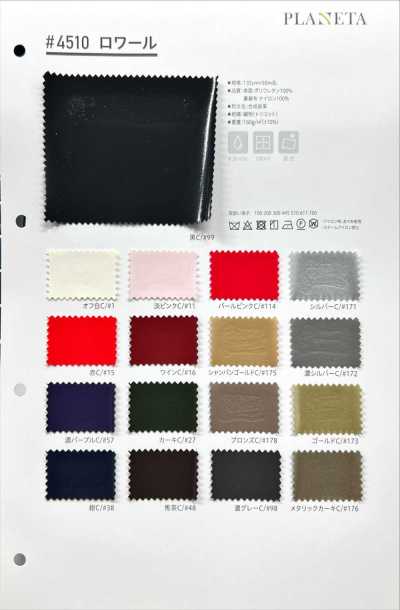
Enamel leather is a material with a clear or colored resin film formed on the surface to give it a strong gloss. Originally, it refers to finished natural leather, but in the apparel and fashion materials field, enamel-finish materials made from synthetic leather or artificial leather are also widely called by this name.
Rather than a material name, it is sometimes used as a term describing the surface finish and appearance. For that reason, in planning and ordering, it is important to check in the specification sheet whether the base material is natural leather or synthetic leather, and what type of surface resin is used.
Features
Its greatest feature is a smooth surface that strongly reflects light, with a hard and glamorous impression. It shows color vividly, and black and dark colors can create a formal, sharp look. On the other hand, depending on the material, wrinkles may appear easily at flexed areas, and scratches may also stand out.
Because of the surface film, water and light dirt may be less likely to penetrate than with textile materials or unfinished leather. However, breathability and moisture absorption tend to be low, and care is needed regarding hardening in low temperatures, stickiness in high heat and humidity, and deterioration of the resin layer.
- The degree of gloss, color, thickness, and firmness vary by material.
- Elasticity and flexibility depend on the combination of the base material and the surface resin.
- Light-colored items may show color transfer or yellowing, while dark-colored items may show abrasion marks and fingerprints.
Main Applications
In addition to fashion accessories such as shoes, bags, belts, and wallets, it is used for jackets, skirts, dresses, and as accents or decoration in stage costumes. Because it stands out even in small areas, it is also suitable as an accent material for piping, pocket openings, collars, and cuffs.
It is often chosen for formal, dress, and costume applications where its strong gloss can be effectively used. It is not a seasonal material, but when used in clothing, items are designed with consideration for stuffiness, rubbing sounds during wear, and stiffness in low temperatures.
Selection and Handling Notes
When selecting it, first distinguish whether it is natural leather or synthetic leather, then check the thickness, firmness, flexibility, surface gloss, and back-side specification. For apparel use, it is reassuring to evaluate in advance whether it is likely to crack or wrinkle under the required range of movement by actually bending it, for example.
In general, machine washing is often unsuitable, and the care label and the manufacturer's instructions should be followed. Dirt should be gently wiped off with a soft dry cloth or a firmly wrung-out cloth, and use of solvents, strong friction, and products containing alcohol should be avoided. For storage, avoid high temperature and humidity, direct sunlight, and close contact with other materials.
When cutting, because needle holes and scratches can easily remain on the surface, avoid using straight pins and use temporary fixing clips instead. During sewing, check for abrasion caused by the presser foot and feeding issues, and adjust the needle, thread, presser foot, and stitch length with test stitching. In principle, ironing should be avoided, and even when necessary, use a low temperature with a pressing cloth and check on an inconspicuous area first.
Differences from Similar Terms
Synthetic leather is a general term for materials that reproduce a leather-like appearance by layering resin on a base such as fabric. Enamel leather may refer to the high-gloss surface finish among these materials. Therefore, enamel leather is not always natural leather.
Artificial leather generally refers to leather-like materials that use a nonwoven base or similar structure made closer to the fiber structure of natural leather. Suede is a matte material with a brushed surface, and its appearance and care method differ greatly from the smooth, mirror-like enamel leather.
FAQ
Can enamel leather be washed?
In many cases, it is not suitable for home washing. This is because the leather base and surface resin may be affected by moisture, heat, detergent, and friction, causing hardening, stickiness, cracking, or changes in gloss. Always check the product care label and the handling instructions for each material.
What should be noted when sewing enamel leather?
Because needle holes tend to remain, it is a material that is difficult to resew. Straight pins should be limited to seam allowances where they will not be noticeable, or temporary fixing clips should be used. Since scratches from the presser foot and unstable feeding can also occur, check the seam, thread tension, and feeding on a scrap piece before actual production.
Are enamel leather and synthetic leather the same?
They do not have the same meaning. Synthetic leather is a broad category of leather-like materials, while enamel leather is a term for a glossy surface finish. Because many synthetic leather enamel-finish materials are also available, it is necessary to check the base material and surface processing separately when ordering.