Petersham
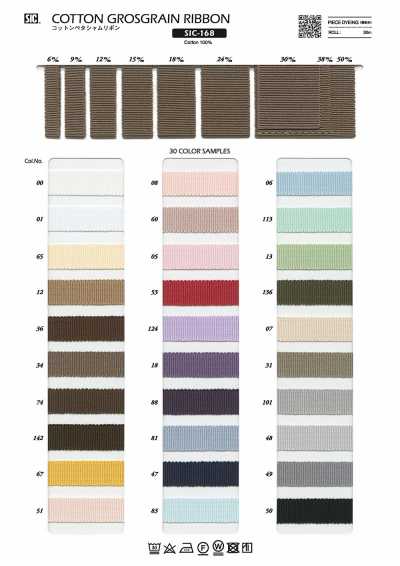
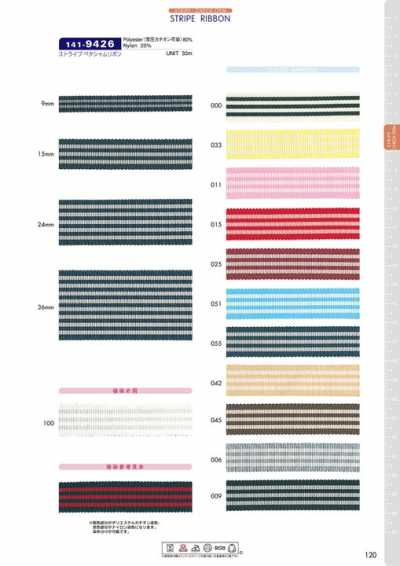
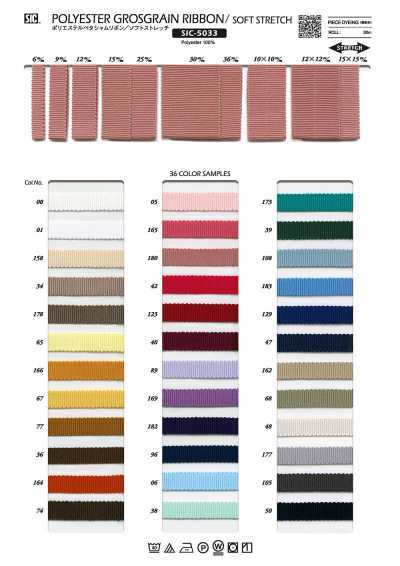
Petersham is a narrow woven ribbon with fine crosswise ribs on the surface, used for garment decoration, edging, and the inside of hats.
Contents6 sections
Definition and Overview
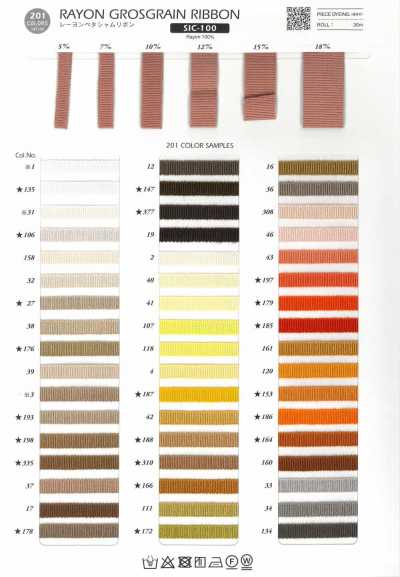
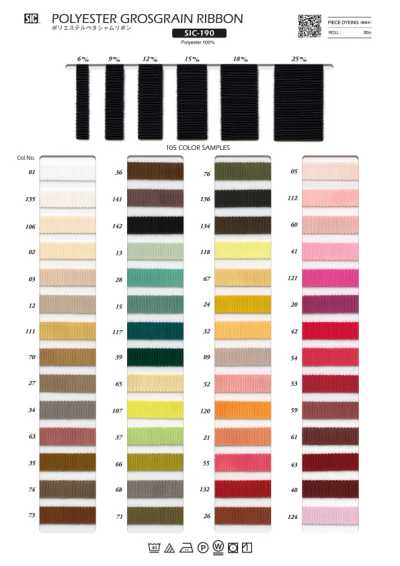
Petersham is a woven ribbon characterized by fine crosswise ribs created by the weft threads appearing on the surface. It is generally flat and tape-like, with moderate thickness and body, and is used as a component material that serves both decorative and reinforcement purposes. In domestic distribution, it may be handled with the name grosgrain ribbon listed alongside it.
In English-speaking markets, the term Petersham refers to a ribbon with a finely wavy edge that gives it some ease and makes it easier to follow curves, and it is used in contrast to the stiffer, straighter grosgrain. In Japan, however, the two are sometimes treated as synonymous or as close terms, so it is important to check not only the name but also the actual edge and flexibility of the product.
Materials and Structure
Petersham is a woven fabric, not a knitted item or a braided cord. The basic structure has ribs visible across the width, and the appearance of the ribs, thickness, and stiffness vary depending on the thickness and density of the warp and weft yarns, as well as the finishing.
Materials include rayon and cotton. Rayon is characterized by a subdued sheen and supple drape, while cotton has a natural texture. Even with the same Petersham, absorbency, resistance to friction, dimensional change after washing, and color development differ depending on the material.
How Width Is Expressed and Main Applications
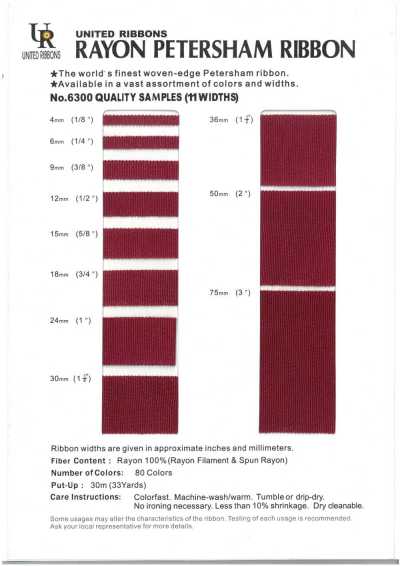
Width is generally expressed in millimeters. It is selected by considering the visible finished width, the width hidden in the seam allowance, and compatibility with the inside diameter of hardware or the opening it passes through. The thickness of the ribs and the shape of the edge also affect the appearance, so it is important to check them together with the width dimension.
In apparel, it is used for hat grosgrain, around the waist, decoration at the neckline and front opening, loops, and edging. In children's clothing, costumes, bags, and accessories, it is also used for ribbon ties, accent tape, and decorative details that make use of stitching.
- For uses along curves, check the wavy edge, ease of bending, and how wrinkles appear.
- For sewing applications, check the front and back sides, how easily the edge frays, and the required strength.
- For applications threaded through hardware, check whether the measured thickness and width fit the hardware.
Selection and Handling Precautions
Select the material, width, fineness of the ribs, body, color, and washing conditions according to the intended use. When using it on curved sections, bend it in practice and check the waviness of the edge and any surface wrinkles. If garment washing or product washing is planned, test the fabric and ribbon together to check shrinkage, color fading, and color transfer.
Because the cut edges of woven ribbon can fray, apply treatment according to the specifications, such as folding the edge in and sewing it down or finishing the edge. Depending on the material, heat-finishing the edge may not be suitable, so confirm in advance whether heat cutting or heat treatment is possible. When ironing, use a pressing cloth and adjust the temperature according to the material label and finish.
Differences from Similar Terms
Grosgrain ribbon is sometimes used as a general term for woven ribbon with crosswise ribs. The distinction from Petersham varies by distribution channel and region, but in a narrower sense, Petersham refers to ribbon with an edge structure that makes it easy to follow curves.
Satin ribbon differs in that its surface is smooth and it tends to have a glossy appearance, while velvet ribbon differs in that it has a deep texture created by pile. Petersham is suited to a classic, practical look that makes use of its crosswise ribs and moderate body.
Frequently Asked Questions
Are Petersham and grosgrain ribbon the same?
In Japan, Petersham is often sold and referred to as grosgrain ribbon, and in practice they are treated as similar. However, Petersham in the narrower sense refers to a ribbon with some ease in the edge that makes it easier to follow curves. For curved applications, check the edge shape and flexibility rather than relying on the name.
Can Petersham ribbon be washed?
Whether it can be washed depends on the material, dyeing, finishing, and the combination with the fabric it is sewn onto. With cotton and rayon, washing with water may cause shrinkage, color fading, and changes in texture. Before mass production, carry out washing tests including the main fabric, and align the result with the product care label.
Do the edges of Petersham ribbon fray?
Because it is a woven fabric, the cut edges may allow yarns to pull out and fray. The basic approach is to tuck the edge into the seam allowance, fold it back and sew it, or apply an edge finish suitable for the application. Heat treatment can cause discoloration or hardening depending on the material, so always test on a scrap piece first.