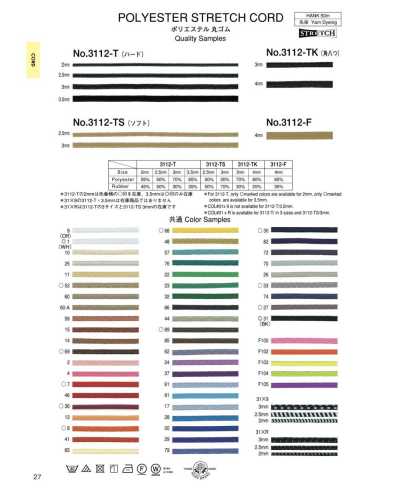
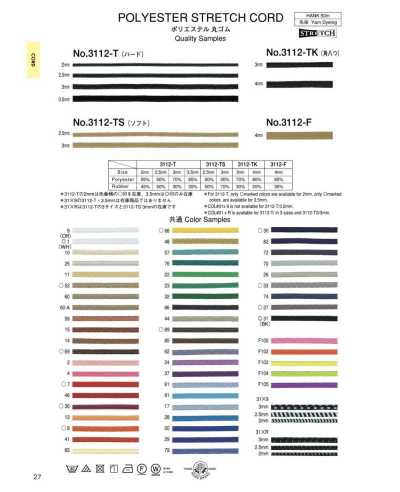
Picot Elastic
Picot elastic is a narrow elastic tape that has picots, small loop-like decorative edges, on one or both sides, combining stretchability with decorative edging.

Contents6 sections
Definition and Overview
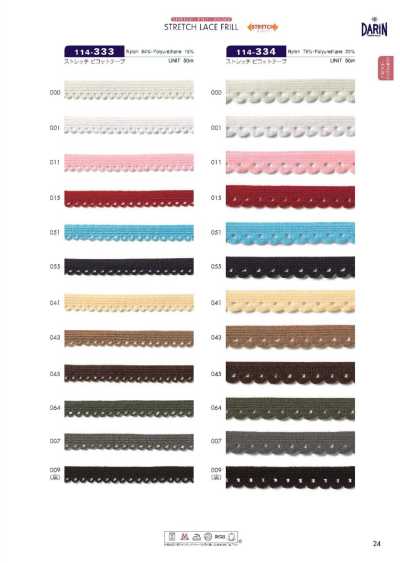
Picot elastic is a stretch tape with a series of small loops or scalloped decorative edges along the tape edge. In addition to its stretch function for following the body, it also finishes seam allowances and fabric edges neatly while adding a soft look.
Picot refers to the decorative edge shape, so picot elastic is not a material name. Many products have the elastic portion wrapped in surface fibers, and the visible surface gloss, softness, and feel against the skin vary by product.
Materials and Structure
Picot elastic is generally made by knitting or braiding elastic yarn or polyurethane-based elastic yarn as the core with yarn such as polyester or nylon. The edge picots are often formed by the knitted structure.
Compared with tapes made with a woven construction like elastic webbing, it differs in surface texture and edge treatment. Many picot elastic products are thin and supple, but depending on the structure, yarn selection, and thickness, there are differences in compression and recovery.
- The type of surface yarn affects luster, dyeability, and feel against the skin.
- The type and amount of the elastic portion affect force during stretch and recovery.
- The size and direction of the picots affect appearance and sewing position.
Width and Stretch Check
Width may be shown as the total width including the picots or as only the tape body. During planning, do not judge from the listed dimensions alone; decide whether the picots will be shown on the front side or sewn in, then confirm the effective width of the actual product.
Stretch may be shown as elongation rate, but even with the same elongation rate, the force needed to stretch it, namely elongation stress, and the ability to return after stretching are not the same. It is important to match the wearing area with the fabric's stretch and confirm the finished dimensions through prototyping.
Main Uses and How to Choose
It is used for necklines, cuffs, hems, and armholes in underwear, lingerie, camisoles, nightwear, and children's clothing. In specifications that show the picot at the edge, finishing and decoration can be done at the same time as sewing, so it is also used for lightweight garments.
When selecting, check the width, color, gloss, and picot shape required for the application, as well as the difference in stretch from the fabric. For applications that touch the skin directly, evaluate the edge hardness, fluffing, and whether the sewing thread or seam will touch the skin.
- For necklines and armholes, choose something that follows movement easily.
- For hems and seam lines, choose one with elongation stress that will not cause the fabric to ripple.
- When showing the picot on the front side, check the left-right appearance and how the seam allowance is concealed.
Handling and Differences from Similar Terms
If it is stretched too much during sewing, the finished product may shrink or ripple. On the other hand, if it is not stretched enough, the necessary stretch will not be obtained during wear. Before sewing, it is basic practice to divide the section evenly, distribute it uniformly, and test sew.
With repeated exposure to heat, ultraviolet light, sweat, detergent components, and aging, the elastic portion may gradually deteriorate and its recovery may decrease. Washing and drying conditions for the finished product should be confirmed not only for the tape alone but also for the fabric it is combined with and the sewing specifications.
Picot tape broadly refers to decorative tape with a picot-shaped edge and is not necessarily elastic. Elastic webbing refers to flat stretch tape in general, whereas picot elastic is characterized by its picot appearance and stretchability.
Frequently Asked Questions
Which side should picot elastic be sewn on?
Generally, it is used with the picots facing outward from the front edge, but depending on the specification, it may be sewn into the seam allowance to keep the decoration subtle. Confirm by test sewing whether the picot peaks come out evenly to the outside before deciding on mass-production conditions.
Should the length of picot elastic be the same as the dimension of the part it is attached to?
Whether to make it the same length or slightly shorter depends on the area, the fabric's stretch, the elastic's elongation stress, and the desired fit. Do not decide by a fixed ratio; check rippling and tightness through prototyping combined with the actual fabric.
Does picot elastic stretch out after washing?
Repeated washing, drying, heat, ultraviolet light, sweat, and similar factors may reduce the recovery of the elastic portion. In particular, high-temperature processing and strong chemicals can have an effect, so confirm residual stretch and appearance changes through the supplied care conditions and product washing tests.
- Search products for "Picot elastic"
- Products with material "Polyester"
- Products with material "Nylon"
- Products with material "Polyurethane"
- Products for style "For Innerwear"
- Products for style "For Lingerie"
- Products for style "For Nightwear"
- Products for style "For Kids"
- Browse Elastic Band products