


Openwork Knitting
Openwork knitting is a knit fabric that expresses regular sheerness patterns and a light appearance through a knitting structure that creates stitch transfers and holes.
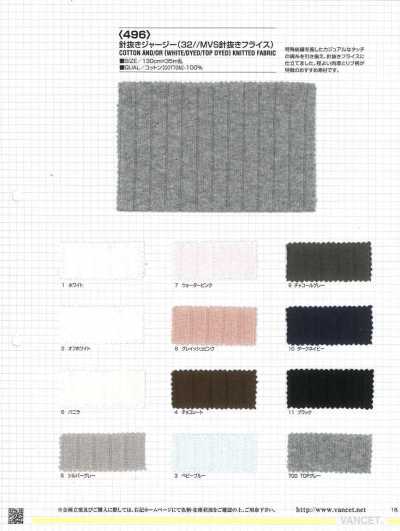
Contents6 sections
Definition and Overview
Openwork knitting is a knitting method that intentionally places holes and gaps in the knitted fabric to create a pattern. By varying the size and placement of the holes and combining them with the base structure, it can produce a wide range of looks such as geometric patterns, floral patterns, and vertical stripes. Pointelle is used as one of the names for openwork knitting.
The holes are created by techniques such as transferring stitches to adjacent needles. Because this is a term for the knitting structure and design rather than a material name, the texture and function vary greatly depending on the yarn used, such as cotton, wool, or synthetic fiber.
Features
Because the fabric has openings, it generally offers good breathability and gives a light, delicate, and feminine impression. On the other hand, large open areas or light-colored thin fabrics can make the skin or undergarments easily visible, so when designing, consider layering, linings, or pairing with innerwear.
Openwork patterns add shadow and dimension to a flat knitted fabric. However, in structures with many stitch transfers, snags may cause stitch distortion or runs to stand out. Durability and stretch should be checked according to the yarn type, knitting density, and pattern size.
Main Applications
Openwork knitting is used for spring and summer knit pullovers, cardigans, vests, knit dresses, and similar items. Taking advantage of its breathability and decorative qualities, it is also suitable for layered pieces worn over innerwear.
Fine openwork patterns are also used in underwear, nightwear, and baby and kids' clothing. When warmth retention is a priority, it can also be used for autumn and winter knits by selecting materials such as wool or by designing patterns with more restrained openwork sections.
- Cardigans, pullovers, vests
- Dresses, skirts
- Innerwear, nightwear
- Baby and kids' clothing
How to Choose and Care for It
When selecting, check not only the appearance of the pattern but also sheerness, knitting density, stretch, blend ratio, and care instructions. Before production, confirm with samples how the color of what is worn underneath will show through, whether the pattern will distort at seams, and whether the holes will open too much when worn.
For washing, follow the care label and use a laundry net if necessary to avoid snags and loss of shape. Fabrics that include natural fibers in particular should be checked in advance for shrinkage and dimensional changes caused by washing. When drying, flat drying may be appropriate so the fabric does not stretch under its own weight.
During sewing, if cut edges or seam allowances fall over the holes, stitching may become difficult and fraying may occur more easily. Avoid damage from seam rippers or coarse needles, choose needles and sewing thread suited to the knitted fabric, and test conditions that prevent stretching or puckering while sewing.
Differences from Similar Terms
Eyelet knitting often refers to openwork knitting with holes arranged in a regular pattern, and is treated as a type of openwork knitting. However, the scope of the term may differ depending on the planning, region of production, or trading partner.
Lace shares the characteristic of transparency, but openwork knitting expresses patterns through knit construction, whereas lace is a general term for decorative fabrics made by various methods. Mesh often refers to a net-like structure and is not necessarily openwork knitting that creates patterns.
Frequently Asked Questions
Is openwork knitting only a summer material?
It is a knitted fabric often used for spring and summer clothing because of its breathability. However, warmth retention and thickness vary depending on the material, yarn thickness, knitting density, and amount of openwork pattern. Items made with wool or similar materials are also used for layered knitwear in autumn and winter.
Does openwork knitting shrink when washed?
The degree of shrinkage varies depending on the material, such as cotton or wool, knitting density, finishing, and washing method. Because knitted fabrics are prone to dimensional changes from moisture and friction, if the item is to be commercialized, check the shrinkage rate and shape retention through washing tests and set care instructions accordingly.
What is the difference between openwork knitting and lace?
Openwork knitting is a knitting structure that creates holes and patterns by manipulating stitches. Lace is a general term for decorative, transparent fabrics that includes knitting, weaving, embroidery, and more. They may look similar, but the production method, stretch, and handling during sewing are different.
- Search products for "Openwork Knitting"
- Products for style "For Innerwear"
- Products for style "For Lingerie"
- Products for style "For Shirts/blouses"
- Products for style "For Skirts And Dresses"
- Products for style "For Nightwear"
- Products for style "For Kids"
- Products for style "For Knits/cut-and-sewn Garments"
- Browse Fabric products





