Top Dyeing
Top dyeing is a dyeing method in which fibers are dyed while they are in a loose, opened state before spinning, then mixed and spun into yarn.
Contents6 sections
Definition and Process
Top dyeing is a method in which raw fibers are dyed at the stage where they have been opened and made easier to mix. After dyeing, the fibers are mixed with different colors or types as needed, spun into yarn, and then processed into woven fabric or knit.
It is used especially in spinning that uses short fibers such as wool. Because colors can be blended at the fiber stage, it can give even single-color fabric a sense of depth and a natural uneven appearance.
Texture and Visual Characteristics
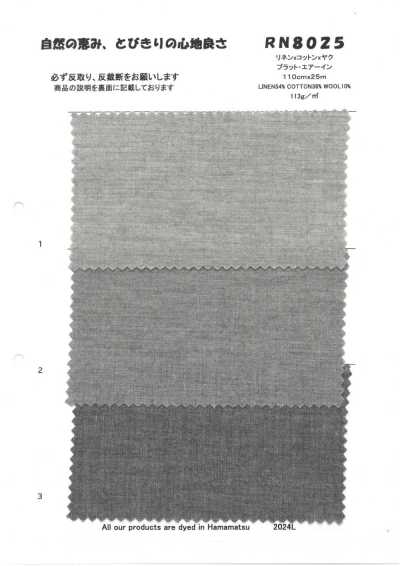
By blending fibers dyed in different colors, multiple colors are mixed within the yarn. As a result, fine specks of color and a heathered appearance appear on the surface, making it easy to express a deep melange look.
Texture changes greatly depending on the type of fiber, spinning method, twist, weave or knit structure, and finishing process. Top dyeing alone does not determine softness, warmth, durability, or other functions.
Main Applications
It is used for wool-like fabric, tweed, woolen yarn, knits, and more that make use of a melange or mixed-color look. It is often seen in autumn and winter items such as jackets, coats, sweaters, cardigans, and scarves, where material texture and color depth are emphasized.
On the other hand, top dyeing is not a name for the fabric structure or the item itself. Even with the same top dyeing, appearance and applications differ from light fabrics to heavy fabrics depending on fiber composition, yarn count, density, and finishing treatment.
Selection and Handling Notes
When planning, do not judge the desired melange effect by color swatches alone; check the actual yarn or fabric sample. Because the appearance changes depending on the color and ratio of the fibers mixed, as well as the lot, it is important to confirm the color tone with a lab dip or prototype before full production.
Shrinkage and washing method cannot be determined by the dyeing stage alone. Check the material, spinning, weaving or knitting, finishing specifications, and care label, and if necessary, apply washing and relaxation treatment before cutting. In sewing, consider the appearance of the melange effect and also check color differences and direction differences between parts.
- With a melange effect that has light and dark tones, the appearance may change depending on the cutting location.
- For additional production, confirm the possibility of lot-to-lot differences even with the same color name.
- Check washing fastness and rubbing fastness for each fabric specification, including the material, dye, and processing.
Differences from Similar Terms
Top dyeing is a name often used with nearly the same meaning as top dyeing. Top refers to a bundle of fibers handled in the spinning process, and in practice it may also be called sliver dyeing or loose fiber dyeing.
Yarn dyed is used as a general term for methods in which yarn or fibers are dyed before weaving or knitting. Piece dyed is a method in which fabric is dyed after it has been woven or knitted. Top dyeing is included in yarn dyed, but differs in that the dyeing stage is fiber before spinning, not yarn.
Frequently Asked Questions
What is the difference between top dyeing and melange yarn?
Top dyeing is a term for the processing stage in which fibers are dyed before spinning. Melange yarn refers to yarn with an appearance made from fibers or yarns of different colors mixed together. Melange yarn can be made by top dyeing, but that is not the only way to make it.
Is top-dyed fabric prone to shrinking?
Shrinkage cannot be judged from top dyeing alone. The shrinkage rate depends on fiber composition, spinning method, weave or knit structure, finishing treatment, and washing conditions. It is important to check the fabric specification shrinkage rate and care label, and to carry out a washing test before mass production.