Reflective Yarn
Reflective yarn is yarn equipped with retroreflective functionality that readily returns incident light toward the light source, used to improve visibility in dark places and for design expression.
Contents6 sections
Definition and Overview
Reflective yarn is yarn that uses retroreflective properties, which readily return light toward the light source when it receives light such as car headlights. It is used in cords, elastic bands, tape, and other products to supplement visibility at night or in dark places, as well as for daytime appearance.
Unlike ordinary reflection, which reflects light in a fixed direction like a mirror, retroreflection has the property of making light easier to see from the side where it is illuminated. However, how it appears varies depending on the relative positions of the light source and observer, the angle, distance, and surrounding brightness.
Materials and Twist / Structure
The reflective function may be provided by micro glass beads or retroreflective film. These are processed into a yarn-like form and used either alone or by combining or twisting them together with base yarns such as polyester.
In cords and round cords, structures that weave or incorporate reflective yarn on the surface are common. Making the reflective part easier to appear on the outer side helps improve visibility, but in parts subject to friction or bending, it is important to confirm appearance and durability under actual use conditions.
- The amount of twist or incorporation affects the visibility of the reflection, thickness, and stiffness.
- In cords with a core, the core material supports roundness and ease of tying.
- Confirm the structure of the reflective yarn itself separately from the structure of cords made with reflective yarn.
How Thickness Is Expressed
The thickness of reflective yarn may be indicated in the same way as ordinary yarn, using count, denier, or dtex. In some count systems, a larger number means a finer yarn, while denier and dtex use a system in which a larger number means a thicker and heavier yarn, so be careful not to confuse the notation.
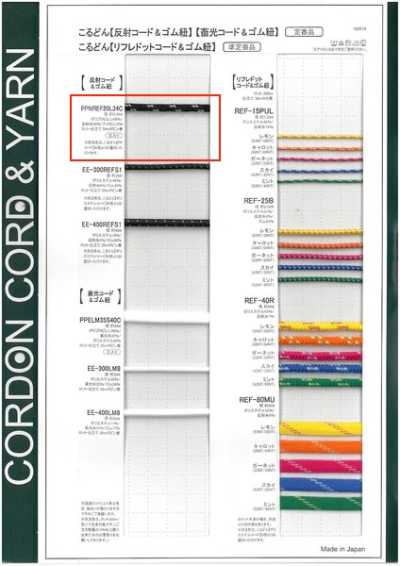
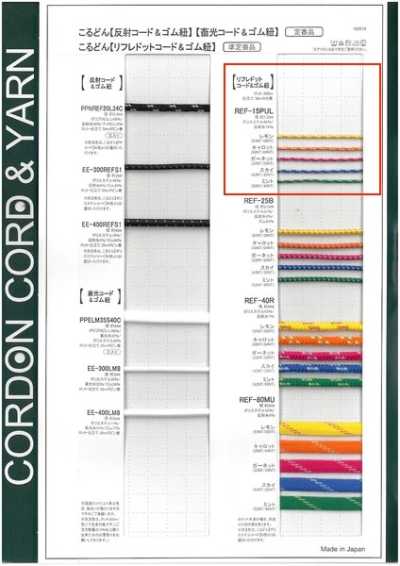
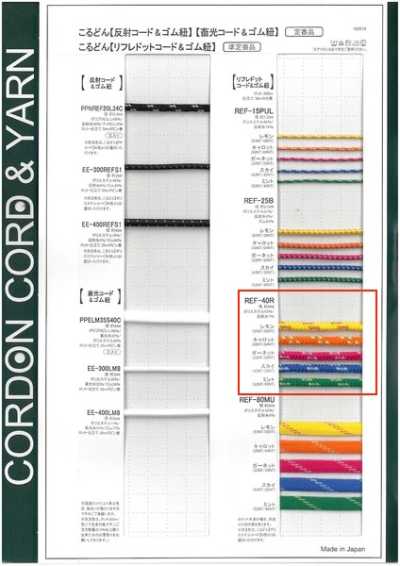
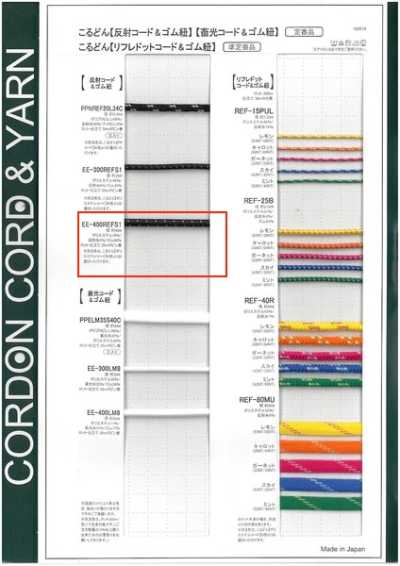
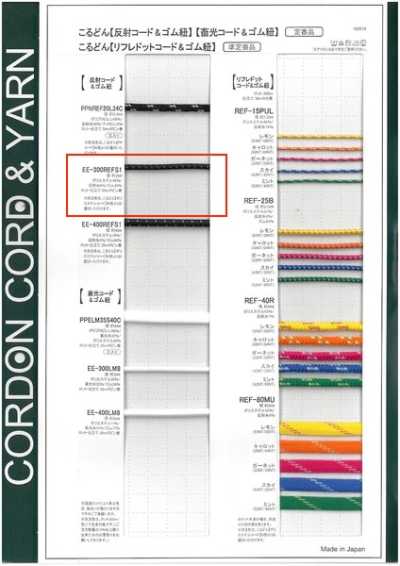
For products that incorporate reflective yarn into cords or elastic bands, the finished product is often indicated by its diameter, width, or nominal count rather than the count of the yarn alone. Since the nominal count may be a customary control number for each product, confirm the actual dimensions, cross-sectional structure, and dimensions when stretched.
Main Applications
Reflective yarn is used in outdoor clothing, sportswear, uniforms, bags, and similar items as an accent to improve visibility at night or in dark places. It is also used in places where reflective properties are desired in thin components, such as around hood and hem spindles, shoelaces, and bag pull tabs.
For design purposes, it can create a subdued look in daylight while producing a reflective change when light hits it. However, products that use reflective yarn in only part of the item do not necessarily comply with a specific safety standard. For safety applications, confirm the requirements for the finished product.
Selection and Sewing Notes
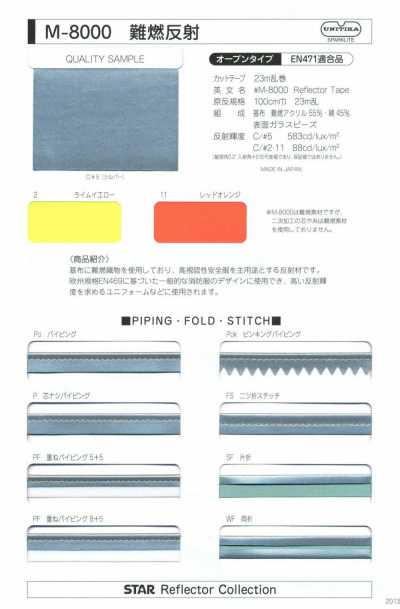
When selecting, confirm not only the required reflective appearance for the application but also the thickness, flexibility, elasticity, ease of tying, color, and durability against washing and friction. When sewing onto garments, consider a specification that does not excessively damage the reflective part at the seam.
In prototyping, confirm the reflective condition under the actual intended light source, and evaluate bending, friction, and appearance after washing. When sewing with a sewing machine, it is important to match the needle thickness, needle point shape, thread tension, and feed conditions to the material, and to suppress enlarged needle holes, breakage, and puckering.
- Check reflective performance in the finished product under actual use conditions, not only in the yarn itself.
- High-temperature ironing or pressing may affect the appearance of the reflective part, so carry out a preliminary test.
- When used as sewing thread, separately confirm sewability and seam strength.
Frequently Asked Questions
Are reflective yarn and retroreflective material the same?
Reflective yarn is often a name for retroreflective material processed into a yarn form, or for a yarn that incorporates retroreflective parts. Retroreflective material is a broader concept that includes sheets, tape, and prints, and reflective yarn is one of its application forms.
Does using reflective yarn mean the product complies with safety standards?
Using reflective yarn alone does not mean that clothing or equipment complies with safety standards. If needed, the required standard, the placement area of the reflective material, placement position, and the reflective performance and durability of the finished product must be confirmed from the planning stage.
Can reflective yarn be used as ordinary sewing thread?
Some products can be used for sewing, but others are intended to be incorporated into cords or braids mainly for their reflective function. When using it for sewing, confirm the recommended needle, thread tension, and sewing speed, and evaluate skipped stitches, thread breakage, and seam appearance with test sewing.