Retroreflective Luminance
Retroreflective luminance is a performance index that quantifies the intensity of light returned toward the light source when light is shone on retroreflective materials, under specified observation angle and entrance angle conditions.
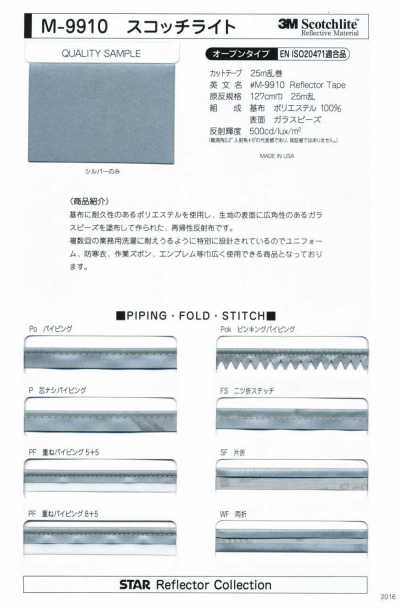
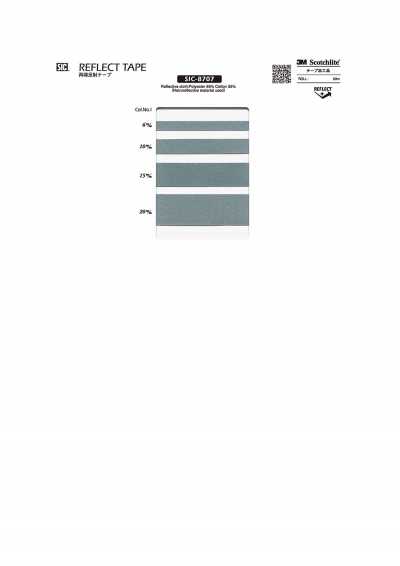
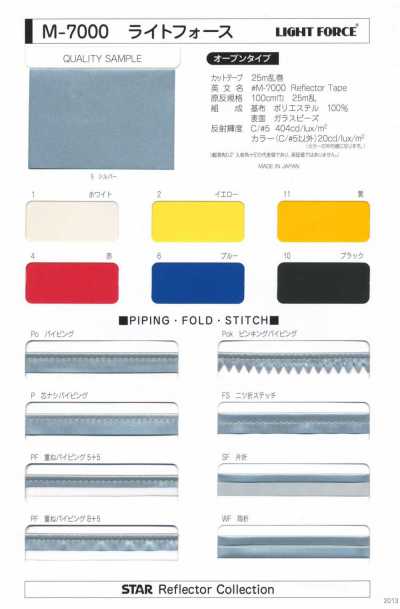
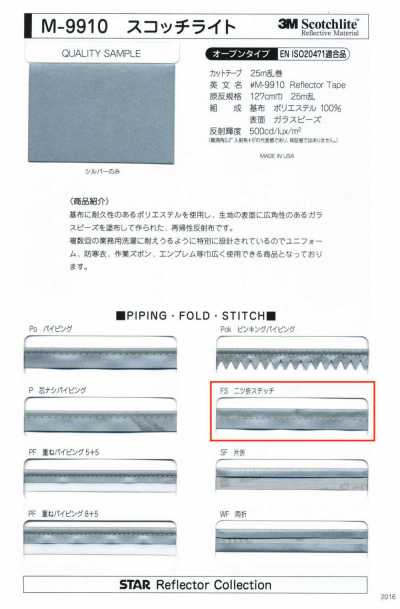
Contents5 sections
Definition and Measurement Conditions
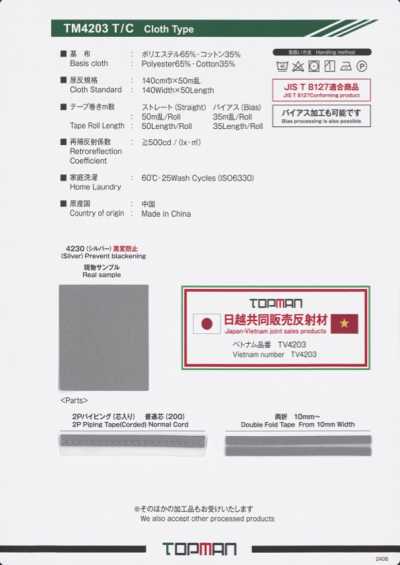
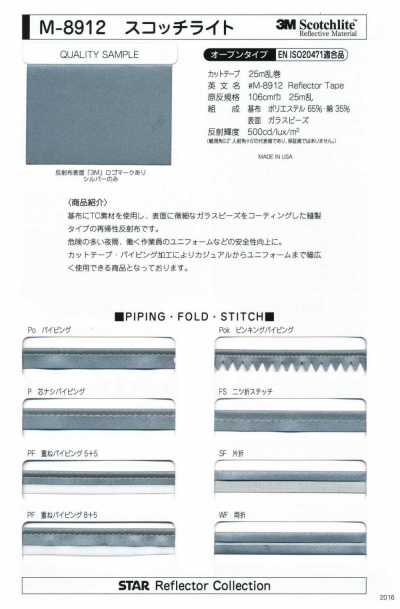
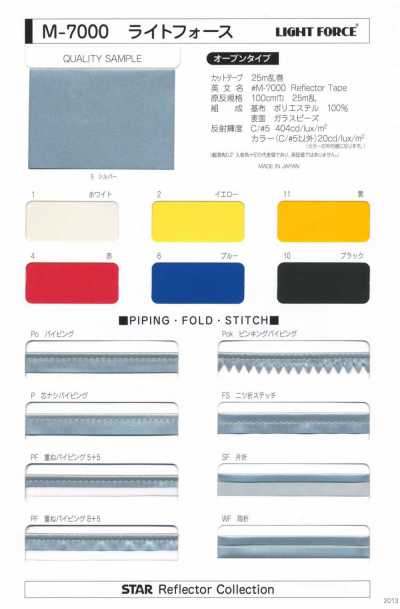
Retroreflective luminance is an index that expresses the visibility of retroreflective materials, which return light received at night from vehicle headlights and other sources toward the light source. It is generally used with almost the same meaning as the retroreflective coefficient, and the unit is shown as cd·lx−1·m−2, etc.
The value depends on the observation angle and the entrance angle. The observation angle indicates the offset between the illumination direction and the viewing direction, and the entrance angle indicates how light enters relative to the front of the retroreflective material. For this reason, values measured under different conditions cannot be compared directly.
Relationship with Retroreflective Materials
Retroreflective materials are materials that use reflective structures such as glass beads or fine prisms to return incident light toward the light source more easily. Retroreflective luminance is a value used to evaluate the optical performance of these materials and products, not the name of a product type such as tape, print, or patch.
Ordinary reflection may scatter light in various directions, but retroreflection is characterized by appearing bright when viewed from the light source side. However, it is not a value that indicates the brightness of something in daylight or the performance of phosphorescent or electroluminescent materials that emit light electrically.
Materials, Structure, and Dimensional Indications
For the base material of retroreflective tape, woven fabric, knitted fabric, film, and the like are used, and many constructions have a reflective layer on the surface. Structures such as plain weave and twill weave, as well as tape width and cord thickness, are not items that indicate retroreflective luminance itself.
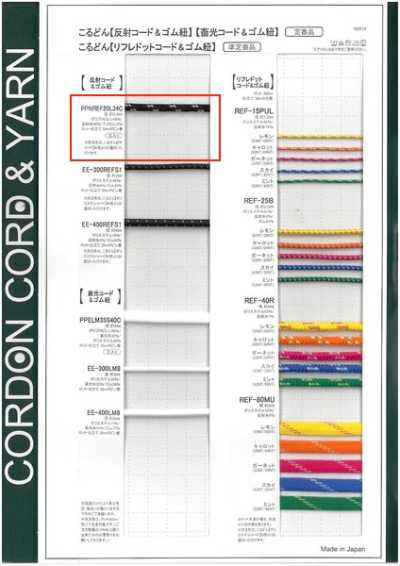
Tapes are checked for width in mm, and cords are checked for diameter or thickness in mm. Even with the same retroreflective luminance indication, the stretch of the base material, thickness, tendency for edges to fray, and ease of sewing differ depending on the structure. In specifications, performance values and dimensions or structure are specified separately.
Applications, Selection, and Handling
In apparel, it is used for applications that improve visibility in uniforms, workwear, sportswear, outdoor wear, bags, and the like. The required retroreflective luminance should be confirmed as a value under specified conditions, taking into account the usage scene, how the light hits it, the distance from the wearer, and the required standards or product specifications.
Resistance to washing, dry cleaning, friction, bending, heat, ironing, and the like is a performance separate from retroreflective luminance. Because performance may change after washing or sewing, it is important to check the indicated handling conditions and to test the actual textile and sewing specifications before mass production.
- Check the retroreflective luminance value together with the observation angle and entrance angle.
- Check washing durability, whether dry cleaning is allowed, and whether ironing is allowed.
- For stretch fabric, check conformity and whether there is surface cracking after stretching.
- When exposing cut edges, check in advance for fraying and layer separation.
Frequently Asked Questions
If the retroreflective luminance value is high, will it look bright under any conditions?
Not necessarily. Retroreflective luminance is a value measured with the observation angle and entrance angle defined, and the appearance changes depending on the relationship between the light source and the viewer, the direction of the retroreflective material, dirt, wrinkles, and so on. When comparing, check not only the numbers but also the measurement conditions and usage environment.
Are retroreflective luminance and washing durability the same performance?
No, they are different performances. Retroreflective luminance is an index related to the brightness of retroreflection, while washing durability is an evaluation of whether appearance and reflective performance can be maintained after washing. Even for washable products, suitability differs depending on the washing method, number of washes, and drying or ironing conditions, so individual specification confirmation is necessary.