Zigzag Braid Tape
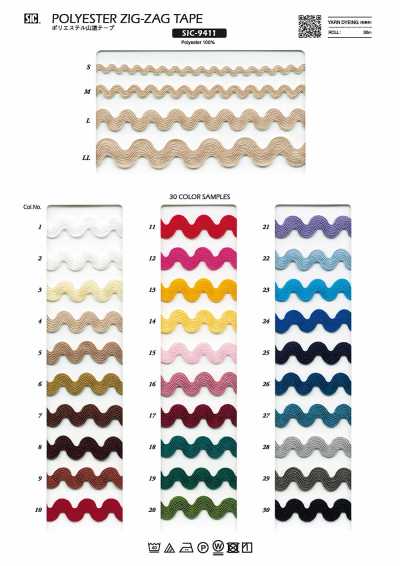
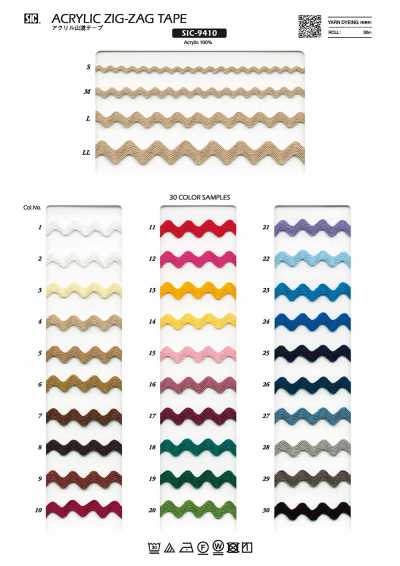
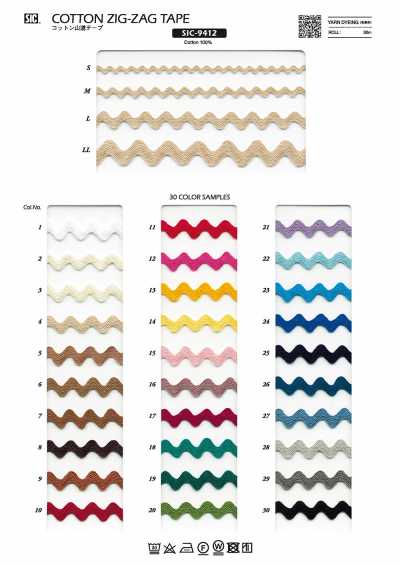
Zigzag braid tape is a flat decorative braid with continuous zigzag waves, used as a clothing material sewn onto garment and accessory edges, seam lines, and applique outlines.

Contents6 sections
Definition and Overview
Zigzag braid tape is a narrow decorative material characterized by continuous mountain-shaped or wavy contours on both sides. Unlike straight tape, it creates a rhythm along the edge itself, so it adds an accent simply by sewing it on. It is also called zigzag braid or Rickrack.
Braid is a term for narrow cords, braids, or knitted materials made for decoration. Even when zigzag braid tape looks like tape, its feel, thickness, and stretch vary depending on the material and manufacturing method, so it is important not to judge performance by the name alone.
Materials and Structure
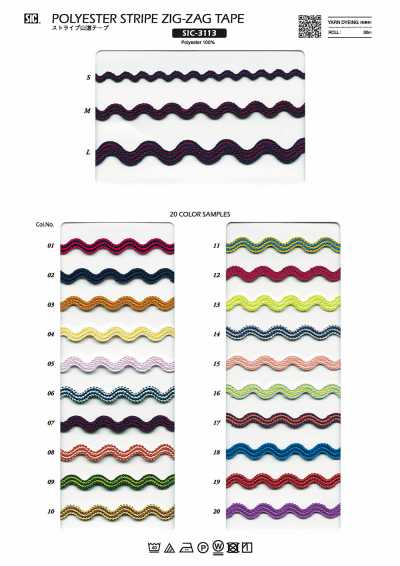
Various materials are used for zigzag braid tape, including rayon, polyester, and linen blends. Rayon is soft and tends to have a sheen, while polyester is relatively easy to handle. Linen blends often create a natural look that makes the most of the material texture.
Most have a flat structure in which yarns are braided or knitted to form continuous zigzags. They cannot be uniformly classified by weave structure names such as plain weave or twill weave. The peaks and valleys of the zigzags are prone to snagging, so the clarity of the outline and flexibility vary depending on yarn thickness, density, and finishing.
How to Read Width and Specifications
Width is generally checked by laying the tape naturally without spreading the waves and measuring to the outermost points on both sides. However, the handling of wave height and measuring methods may differ by product, so check not only the finished width but also the visible width when sewn on using a sample.
The term "strand" may be used for zigzag braid. This is used as an indication to distinguish the product specification and construction, but it does not necessarily correspond simply to the width or size of the zigzags. Do not choose based only on the number of strands; check the width, thickness, and zigzag shape on the actual product or in the specification table.
Main Applications
It is used to decorate necklines, cuffs, hems, and pocket openings on children’s clothing, blouses, dresses, aprons, costumes, and more. In addition to sewing it over seam lines, it is also suitable for outlining appliqués. The continuous zigzag shape also helps soften the boundary between color sections.
Outside apparel, it is also used for edge decoration on bags, pouches, hats, fabric accessories, and textile interior items. When following a curve, test in advance how much the peaks and valleys of the zigzag open, and check whether the wave shape becomes distorted at corners or sharp curves.
Selection and Handling Notes
Select the material, width, thickness, and pliability according to the fabric thickness of the application area, the appearance of the stitching, and washing conditions. Lighter types suit thin fabrics, while types that hold their shape are easier to match to thick fabrics or areas where you want to emphasize the outline. Before sewing, test the stretch relative to the grain and how much the seam will shrink.
The ends may fray or unravel. After cutting, finish the ends as needed, and secure the start and end of stitching with backstitching or similar methods. Shrinkage, color fading, and distortion after washing differ depending on the material and dyeing, so it is reassuring to perform washing tests with the main fabric combined with the accessory before mass production.
- On curves, do not pull strongly; baste while keeping the zigzag spacing even.
- Whether you run the stitch through the center or offset it to one side changes the look of the visible zigzag.
- High iron heat may cause deformation or changes in sheen depending on the material, so use a pressing cloth and test on an inconspicuous area.
Frequently Asked Questions
What is the difference between zigzag braid tape and picot tape?
Zigzag braid tape is a decorative material whose entire tape has a continuous zigzag or wave shape. Picot tape generally refers to something with small loops or picot-edged decoration on one or both sides of a straight body. Compare the shape of the outline, how it looks after sewing, and how well it follows curves using samples when choosing.
Does zigzag braid tape shrink when washed?
Whether it shrinks and how much depends on the material, such as rayon, polyester, or linen blend, as well as the dyeing and finishing. In addition, differences in shrinkage from the main fabric can cause wave distortion and seam shrinkage. If product washing will be performed, wash test it in advance with the accessory sewn on and check the appearance.
- Search products for "Zigzag braid tape"
- Products with material "Rayon"
- Products with material "Polyester"
- Products with material "Linen"
- Products for style "For Kids"
- Products for style "For Costumes/dresses"
- Products for style "For Bags"
- Products for style "For Interiors"
- Browse Ribbon, Tape, Cord products