Rotary Cutter
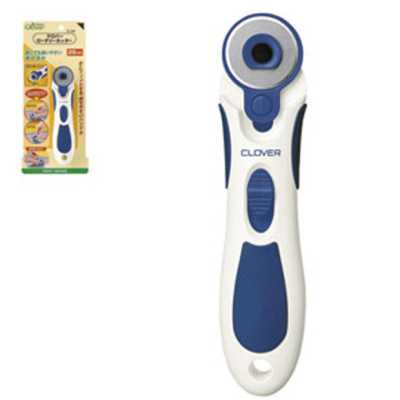
A rotary cutter is a cutting tool that cuts fabric and pattern paper by rotating a circular blade, and it is used to cut straight lines along a ruler and to cut stacked fabric stably.
Contents5 sections
Definition and Overview
A rotary cutter is a tool that cuts by rolling a circular blade attached to the handle. Because it does not open and close the blade like scissors, it can cut fabric without lifting it much. It is used for cutting along patterns, straight cutting, patchwork, and similar tasks.
Where dressmaking scissors cut by pinching the fabric with the blades, a rotary cutter cuts against a cutting mat placed underneath. It is useful for long straight lines and cutting stacked lightweight fabric, but dressmaking scissors may be easier to handle for small inner corners or tight curves.
Basic Use
Place the fabric flat on the cutting mat and layer it if necessary. Align the ruler with the cutting line and hold it firmly with your non-dominant hand. Lightly place the blade against the side of the ruler and cut by rolling with steady pressure, basically moving away from your body.
At the start and end of a cut, it is important not to place your hand or fingers in the direction the blade is moving. Forcing the cut through thickness that cannot be cut at once may shift the ruler or make the cut edge uneven. If needed, cut the same line in several passes.
- Place the cutting mat on a flat, stable surface.
- Choose a ruler that is non-slip and compatible with the rotary cutter.
- Check the grain line and pattern direction before cutting.
- After cutting, return the blade to the stored position.
Types and How to Choose
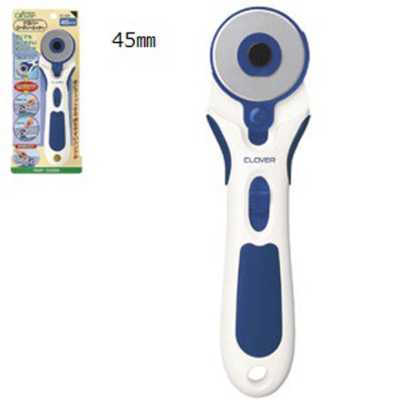
There are types with different blade sizes. A smaller blade may be chosen for work that emphasizes maneuverability, while a larger blade may be chosen for long straight cuts and layered cutting. In addition to blade size, check how easy it is to grip, how easy it is to extend and retract the blade, and whether it suits your dominant hand.
In addition to standard straight blades, there are types that use blades for making wavy edges or for scoring the fabric surface. Because a blade that does not suit the application affects the cut edge and workability, choose based on the material to be cut, the amount of curves, and the number of layers.
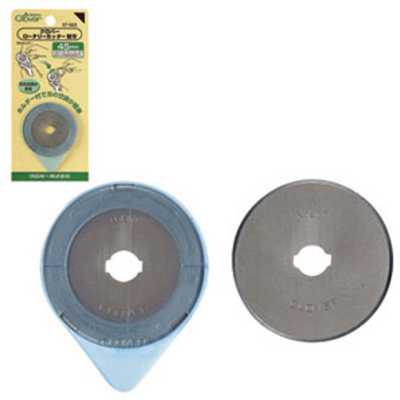
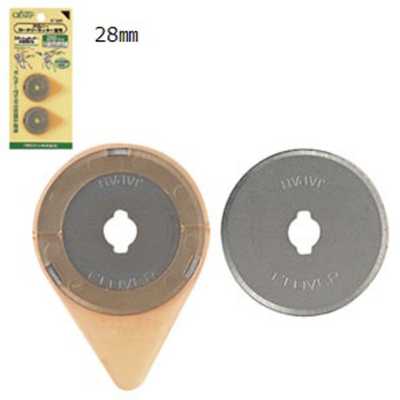
When selecting replacement blades, confirm the shape and size that fit the main unit. Continuing to use a dull blade can snag the fabric or require greater force, so if the cutting feel changes, consider replacing it.
Care and Safety Precautions
After use, always store the blade and keep it out of reach of children. Do not touch the blade tip or leave it open on a desk. When replacing the blade, follow the instructions, cover the old blade tip with thick paper or similar material, and dispose of it according to your local sorting rules.
If lint or fabric scraps stick to the blade or rotating part, remove them while avoiding the blade tip. As a basic rule, avoid forcing disassembly or resharpening the blade. A drop in sharpness also affects safety, so if the cut starts to crush the material, replace the blade.
Frequently Asked Questions
Can a rotary cutter be used without a cutting mat?
Using it with a cutting mat is the basic practice. It not only prevents damage to desks and floors, but also helps the blade run steadily and makes it easier to get a clean cut edge. If you substitute paper or cardboard, the blade may not cut smoothly and may damage the cutting surface or the blade.
Can a rotary cutter cut thick fabric or layered fabric?
It depends on the material thickness, density, number of layers, and blade sharpness. If you try to force the cut too hard, the ruler can shift easily and it becomes dangerous. Do a test cut, and if it does not cut well, reduce the number of layers or consider using dressmaking scissors.
When should a rotary cutter blade be replaced?
If the fabric does not cut cleanly and snags, if strong force is needed when cutting, or if uncut sections remain, consider replacing the blade. Sharpness is especially noticeable in the finish on lightweight or delicate fabric, so check the condition with a scrap piece before cutting.