Sirospun Yarn
Sirospun yarn is a spun yarn made by adding twist while drawing together multiple fiber bundles during the spinning process, a method aimed at producing a yarn with reduced fuzz, uniformity, and relatively high strength.
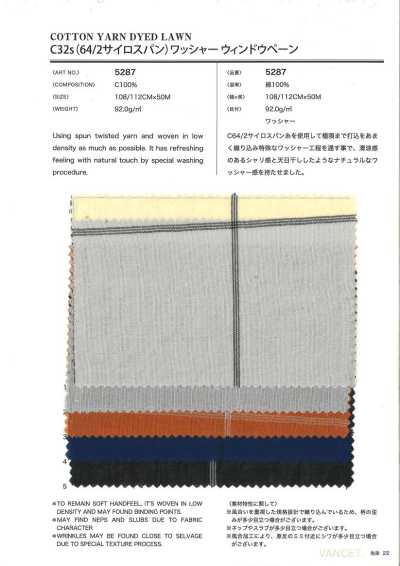
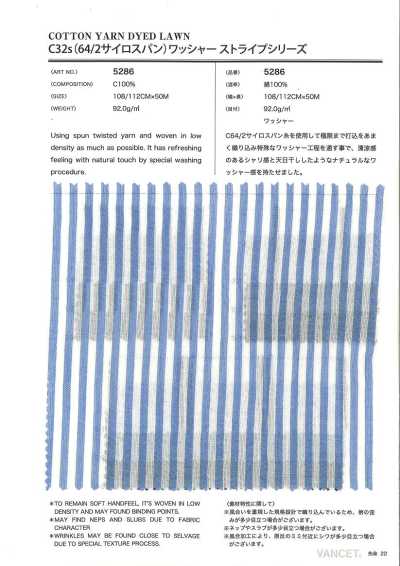

![59544-24 26AW HERDREX [Siro-milled Wool] Navy Glen Check](/img/item/thumb/YX/1103611_t2.jpg)
Contents6 sections
Definition and Overview
Sirospun yarn is a spun yarn also commonly called siro yarn. On a spinning frame, multiple roving strands are fed at regular intervals and twisted together while being drawn out. This differs from the process for ordinary ply yarn, where singles are twisted together after they are finished.
It is used for raw materials including cotton, linen, wool, and blends of different fibers. Because the final properties of the textile vary greatly depending on the yarn count, raw material, twist amount, weave or knit structure, and finishing treatment, quality cannot be judged by the name Sirospun yarn alone.
Texture and Functional Characteristics
The fibers tend to align well, so it generally has less fuzz and a relatively smooth surface. In woven fabrics, it is often associated with a clean look and a neat appearance, and it is also used in fine-count, tightly woven textiles.
Its structure, in which multiple fiber bundles are twisted together, can provide strength and abrasion resistance compared with singles yarn. On the other hand, bulk, luster, crispness, and moisture absorbency are also affected by the raw material, twist, and after-finishing, so it is important to check the actual textile.
- A relatively smooth surface with reduced fuzz
- A uniform appearance with little yarn irregularity
- A structure that may offer strength and abrasion resistance depending on the application and design
Main Applications
Sirospun yarn is used for lightweight to medium-weight woven fabrics that make use of a clean surface and a light feel, such as shirts, blouses, and dresses. In yarn-dyed chambray, stripes, and checks, it is also used in designs that change the color or material of the warp and weft.
In textiles made with cotton or linen as the raw material and combined with a looser density or washer finish, it can create a cool look suited to spring and summer. In wool-based materials, it may be used for shirting and light apparel, taking advantage of bulk and surface texture.
Selection and Handling Notes
When selecting, in addition to confirming that it is Sirospun yarn, check the blend ratio, yarn count, whether it is equivalent to singles or ply yarn, density, fabric weight, and finishing treatment. Evaluate the desired surface feel, sheerness, stiffness and resilience, and the appearance of puckering after sewing using swatches and prototypes.
Shrinkage and dimensional changes are not determined by the yarn production method alone. In particular, textiles containing natural fibers may change with washing, tumbler drying, or garment washing. Before mass production, perform wash tests and consider pattern adjustments and straightening conditions according to the shrinkage rate.
For sewing, adjust the needle size, thread, and feed conditions according to the fabric thickness and density. Fine-count, high-density textiles can make needle holes and seam puckering stand out, so sew test pieces in inconspicuous areas and check the seam appearance.
Differences from Similar Terms
Sirospun yarn and plied yarn are related in that they involve twisting together multiple yarns or fiber bundles, but plied yarn is a broader term. Sirospun yarn generally refers to the sirospun method, in which twist is formed in the spinning process using multiple rovings.
Compact yarn is yarn made using a spinning technology that condenses the fiber bundle during spinning to reduce fuzz. Its production focus differs from that of Sirospun yarn, but there are also yarns that combine both technologies. In addition, singles and ply yarn are terms that describe the structure of the finished yarn and should be checked separately from the Sirospun yarn production method.
Frequently Asked Questions
Are Sirospun yarn and ply yarn the same?
No. Ply yarn refers to a structure in which two or more finished singles yarns are twisted together. Sirospun yarn is a production method in which multiple rovings are fed during the spinning process to form twist. The appearance and performance of the yarn are compared by including the raw material, yarn count, and twist amount.
Does fabric made with Sirospun yarn shrink less when washed?
Not necessarily. Simply being Sirospun yarn does not determine shrink resistance. The shrinkage rate varies depending on the raw material, weave or knit structure, density, dyeing and finishing process, and washing method. If home laundering is assumed, wash testing according to the care label and confirmation of dimensional change are necessary.