Sleeve Pitch
Sleeve pitch is the pattern angle that indicates how the sleeve is set to face forward or backward relative to the body, and it affects sleeve placement and arm mobility.
Contents6 sections
Definition and Overview
Sleeve pitch is the design that determines how the sleeve faces when it hangs naturally, and how much it is set to angle forward or backward relative to the body. It is mainly determined by the relationship between the sleeve cap and armhole of a set-in sleeve, and affects the appearance when worn and ease of arm movement.
Increasing the forward pitch makes the sleeve face forward and makes it easier to accommodate a posture with the arms in front. With a backward pitch, there is more room to move the arms backward, but an excessive setting can impair the silhouette at rest and the comfort when worn.
Relevant Part and Role
The relevant part is the sleeve attachment line that runs from the shoulder point through the sleeve cap to the underarm. Sleeve pitch is considered together with the shape of the front and back armholes, shoulder slope, and the amount of ease in the body, not just the angle of the sleeve itself.
Because the arms are positioned slightly forward rather than perfectly upright, many garments for everyday wear are given a certain amount of forward pitch. If the forward pitch is appropriate, it becomes easier to balance how the sleeve sits when the arms are lowered and the resistance when moving the arms forward.
Types and Main Applications
Sleeve pitch is not a separate supply or material type, but a specification in pattern design. Depending on the design intent, adjustments are made by increasing the forward pitch, reducing it, or setting it toward the back side.
For jackets and coats, the forward pitch may be set in combination with a raised sleeve shape. For sports applications and work applications, it is considered according to the expected movements, such as a forward-leaning posture, raising the arms, or handling tools.
- Forward pitch: a setting that matches movements of extending the arms forward.
- Backward pitch: a setting that takes backward movement and specific postures into account.
- Intermediate pitch: a setting that emphasizes balance between everyday posture and movement.
How to Choose and Sewing Notes
Sleeve pitch should not be decided by item name alone; it should be checked through a toile or fitting along with the wearer's posture, intended use, thickness of inner layers, sleeve width, and armhole depth. It is important to check not only the state with the arms lowered, but also movements such as stretching forward, bending the elbows, and raising the arms.
In sewing, align the front and back notches between the sleeve and body accurately. If the left and right sleeves are reversed, or the front and back are mixed up, the sleeve pitch will be opposite and the fit will change greatly. The amount of ease and shaping by pressing also affect the three-dimensional appearance of the sleeve cap and how the pitch looks.
Differences from Similar Terms
Sleeve pitch refers to the forward-and-back angle of the sleeve, while the sleeve cap refers to the highest part at the top of the armhole. The height of the sleeve cap and the amount of ease affect the three-dimensional appearance of the sleeve, but they do not by themselves indicate sleeve pitch.
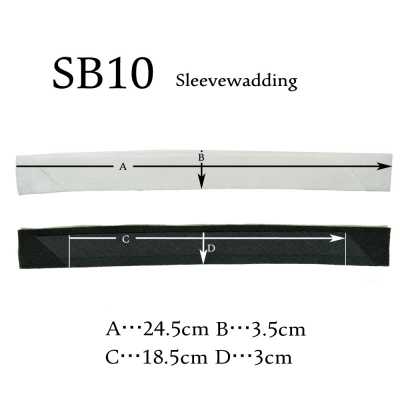
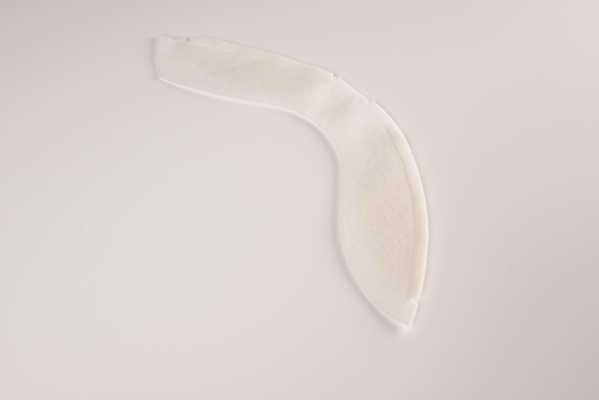
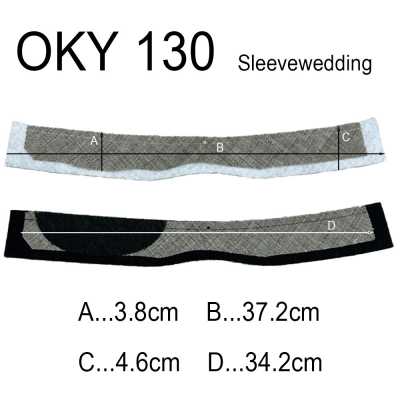
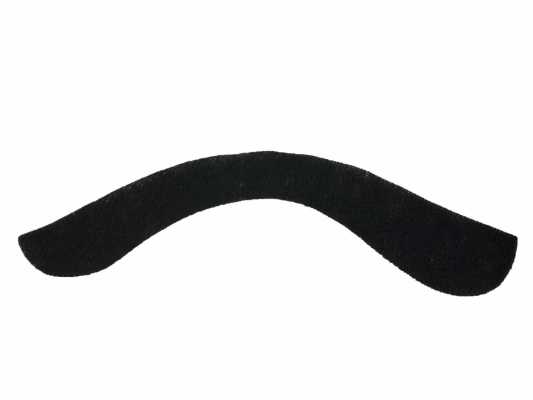
Sleeve head wadding is a secondary material inserted near the shoulder point and sleeve cap to shape the shoulder area. Sleeve pitch is part of the pattern and sleeve attachment design, and is distinguished from the presence or thickness of sleeve head wadding. Armhole is a term for the opening on the body side where the sleeve is attached.
Frequently Asked Questions
What problems occur if sleeve pitch is not correct?
If the forward pitch is insufficient, the sleeve and back are more likely to be pulled when the arms are extended forward. Conversely, if the forward pitch is too strong, wrinkles in the sleeve may become uneven or the sleeve may rotate unnaturally toward the front when the arms are lowered naturally. Judgment should be based on fitting, including the sleeve width and body ease.
Can sleeve pitch be adjusted by changing the sleeve cap height?
Changing only the sleeve cap height does not necessarily allow sleeve pitch to be adjusted properly. The sleeve cap, front and back armholes, underarm position, and the front-back width of the sleeve must be reviewed together. Partial corrections also change the seam lengths and the amount of ease, so verification with a prototype is necessary.
Does a raglan sleeve also have sleeve pitch?
Even in a raglan sleeve, the forward-and-back direction is designed according to the seam line between the sleeve and body and the sleeve shape. However, because the structure differs from a set-in sleeve, it is adjusted by looking at the entire seam line and range of motion rather than using the same method based on the sleeve cap and armhole.