Space-dyed Yarn
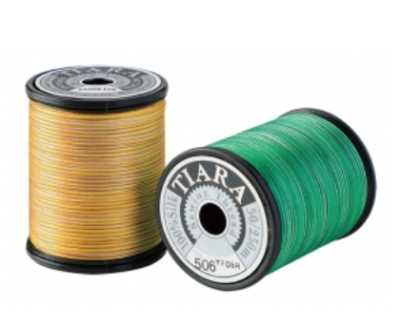
Space-dyed yarn is a yarn dyed with multiple colors in sections along the length of a single yarn, creating color transitions in knitted fabrics, woven fabrics, and stitches.
Contents6 sections
Definition and Overview
Space-dyed yarn is a decorative yarn in which colors change at regular or irregular intervals along the length of the yarn. Because the yarn is dyed first and then used for weaving, knitting, or sewing, the finished product shows stripes, a heather-like effect, and gradual color transitions. The length of each color section varies by product.
The appearance of the pattern changes even with the same yarn depending on stitch size, weave density, and stitch pitch. In fine knitted fabrics, the colors tend to blend together, while in coarse knitted fabrics or large stitches, each color change is easier to see.
Materials, Twist, and Structure
Space-dyed refers to a dyeing method and does not limit the material or structure of the yarn itself. It is used for yarn made from materials such as cotton, wool, silk, and polyester, depending on the application. Luster, moisture absorption, strength, and fuzziness are determined by the material and spinning method, not by the space-dyeing itself.
Space-dyeing can be applied to single yarn, plied yarn, spun yarn, and filament yarn. The level of twist also affects the firmness of the yarn, its surface texture, and the appearance of the knitted fabric. You cannot determine the number of twists, yarn thickness, or elasticity from the fact that it is space-dyed alone.
How Thickness Is Expressed
The thickness of space-dyed yarn is indicated in the same way as other yarns: by count, denier, dtex, or application-specific nominal count. Count is mainly used for spun yarn, and larger numbers generally indicate finer yarn. By contrast, denier and dtex are mainly used for continuous filament yarn, and larger numbers indicate thicker yarn.
For sewing space-dyed yarn, check the sewing thread count or nominal count, compatible needles, and recommended textile together. Do not judge thickness from the color change alone; select it based on the strength required for the seam and the needle hole size relative to the textile.
Main Applications
In knitwear and woven goods, it is used to give knitted or woven fabrics a natural color variation. It creates visual interest even in structures that are close to solid, and is used for sweaters, socks, scarves, miscellaneous goods, and more. The way the pattern appears depends on the product dimensions and the knitting or weaving design.
For sewing, the color changes are used in decorative stitching, quilting, embroidery, and button attaching. In particular, color transitions are easier to see in areas with long stitch spacing. When you do not want the stitches to stand out, a solid-color thread may be more suitable.
Selection and Sewing Considerations
During planning, confirm the color order, the length of each color, and how the boundaries between colors will appear under the actual gauge and stitch conditions. If you want the color position to match on the left and right sides or the front and back of a product, the appearance will change depending on the cutting position and the starting position for sewing, so it is important to check the pattern on an actual sample before mass production.
In sewing, even if the same space-dyed yarn is used for the upper and lower threads, the color positions may not match on the front and back because the thread feed amount and sewing start position differ. Adjust the machine thread tension, needle, and sewing speed to match the textile and yarn, and test sew to check for puckering or skipped stitches.
Melange yarn is made by spinning together fibers of different colors to create an overall mixed-color effect. In contrast, space-dyed yarn changes color along the length of a single yarn. Printing, on the other hand, is a process that adds a pattern to the surface of the textile, and differs from space-dyeing, which gives the yarn itself color changes, in both process and appearance of the pattern.
Frequently Asked Questions
What is the difference between space-dyed yarn and melange yarn?
Space-dyed yarn changes color along the length of a single yarn, so color flow and color boundaries appear in the knitted fabric or seam. Melange yarn is spun by blending multiple colored fibers, so it differs in that the overall appearance is a blended tone from a single yarn.
Can the same pattern be created on the left and right sides with space-dyed yarn?
You can get closer by controlling the repeat length of the colors, the gauge of the knitted fabric, and the cutting and sewing start positions, but the appearance may not be exactly the same. For products where symmetry is important, confirm the color position with a prototype and design with material yield in mind.