Takashima Chijimi
Takashima Chijimi is a summer fabric produced in Takashima City, Shiga Prefecture, woven mainly with cotton highly twisted yarn and characterized by a textured surface and a dry, non-clinging feel against the skin.
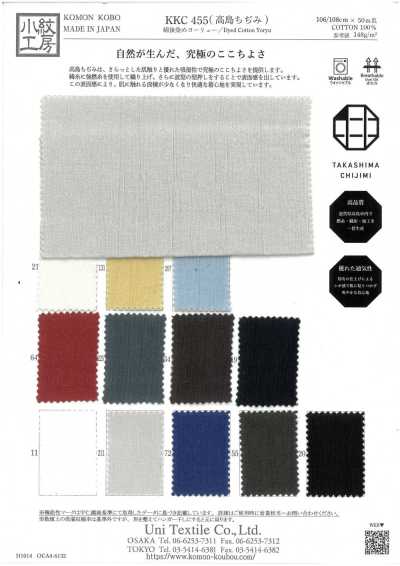

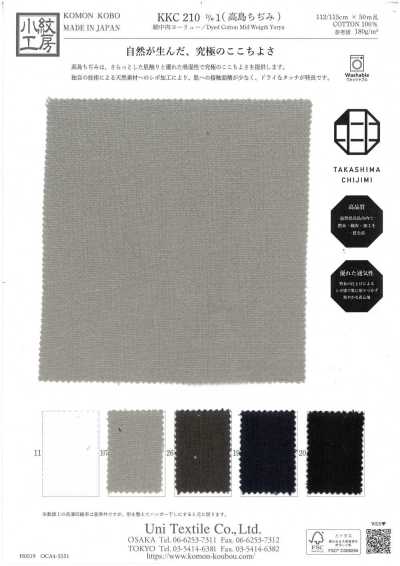
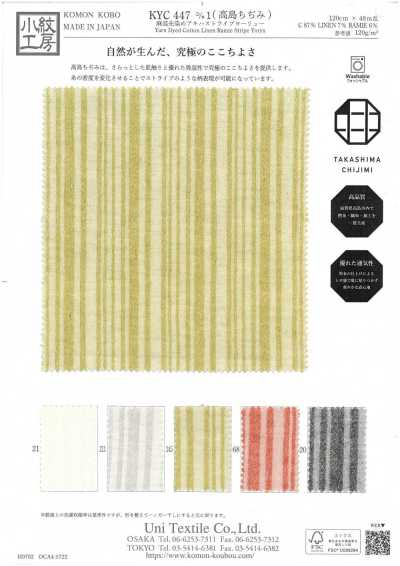
Contents6 sections
Definition and place of production
Takashima Chijimi is a woven fabric that has been produced in Takashima City, Shiga Prefecture, located northwest of Lake Biwa. It is generally made mainly from cotton, and is finished as a cool-feeling fabric using highly twisted yarn. It is said to have been produced locally since around the Tenmei era of the Edo period.
“Takashima Chijimi” is not the name of a material or a single weave structure, but a term that refers to a group of fabrics characterized by their texture created with highly twisted yarn, along with their place of production. For that reason, the hand feel and applications vary depending on the blend ratio, weave structure, thickness, and finishing.
Fabric features and technology
Highly twisted yarn is yarn with a strong twist, and it has the property of trying to shrink when affected by moisture or heat. By using this property, fine unevenness called texture is created on the fabric surface, making it easier to reduce the area that touches the skin. Its smooth feel and non-clinging nature against the skin are characteristic.
Those made with cotton have absorbency and are used in clothing for hot seasons. However, absorbency, breathability, sheerness, and tendency to shrink vary depending on yarn thickness, density, the way the texture appears, and processing conditions, so it is important not to judge performance by the name alone.
Typical applications
Relatively lightweight Takashima Chijimi is used for items that require a cool feel and a non-clinging touch, such as shirts, blouses, dresses, jinbei, loungewear, and pajamas. It is also sometimes used for underwear, bedding fabric, and summer accessories.
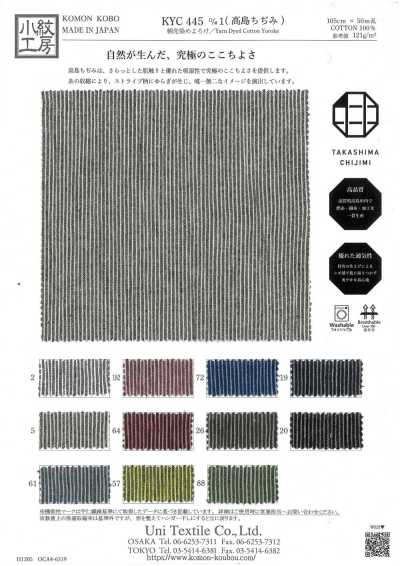
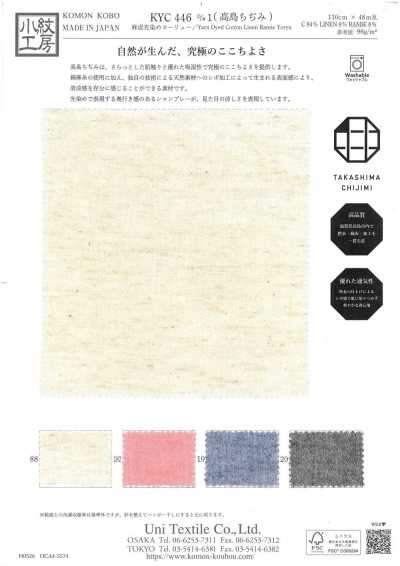
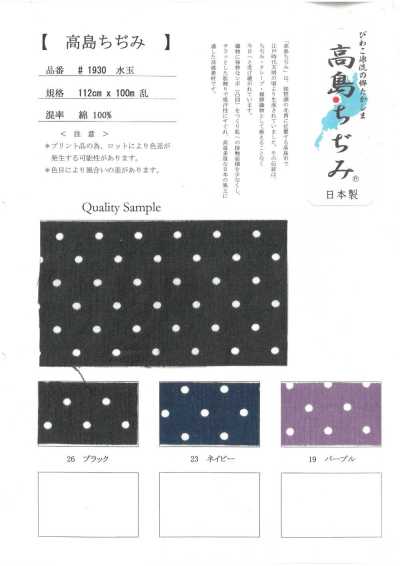
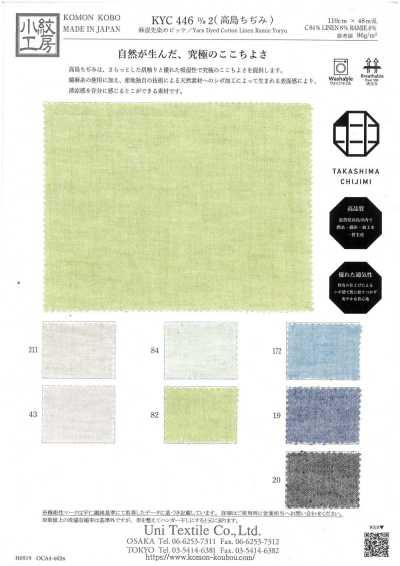
There are many different fabric expressions, such as yarn-dyed patterns like stripes and checks, solids, and printed items. Before cutting, check the appearance created by the texture, pattern direction, and sheerness on an actual sample, and choose one that matches the product design and wearing situation.
- Shirts, blouses
- Dresses, skirts
- Jinbei, yukata-style clothing
- Pajamas, loungewear
- Underwear and summer accessories
Points to check when sourcing
If you want to emphasize the place of production, confirm with the supplier the basis for using the “Takashima Chijimi” designation, such as weaving or processing in Takashima City. Even if it is distributed as a fabric name, the process and production area may differ by product number, so it is necessary to check separately from the country-of-origin label.
In mass production, there may be differences in the texture, color tone, width, fabric weight, and shrinkage rate from roll to roll. Align the conditions of the sample roll used for prototyping and the mass-production roll, and confirm the minimum lot, stock availability, whether additional production is possible, and delivery lead time including dyeing and processing in advance.
- Processes covered by the place-of-production labeling and the basis for it
- Blend ratio, weave structure, fabric width, fabric weight
- Texture, sheerness, shrinkage after washing
- Minimum lot and conditions for additional production
- Sample roll, mass-production roll, and lead time including processing
Differences from similar terms
Chijimi is also used as a general term for woven fabrics with texture and a shrink-like appearance, and types vary depending on the place of production, material, and manufacturing method. Takashima Chijimi is characterized by its association with Takashima City and by being treated as a cool-feeling fabric made mainly with cotton highly twisted yarn.
Yoryu is also a lightweight woven fabric with vertical texture on the surface, but Yoryu is a name that focuses on the fabric’s appearance, weave, and processing. Takashima Chijimi, on the other hand, is a name that includes the place of production, so the two are not synonymous.
Frequently asked questions
Is Takashima Chijimi always 100 percent cotton?
It is generally made mainly from cotton, but the blend ratio cannot be determined from the name Takashima Chijimi alone. It may include fibers other than cotton, or be processed according to the intended use. When sourcing, confirm the blend ratio and the basis for the care tag information by product number.
Are Takashima Chijimi and Yoryu the same?
No, they are not the same. Yoryu is mainly a name for fabrics with visible vertical texture, whereas Takashima Chijimi is a name that includes the place of production in Takashima City, Shiga Prefecture. Even if a fabric within Takashima Chijimi has a Yoryu-like appearance, the scope indicated by the names is different.
What should be noted when mass-producing Takashima Chijimi?
The way the texture appears affects how it looks after cutting and sewing, as well as its dimensions after washing. Before mass production, check the roll width, shrinkage rate, pattern direction, and sheerness, and if possible, conduct sewing and washing tests on the planned mass-production roll. Lot differences and delivery lead times for additional orders also need to be confirmed.