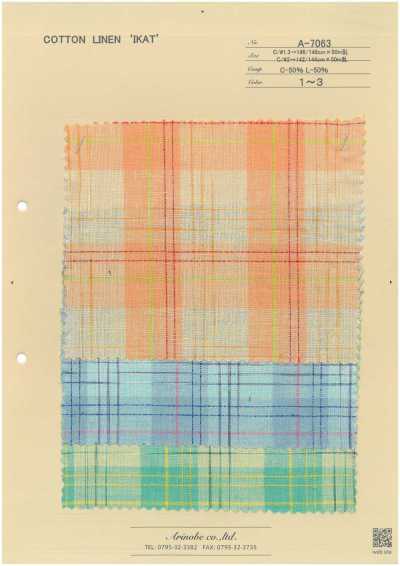
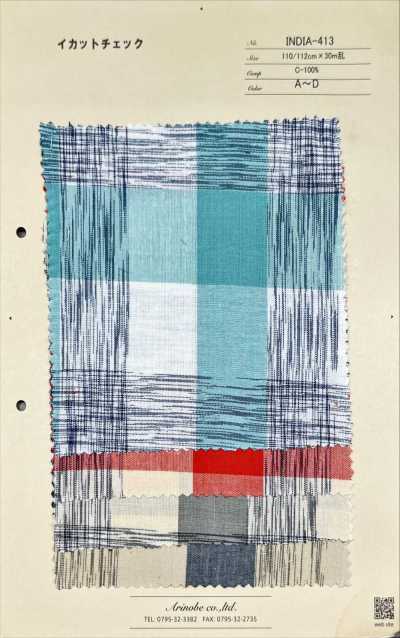
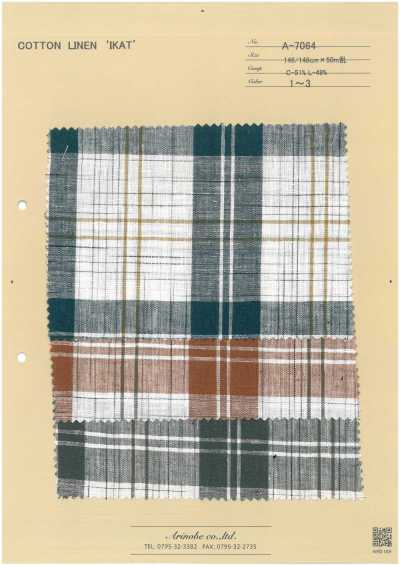
Warp Ikat / Weft Ikat
Warp ikat and weft ikat are types of ikat fabric that use warp yarns or weft yarns dyed in part before weaving, creating the distinctive blurred outlines of the pattern.
Contents6 sections
Definition and Overview
Warp ikat and weft ikat are classifications of ikat in which yarns are partially resist-dyed in advance, such as by tying them off, and then woven after dyeing to create the pattern. Warp ikat is made by creating the pattern with warp yarns, while weft ikat is made by creating the pattern with weft yarns.
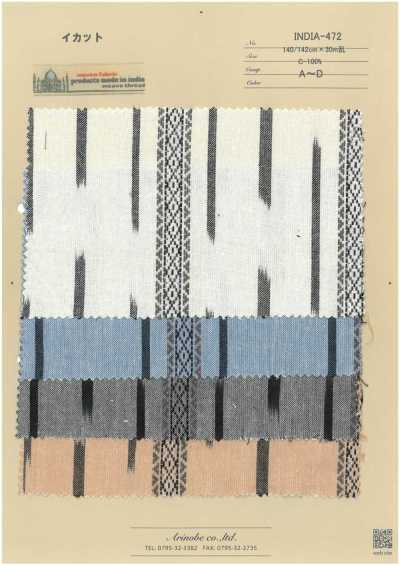
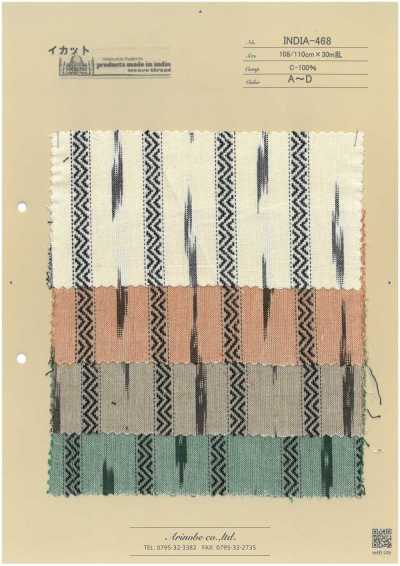
Because of slight misalignment between the dyeing position and the weaving position, the pattern outline shows blurring and bleeding. This unevenness is characteristic of ikat and differs from printed patterns, which have a clear outline.
Pattern Formation and Types
Warp ikat creates patterns by dyeing the warp yarns separately before they are set on the loom. It tends to show patterns that continue in the warp direction and a vertical blurred effect, and in the weaving process, adjusting the position of the warp yarns affects how the pattern appears.
Weft ikat is a method in which the weft yarns are dyed separately and woven in. It is characterized by patterns that continue in the weft direction and a horizontal blurred effect, and the appearance of the pattern changes depending on the position when the weft yarns are inserted. When both the warp and weft yarns are dyed separately, it is generally called warp-weft ikat or double ikat.
- Warp ikat: ikat in which the pattern is expressed by separately dyeing the warp yarns.
- Weft ikat: ikat in which the pattern is expressed by separately dyeing the weft yarns.
- Warp-weft ikat: ikat in which the pattern is expressed through both the warp and weft yarns.
Main Applications and Seasonality
Ikat patterns are used for shirts, blouses, dresses, skirts, pants, and outer layers. The blurred motif can create a wide range of impressions, from ethnic, Japanese-inspired, and craft-like designs to abstract and modern patterns.
Seasonality is not determined by the ikat technique alone. Lightweight cotton or linen is more suitable for spring and summer, while medium to heavy fabrics that include wool or silk can also be suitable for fall and winter. Judgment should be based on the material, weave, fabric weight, and finishing.
Notes on Fabric Selection and Cutting
When selecting, check the pattern direction, pattern size, repeat, and pattern placement from the selvedge on the actual fabric. Since warp ikat and weft ikat differ in the direction that stands out, the impression of the finished product changes depending on how the body and sleeves are placed on the grain.
If you need to match patterns at the center front, center back, side seams, pockets, collar, or facings, more yardage is needed than for solid fabric. For fabrics with an up/down or left/right direction to the pattern, lay out the pattern pieces in one direction to prevent cutting mistakes.
Because ikat is valued for pattern shifts and wavering outlines, it is not always appropriate to make every part match the motif exactly. Share in the specification sheet which areas should be matched as a product requirement and which areas can be accepted as part of the ikat character.
- Check how the pattern appears within the roll.
- Decide which areas need pattern matching, such as the left and right body panels and the front placket.
- Calculate yardage with one-way cutting requirements in mind.
- Mark the grain and pattern direction before cutting.
Differences from Similar Terms
Ikat is a pattern expression made by dyeing yarns separately before weaving. It differs in method from printing, which applies color to the surface of the fabric, and the front and back appearance and the soft outline caused by the way the yarns absorb dye are different.
Ikat is the internationally used term for a technique or pattern equivalent to ikat. Meanwhile, yabane is the name of a motif that resembles arrow feathers, while warp ikat and weft ikat are classifications based on the direction of the yarns used to create the pattern.
Frequently Asked Questions
Can warp ikat and weft ikat be distinguished by appearance alone?
The blur at the outline of the pattern and the way the motif continues may provide clues as to whether it is strongly visible in the warp direction or the weft direction. However, since it can be difficult to identify depending on the pattern design and weave density, confirm it accurately using the fabric specification and information from the production area or mill.
Does ikat fabric require more yardage than printed fabric?
In designs that require pattern matching or consideration of pattern direction, more yardage is often needed than for solid fabric. However, the required amount varies depending on the pattern size, repeat, piece layout, and the range that must be symmetrical. Before cutting, check the fabric width and pattern position, then create markers.