Twin Needle
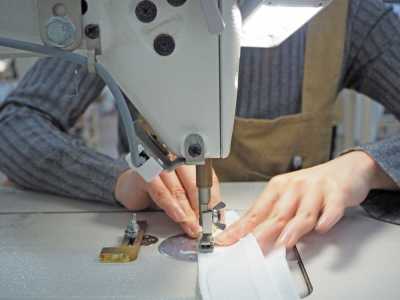
Twin needle refers to a sewing specification in which a machine equipped with two needles simultaneously forms two parallel rows of stitching, or the term used for that stitching.

Contents6 sections
Definition and Overview
Twin needle is a specification for sewing two rows of stitching while maintaining the needle spacing. It reinforces the seam and also creates a straight, even stitch as a design feature. It is used for heavy casual clothing, workwear, denim products, and the like.
Twin needle can refer to a sewing machine or a sewing specification, and it does not always indicate the stitch type uniformly. There are twin needle lockstitch and twin needle chainstitch versions, and the appearance of the thread on the back, stretchability, and how easily it comes undone differ depending on the machine and stitch type used.
Position in Product Making
The twin needle process is set at the stage after cutting, when each part is sewn together and seam allowance is secured, or at the stage of finishing hems, pocket openings, and similar areas. In the sewing specification sheet, clearly define the sewing position, needle spacing, thread color, stitch type, and the handling at the start and end of sewing.
Because it greatly affects the product appearance, check the seam width, distance from the edge, and how well it follows curved sections with samples before mass production. If washing or garment dyeing is performed, puckering and thread breakage after processing also become items to check.
- Securing seam allowance at side seams and inseams
- Reinforcement and decoration of pocket openings, belt loops, fly fronts, and similar areas
- Securing stitches on facings and folded sections such as hems and cuffs
How to Proceed and Practical Points
At the planning stage, decide whether to emphasize the twin needle for reinforcement or for design. For stitches visible on the front side, the impression changes greatly depending on thread thickness, color, and needle spacing, so actual sample checks including the fabric and trims are necessary.
When instructing the sewing factory, mark reference lines on the section drawing or enlarged drawing in the specification sheet, and distinguish the dimensions from the edge and the needle spacing. Curves, steps, and crossing points are prone to irregular stitching, so the tolerance range and whether backstitching is required should also be agreed in advance.
Ordering and Quality Notes
When placing an order, do not finalize the specification by the name twin needle alone; specify whether it is lockstitch or chainstitch, the front and back stitching, needle spacing, yarn count, thread color, and stitch count. The suitable needle, thread tension, and presser conditions also change depending on the fabric thickness, stretch, and surface slipperiness.
In quality checks, confirm variation in the spacing between the two rows, uneven distance from the edge, skipped stitches, poor thread tension, puckering, and crooked stitching. At areas where thickness overlaps, needle breakage and skipped stitches are more likely, so needle management including needle inspection before and after the process is also important.
Differences from Similar Terms
Double stitch is a broad term that generally refers to a state in which two rows of stitches are visible. It may include specifications sewn twice with a single needle, not only items sewn at once with a twin needle machine. When communicating specifications, confirm not only the appearance name but also the machine used and the stitch construction.
Coverstitch is a stretchable stitch mainly used for knit hems and cuffs. Multiple parallel needle threads may be visible on the surface, but twin needle is a term indicating the number of needles and the process, while coverstitch is a term indicating the stitch type.
Frequently Asked Questions
Do twin needle and double stitch mean the same thing?
They are sometimes used to mean the same thing, but strictly speaking they are different. Twin needle refers to a machine or specification that stitches with two needles at the same time. Double stitch, on the other hand, refers broadly to any stitch that appears as two rows and may include specifications sewn twice with a single needle.
What information is needed when instructing a factory on a twin needle specification?
Indicate the stitch type, whether it is lockstitch or chainstitch, needle spacing, sewing position from the edge, front and back appearance, thread type, thickness, and color, stitch count, and the handling at the start and end of sewing. Showing the target area in a drawing and attaching a physical sample makes it easier to prevent misunderstandings.
What defects are likely to occur with twin needle stitching?
Typical examples are uneven spacing between the parallel stitches, waviness in the sewing line, skipped stitches, poor thread tension, and puckering. Because these are likely to occur with fabric stretch, steps, and overlapping thickness, pre-sewing with the same fabric, thread, and conditions as mass production, and checking the appearance after washing, are important.