


Wabash
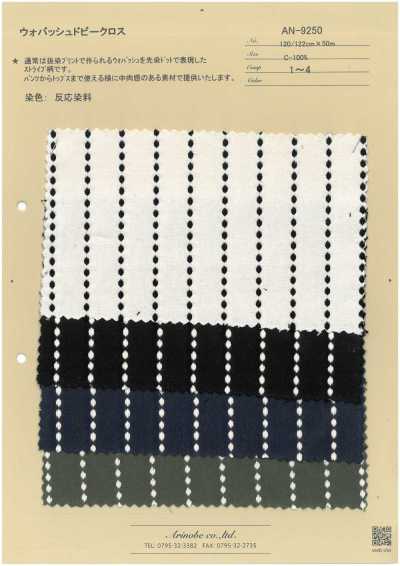
Wabash is a vintage-style pattern that uses discharge printing or printing to place fine dots in repeated rows on a dark ground, creating the look of vertical stripes.
Contents6 sections
Definition and Overview
Wabash is a pattern in which small light-colored dots are regularly arranged vertically on a dark ground. Because the dots line up and look like stripes, it is also called Wabash stripe. It is not the name of the fabric structure or material, but the name of the pattern shown on the surface.
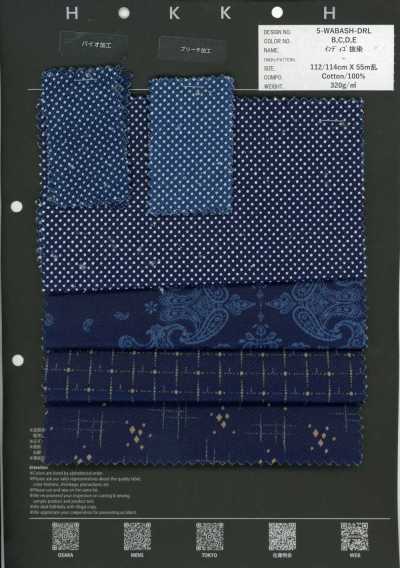
The best-known version uses white dots on an indigo-like ground color, giving an impression reminiscent of workwear and vintage clothing. However, the ground color, dot size, stripe spacing, and method of expression vary depending on the fabric.
Pattern Formation and Name
Wabash is basically a pattern in which dot motifs are continued vertically, but there are also versions with multiple rows of dots or combined with linear motifs. It is generally described as a dot stripe, but not all dot stripes are called Wabash.
It is often expressed by discharge printing that partially removes the color from dark-dyed fabric, and its appearance and texture differ from printing that layers pigments or dyes. Since Wabash does not necessarily indicate a specific production method, the pattern specification and processing method should be checked separately during planning.
- A stripe-like pattern made by linking fine dots vertically.
- Light-colored dots on a dark ground are commonly seen.
- The method of expression, such as discharge printing or pigment printing, varies by fabric.
Main Uses and Seasonality
It is used for casual and work-style garments such as work shirts, coveralls, jackets, pants, and overalls. For accessories, it is also used in hats, bags, and pouches. Vertical patterns tend to give garments a neat, streamlined impression.
Season is not determined by the pattern alone. If it is a lightweight cotton fabric, it is suitable for spring and summer shirts and blouses; if it is a denim-like heavy fabric or a brushed material, it is suitable for autumn and winter outerwear and bottoms. It is important to choose the material, fabric weight, weave, and finish according to the intended use.
Points to Note When Choosing and Cutting the Fabric
When selecting, check the pattern pitch, dot size, contrast between the ground color and pattern color, as well as the material, thickness, elasticity, and color change after washing. With indigo-like colors and dark colors, there is also a possibility of color transfer due to friction or washing, so confirm the color fastness according to the product application.
When cutting, it is common to align the direction of the pattern that appears as vertical stripes with the grainline. If the stripe positions shift on the front body, collar, pocket, or yoke, it is likely to stand out, so set the cutting allowance with pattern matching in mind. Also check the appearance of the left and right body panels and sleeves at the marking stage.
- Check whether the fabric edge and pattern direction are parallel.
- Specify whether the stripe positions on the placket, pocket, and collar should be aligned or intentionally shifted.
- Allow extra yardage compared with solid fabric, taking pattern matching into account.
- Before cutting, check for pattern displacement or skew within the roll.
Differences from Similar Terms
Stripe refers broadly to any striped pattern made with lines, while Wabash is a pattern that expresses stripes through a series of small dots. Even if it looks like a stripe from a distance, its defining feature is that it is a collection of dots when seen up close.
Hickory generally refers to a workwear stripe pattern expressed by weaving or yarn dyeing. Wabash is often expressed by printing or discharge printing, and the structure of the stripes also differs. In addition, even if a fabric expresses another pattern such as paisley by discharge printing, it is distinguished from Wabash if it does not have dot-based stripes.
Frequently Asked Questions
Is Wabash the same fabric as denim?
Wabash is not the fabric itself, but the name of a pattern, so it is not synonymous with denim. It can be expressed on cotton fabrics such as denim, but the base weave and material, such as plain weave or twill, should be checked individually.
Does Wabash fabric require more yardage than usual?
If the stripe positions need to be aligned on the front body or pockets, extra allowance for pattern matching may be required. The necessary amount varies depending on the pattern spacing, fabric width, pattern layout, and the parts where the pattern is matched, so it should be confirmed with the marker before deciding.
What is the difference between Wabash and dot stripe?
Wabash often refers to a stripe-like expression created by vertically aligned dots, and is used in connection with a vintage-style design featuring light-colored dots on a dark ground. Dot stripe, on the other hand, is a more general description of a pattern.





