Acrylic Tape
Acrylic tape is a narrow woven tape made primarily from acrylic fiber yarn, and is a secondary material used for edging, reinforcement, handles, and decoration.
Contents6 sections
Definition and Overview
Acrylic tape is a narrow tape made from yarn whose main raw material is acrylic fiber. It is used in apparel, bags, miscellaneous goods, and similar items for purposes such as finishing seam allowances, edging, reinforcement, hanger loops, and handles. Depending on the application, some products use blended yarn.
The name refers to the material and does not uniformly indicate the weave or shape. In addition to flat woven tape, there are tapes with a twill weave and tubular woven types, and their appearance and feel vary by product.
Materials and Structure
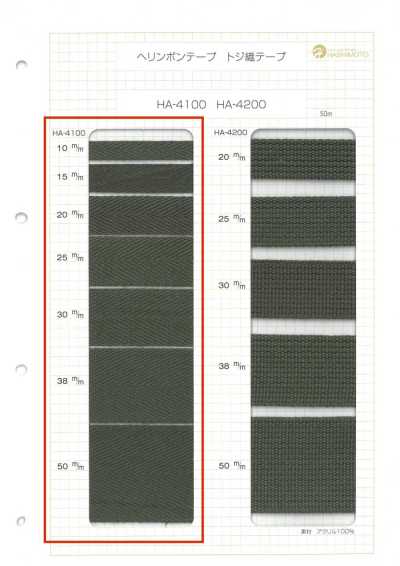
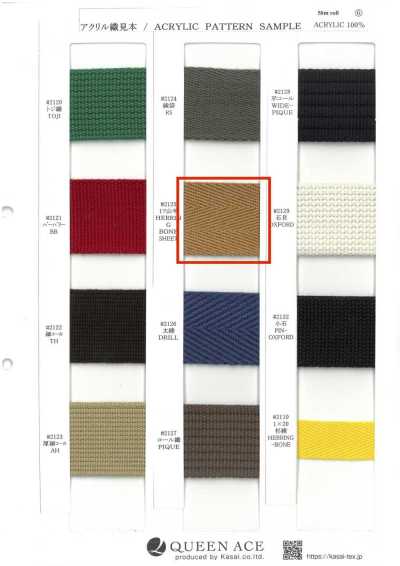
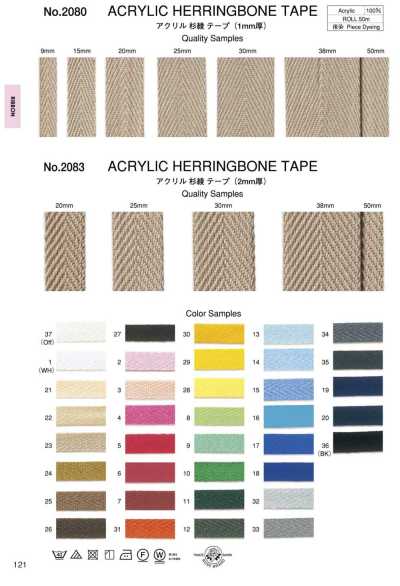
Most are narrow woven fabrics made by interlacing warp and weft yarns. Among them, twill-woven types show diagonal ridges on the surface and are also called acrylic twill tape. The twill texture contributes not only to the design but also to a softer appearance.
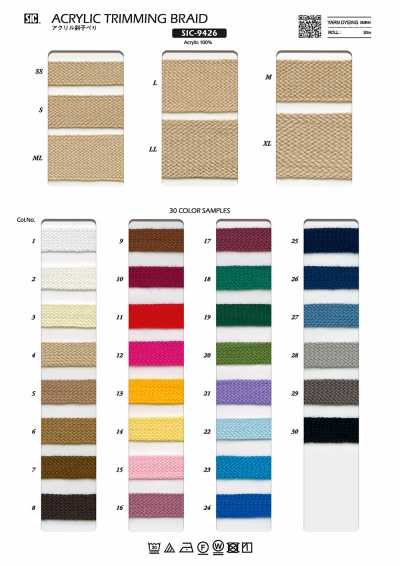
Tubular types are tape woven in a tubular form. In specifications that incorporate buttonhole thread inside, the tape can have more body and softness. Compared with flat tape, it may be easier to grip and is also used in areas touched by hand, such as bag handles.
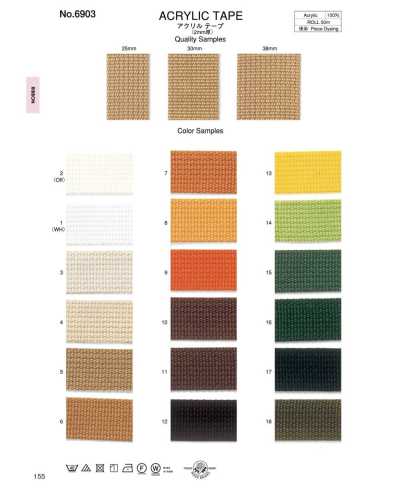
- Plain weave types have a relatively flat surface and are easy to handle.
- Twill weave types are characterized by visible diagonal ridges.
- Tubular types are structured to easily provide thickness and softness.
How to Read Widths and Specifications
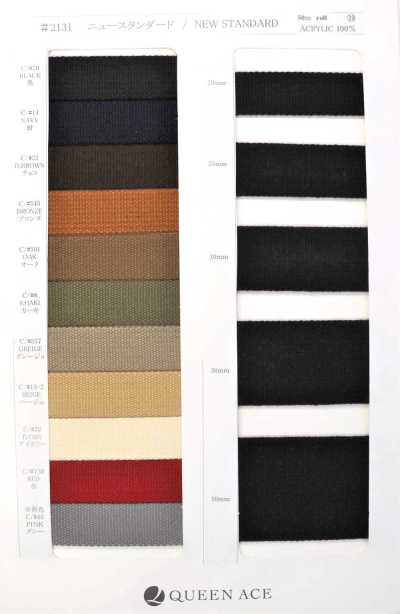
Acrylic tape is generally described by its finished width in millimeters. For sewing applications, select it while considering whether the width allows enough seam allowance or whether folding back or overlapping stitching will be used. For handles, the area that touches the hand and compatibility with the inner diameter of hardware are also important.
Even with the same width indication, ease of threading and sewing changes depending on thickness, density, weave structure, and edge stiffness. In specifications, listing not only the width but also the material, color, structure, and, if necessary, thickness and intended location can help prevent misunderstandings.
Main Applications and Selection
The main applications are bag handles and shoulder straps, hanger loops for apparel, reinforcement for facings and seam allowances, and color accents. For areas where a flat shape and strength are important, check weave density and thickness; for areas that touch the skin or hands, check surface fuzz, stiffness, and edge feel.
Acrylic tape is a material that is often confused with polypropylene PP tape or polyester tape. It is important to organize the required strength, weather resistance, texture, dyeability, and washing conditions for the intended use, and not to decide whether it can be substituted based on the material name alone.
- For handles, check the width, thickness, softness, and edge feel.
- For edging, check how well it follows curved sections and resistance to fraying.
- When threading through hardware, match the tape thickness to the hardware inner diameter.
- Before mass production, check sewing shrinkage and slippage with a sewing sample using the fabric to be used.
Handling and Sewing Precautions
Woven tape does not stretch much overall, but depending on the weave structure and finish, dimensions may change due to pulling or washing. For products that will be washed, conduct a preliminary test together with the main fabric and check stretching, shrinkage, color transfer, and waviness around the stitching.
The cut ends may fray depending on the yarn and structure used. It is necessary to apply suitable finishing according to the intended use, such as sewing the ends in, folding them back, or finishing the edges. Methods that melt and harden the cut ends with heat may not be suitable for acrylic material, so always confirm with the actual item.
Frequently Asked Questions
Are acrylic tape and acrylic twill tape the same?
Acrylic tape is mainly a material-based name, while acrylic twill tape usually refers to twill tape made with acrylic yarn. Since acrylic tape also includes plain weave and tubular types, confirm not only the material but also the weave and shape when ordering.
Does acrylic tape shrink when washed?
The degree of shrinkage or stretching varies depending on the type of yarn, weave density, dyeing and finishing, and washing conditions. When used together with the main fabric, it is important to carry out a test not only on the tape itself but also after sewing, and to check dimensional change, color transfer, and waviness in the stitching.
What should be considered when choosing it for bag handles?
Check not only the width but also the thickness, weave density, softness, edge feel, and ease of threading through hardware. If heavy contents are expected, consider the strength including the seam specification at the base and reinforcement of the fabric, not just the feel of the tape itself.