Webbing
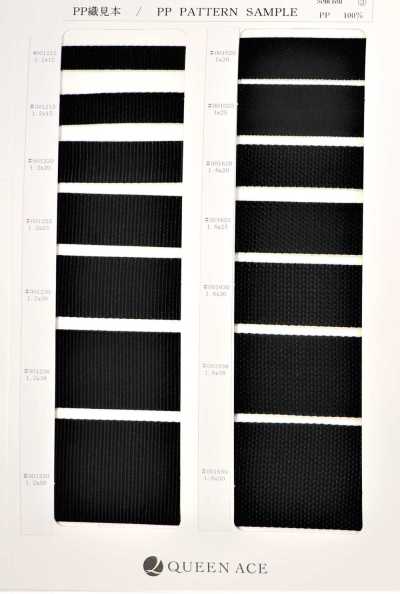
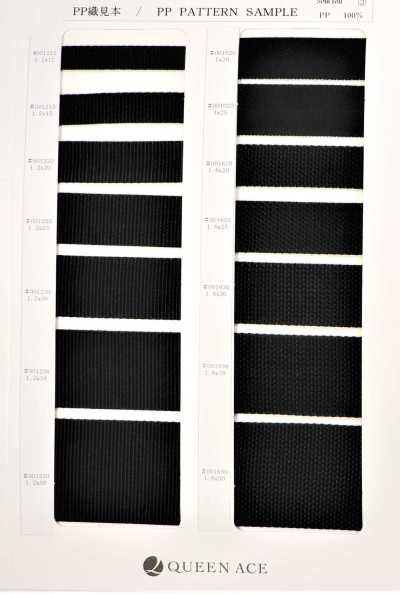
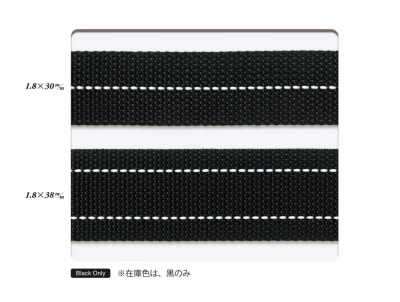
Webbing is a tape-like material made by weaving fibers into a narrow strip, mainly used for load-bearing belts, handles, straps, and similar applications.
Contents6 sections
Definition and Overview
Webbing refers to a narrow woven fabric made of warp and weft yarns. In apparel and bags, it is used for belts, handles, shoulder straps, reinforcement fabric, and straps combined with adjusters. It is a material in which strength, abrasion resistance, and ease of handling are often valued more than decorative appeal.
In a broad sense, braided cords and band-like materials with knit structures may also be called webbing. However, because woven webbing and knit or braided tape or cord differ in stretch behavior, fraying at the ends, and strength characteristics, the manufacturing method should be specified in the specification sheet.
Materials and Structure
Materials used include cotton, polyester, nylon, and polypropylene. Cotton makes it easier to achieve a natural texture, while synthetic fibers are chosen for applications that require abrasion resistance, light weight, and quick drying. Actual performance depends not only on the material name but also on yarn thickness, density, weave structure, and finishing.
Plain weave has a relatively flat surface and is used as a standard structure. Those with diagonal ribs, such as twill weave and herringbone weave, are structures that make it easier to add flexibility and design appeal. There are also thicker types, double-layer structures, and types with high-density edges, which are designed according to the application.
- Woven webbing: dimensionally stable and used for belts and handles.
- Knit tape: some types have softness and stretch.
- Braided materials: available in round or flat forms, used for cord-like applications.
Dimensions and Applications
Strip-shaped webbing is generally expressed in width in millimeters. Thickness also affects how easily it passes through hardware and how seams overlap, so it is checked as needed. Round or cord-like materials may be indicated by diameter or thickness rather than width.
For applications, dimensions are determined based on the inner size of the hardware to be threaded through, the width of the area to be sewn, and the required length. For load-bearing applications, it is important not to judge by apparent width alone, but to confirm the combination including tensile strength, seam strength, and hardware.
- Bag handles, shoulder straps, internal reinforcement
- Clothing belts, waist adjustment, hanger loops
- Securing straps for backpacks and outdoor gear
- Reinforcement and functional components for uniforms and workwear
How to Choose and Handling Precautions
When selecting, check the strength required for the application, stiffness, surface slipperiness, thickness, color, and ease of sewing. When adjusting length with a slide adjuster or similar hardware, make a sample to verify that the tape width and thickness fit the hardware's inner dimensions and that it will not slip too much during use. For areas that touch the skin, also check the hardness and abrasion of the edges.
Woven webbing is less likely to stretch in the warp direction, but its dimensions and texture may change due to load, moisture, washing, or heat. Items containing cotton may shrink, and synthetic fibers require caution regarding deformation caused by heat. If product washing is planned, carry out a washing test including accessories before mass production.
Cut edges may fray or fuzz. Depending on the material, finish the ends by heat cutting, folding, sewing down, or attaching tape ends. Heat cutting may cause scorching or poor melting with materials that are not compatible, so always confirm in advance.
Differences from Similar Terms
Webbing is a narrow woven fabric mainly intended for strength and support. Ribbon is often centered on decorative use, and even though both are band-shaped materials, the required strength, thickness, and surface feel differ. Note that there are also ribbon-like materials with strength, so suitability for use should not be judged by the name alone.
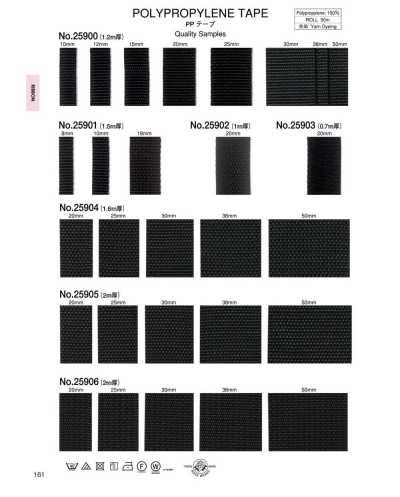
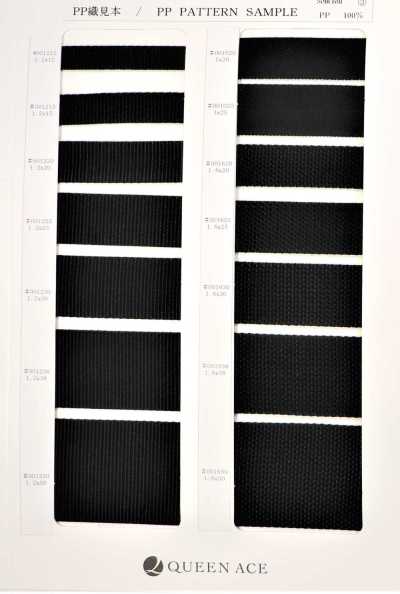
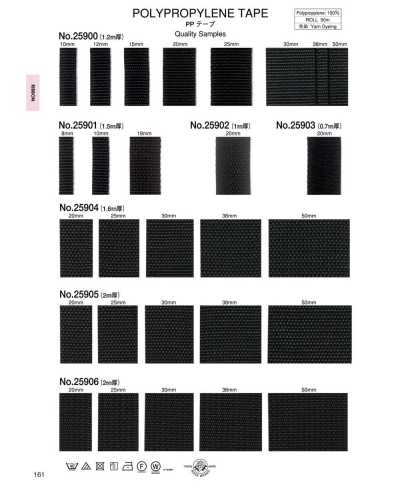
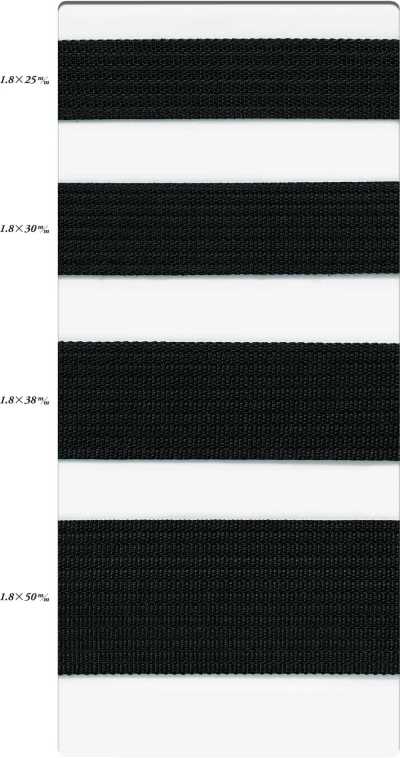
PP tape is a name that includes the material designation for tape made of polypropylene, while webbing is a structure- and application-based term that is not limited to a specific material. Herringbone tape is tape with a herringbone weave pattern, and may be treated as a type of webbing. Flat cords and round cords are cord-like materials whose cross-sectional shape and manufacturing method differ from webbing.
Frequently Asked Questions
Are webbing and PP tape the same?
No, they are not the same. Webbing is a term for a narrow band-like material with strength, and includes cotton, polyester, nylon, and others. PP tape refers to tape made with polypropylene. Since there are products made of PP with different structures and applications, check the material, width, thickness, and strength.
Does webbing shrink in home laundering?
The amount of shrinkage varies depending on the material, weave density, dyeing and finishing, and washing conditions. Webbing containing cotton may shrink when washed in water, and even synthetic fibers require caution regarding deformation and changes in texture caused by heat. If product washing is planned, perform a preliminary test on the sewn product and check dimensional change and color transfer.
How do you prevent the ends of webbing from fraying?
Choose the end treatment according to the material and application. Heat cutting may be used for synthetic fibers that melt with heat, but be careful of scorching and hardening. For materials such as cotton that are not suitable for heat cutting, use folded sewing, bar tacks, piping, or tape ends to suppress fraying of the structure.
- Search products for "webbing"
- Products with material "Cotton"
- Products with material "Polyester"
- Products with material "Nylon"
- Products with material "Polypropylene"
- Products for style "For Bags"
- Products for style "Outdoor"
- Products for style "For Sports"
- Products for style "For Uniforms/Workwear"
- Browse Ribbon, Tape, Cord products