Hemp Leaf
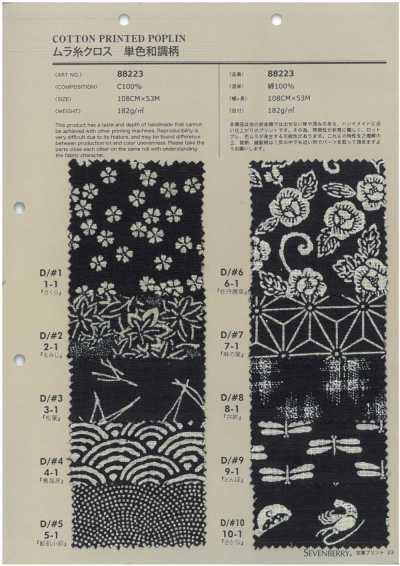
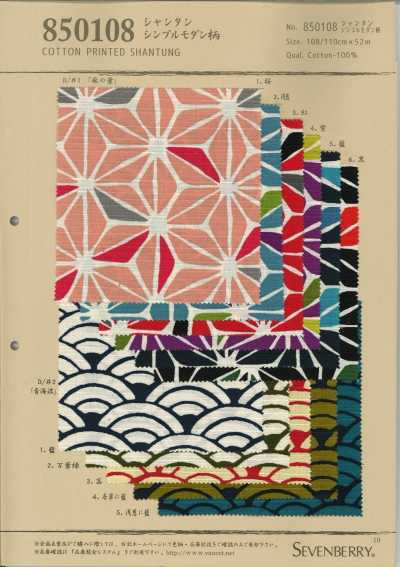
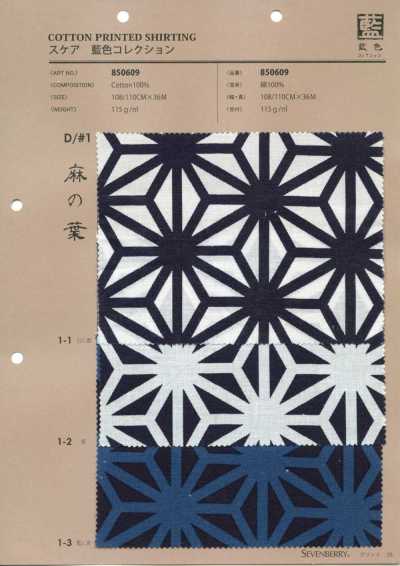
Hemp Leaf is a traditional Japanese pattern created by stylizing the hemp leaf and repeating a geometric unit motif based on hexagons.
Contents6 sections
Definition and Overview
Hemp Leaf is a geometric pattern in which lines radiate from the center, creating a continuous series of hexagons and rhombuses. It does not refer to fabric made from the hemp plant itself, but rather to the name of a “pattern” separate from the material, weave structure, or processing method of the fabric.
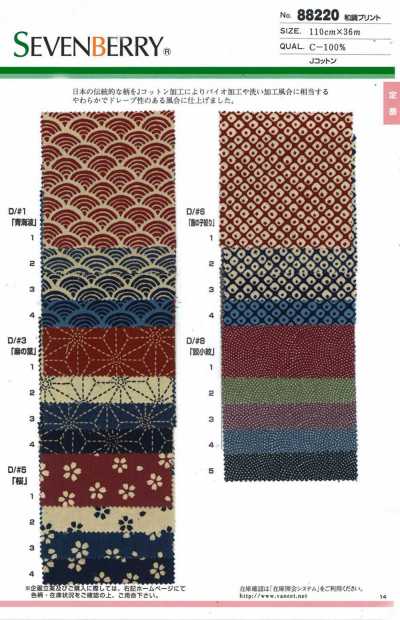
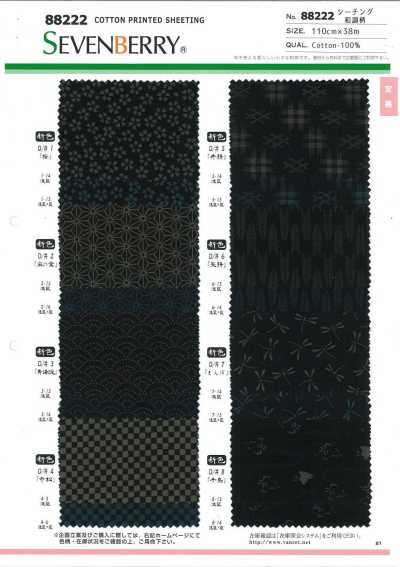
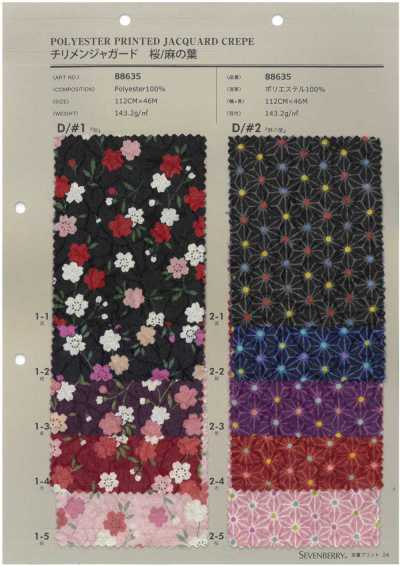
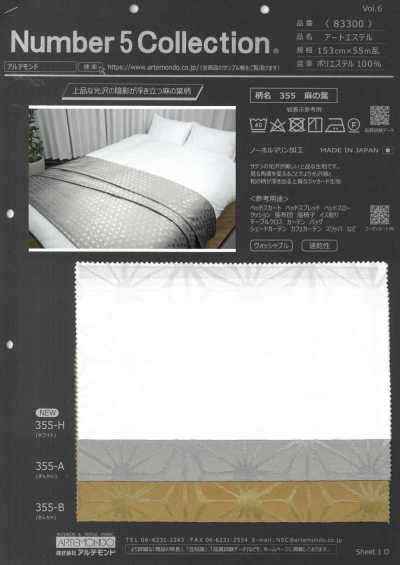
It is expressed as a print, and in some cases as a woven pattern using Jacquard or dobby, or with lace outlining the shape. Even with the same Hemp Leaf pattern, the impression changes greatly depending on line thickness, color scheme, pattern size, and contrast with the ground.
Origin and Name of the Pattern
The basic form is created by further dividing the lines that make up a hexagon, and representing them as a shape spreading from the center like leaf veins. It gives a neat impression through regular repetition, and is used not only for kimono and other traditional clothing, but also for modern textiles with different color schemes and scales.
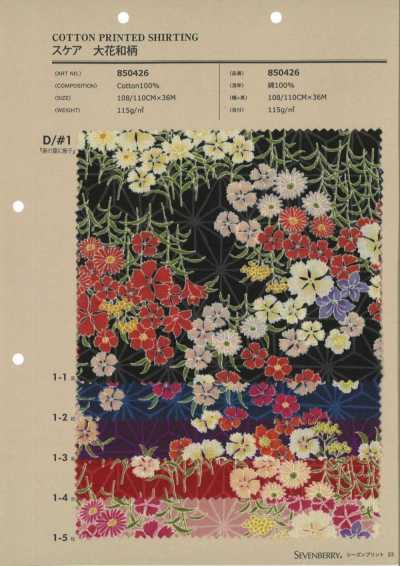
It is generally also called “hemp leaf design,” “hemp leaf pattern,” or “hemp leaf motif.” Designs that combine other patterns such as shippo or cherry blossoms may be based on Hemp Leaf but given a different name as a product name or design name.
Because hemp has long been viewed as a plant that grows straight, the pattern is sometimes treated as one that wishes for a child’s healthy growth. However, the meaning varies depending on the product design, region, and application, so the individual description should be checked during planning.
Main Uses and Seasonality
It is used for items that make use of a Japanese impression, such as yukata, jinbei, accessories for kimono, bags, and interior miscellaneous goods. Small patterns are easy to use for children’s clothing, linings, and miscellaneous goods, while large patterns tend to make the design stand out in dresses, outerwear, and panel applications.
Although it is often used for summer yukata and jinbei, Hemp Leaf itself is not limited to any season. Thin cotton or lawn gives a light impression, while glossy satin or woven patterns create a more festive impression, so seasonality is judged by the material, color, and construction.
- Small patterns are easy to use for detailed switching and accessories.
- For large patterns, the design is easier to convey when enough area is secured to show one unit of the motif.
- With monochrome or similar colors, it looks understated; with multiple colors or strong light-dark contrast, it looks more festive.
Fabric Selection and Cutting Notes
Because Hemp Leaf is a regular continuous pattern, any misalignment in the line positions on the front body, back body, sleeves, or pockets can be noticeable. It is important to decide the seaming points and the center line or hexagon position you want to emphasize before marker making, and to share the criteria for pattern matching in the specification sheet.
For colorways where the direction can be read, transformed patterns that emphasize the leaf shape, or patterns combined with other motifs, one-way cutting may be required. In such cases, the pattern cannot be placed by flipping the pattern pieces, and the required fabric consumption may increase compared with normal, so check the pattern repeat and effective fabric width when estimating.
On woven patterns or glossy fabrics, shadows and highlights depending on the viewing angle also affect how the pattern appears. Before cutting, check the pattern position, grainline, and face and back of the entire roll, and use a trial layout to confirm whether the pattern will break down on only one side and whether there will be differences in appearance between the left and right sides.
Differences from Similar Terms
Kikkou is also a pattern based on hexagons, but it centers on hexagonal outlines that evoke a turtle shell, and its structure differs from Hemp Leaf, which is characterized by lines radiating from the inside. Shippo is a pattern in which circular arcs overlap continuously, and it can be distinguished from Hemp Leaf, which is mainly composed of straight lines.
Geometric pattern is a broad category for patterns composed of straight lines, circles, grids, and so on. Hemp Leaf is one type of such pattern and refers to a specific design established as a traditional Japanese pattern. Also, Japanese-style pattern is a general term for all Japanese-style designs, and is broader in scope than Hemp Leaf.
Frequently Asked Questions
Is a Hemp Leaf pattern fabric made from hemp material?
A Hemp Leaf pattern is the name of the pattern and does not mean that the fabric is made from hemp or hemp fiber. It is used for printed fabrics, woven-pattern fabrics, and lace made from various materials such as cotton, polyester, and rayon. When checking the material, confirm the blend ratio and fabric specifications separately.
Does a Hemp Leaf pattern require more fabric than usual?
If the pattern has a direction, or if the body, sleeves, or pockets need to be pattern matched, extra fabric consumption may be required. The amount needed varies depending on the pattern repeat, pattern size, fabric width, size range, and cutting method, so confirm it with the actual marker layout.
How can Hemp Leaf be distinguished from Kikkou?
Hemp Leaf is characterized by the appearance of vein-like shapes created by straight lines running toward or spreading from the center within the hexagon. Kikkou is mainly composed of continuous hexagons themselves, and does not necessarily have the fine radial lines seen in Hemp Leaf.