


Seigaiha
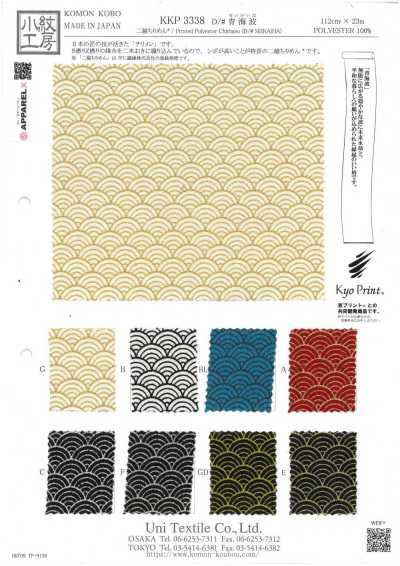
Seigaiha is a traditional Japanese geometric pattern that represents gently spreading waves by repeating semicircular arcs made from overlapping concentric circles.
Contents6 sections
Definition and Overview
Seigaiha is a pattern that represents waves by regularly overlapping semicircular arcs in a scalloped arrangement. It is characterized by the orderly impression created by repetition and the sense of breadth that feels as if the water surface continues endlessly, and it is used from traditional Japanese clothing to modern apparel fabrics.
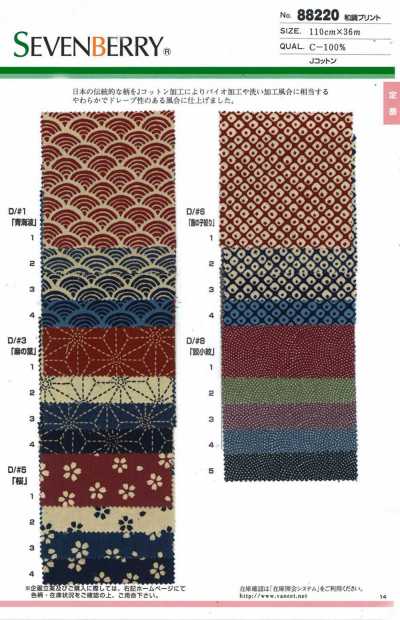
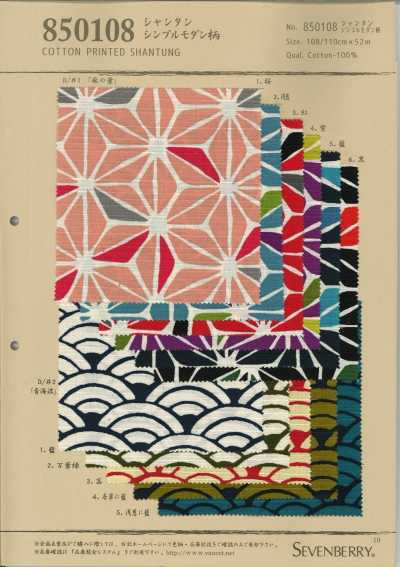
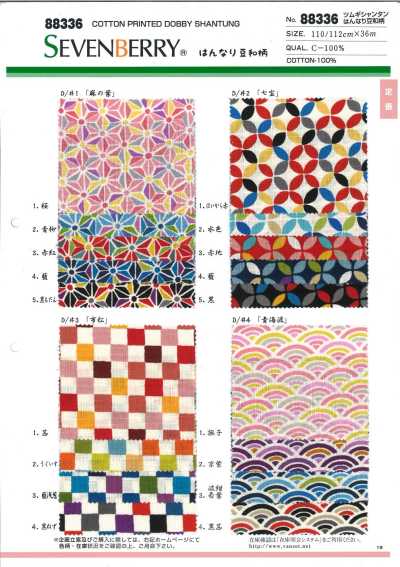
The name generally evokes blue ocean waves, but the pattern itself is not limited to blue. Its appearance changes depending on the color and expression technique, such as single-color understated versions, multicolor versions, and versions with a dimensional look created by metallic accents or woven patterns.
Formation and Types of the Pattern
The basic form is a composition in which semicircular arcs of the same size are arranged in staggered rows in succession. By changing the size, spacing, and degree of overlap of the arcs, the appearance can be adjusted from finely delicate to large and powerful. There are also designs that incorporate other motifs within the waves.
On fabrics, it is expressed not only by printing but also by woven patterns using Jacquard or dobby, embroidery, and lace. Printing is suited to color and detailed expression, while woven patterns more easily create texture through luster and raised effects, though the appearance varies depending on the weave structure and material.
- Small Seigaiha is a delicate expression with finely repeated arcs.
- Large Seigaiha has a strong presence and stands out even on items with a large surface area.
- Variant Seigaiha combines other patterns such as asanoha, flowers, and shippo within the waves.
Main Uses and Seasonality
Seigaiha is used not only for Japanese clothing such as kimono, obi, and yukata, but also for blouses, dresses, skirts, shirts, bags, fashion accessories, and interior applications. Because it is a regular repeating pattern, it is not limited to Japanese-style designs and can also be incorporated into modern projects as a geometric pattern.
Because it evokes waves, it is sometimes chosen for spring and summer, but the motif itself is not limited to any season. The seasonal impression is determined by the thickness of the material, color scheme, luster, and finishing. If the colors are subdued or the pattern is woven, it can also suit autumn and winter items or formal use.
Fabric Selection and Cutting Considerations
When selecting fabric, check the relationship between the size of one Seigaiha unit and the product dimensions. With a large pattern, the impression changes depending on where the motif falls on the body front or chest area, while with a small pattern, misalignment at the seams tends to be less noticeable. Make the decision by checking an actual-size swatch or the pattern repeat.
For patterns where the semicircular arcs appear in a consistent direction, it is important to align the grainline with the direction of the pattern when cutting. If the height and center position of the arcs need to be matched on the front body, back body, left and right sleeves, pockets, and so on, allow extra fabric beyond the usual amount.
Even in all-over patterns where the same design continues across the entire fabric, the continuity of the waves may be interrupted at the side seams, center front, collar, and facing. Clearly state the priority areas for pattern matching in the specification sheet or cutting instructions, and laying out the cut pieces before sewing can help prevent rework.
- Check the top and bottom of the pattern and decide whether reverse cutting is possible.
- For areas that need to look symmetrical, specify the motif placement based on the center line.
- For panel pieces such as pockets and yokes, decide in advance whether to match the pattern or intentionally offset it.
- For products with large motifs or specified motif placement, calculate the required fabric amount including the extra needed for pattern matching.
Differences from Similar Terms
Seigaiha is a specific Japanese pattern that stylizes waves. Japanese pattern is a broad term for traditional Japanese motifs in general, and includes asanoha, kikko, and yasuri. Seigaiha can also be classified as a geometric pattern because it has a regular repeating structure, but geometric patterns also include shapes other than waves, such as checks, circles, and triangles.
Komon generally refers to a pattern made by repeating small motifs across the entire surface, or a kimono made with such a pattern. Fine Seigaiha may be handled in a Komon style, but Seigaiha is the name of the motif, while Komon is a term related to the size and placement of the pattern.
Frequently Asked Questions
Is Seigaiha a pattern used only in summer?
Seigaiha suits spring and summer projects because it represents waves, but it is not a season-specific motif. In autumn and winter, a calm or glamorous impression can be created by choosing brushed materials, woven patterns, deep colors, or gold and silver expressions.
Does Seigaiha patterned fabric require more yardage than usual?
When the direction and placement of the pattern need to be aligned, especially with large motifs, more fabric than usual may be required. Decide which areas to prioritize for matching on the center front, left and right body panels, sleeves, and pockets, and plan the cutting by overlaying the pattern repeat and pattern pieces.
What is the difference between Seigaiha and Komon?
Seigaiha is the specific motif name for a pattern that represents waves by overlapping semicircular arcs. Komon, on the other hand, is generally a term for a construction in which small motifs are repeated across the entire fabric. Fine Seigaiha becomes Komon-like, but the two do not mean the same thing.





