


Block Print
Block print is a printing technique in which dye or pigment is applied to carved wooden blocks or similar blocks, then repeatedly printed onto fabric by hand or semi-hand process.
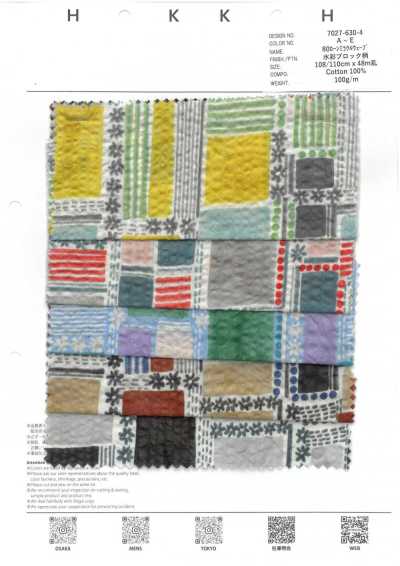
Contents6 sections
Definition and Overview
Block print is a printing method in which a carved pattern block is pressed onto fabric to transfer the design. It is often built up by changing blocks for each color, and when woodblocks are used, it is also called woodblock printing or woodblock dyeing.
It does not refer to the name of a weaving method or fiber type of the fabric, but to a finishing and dyeing method that adds a pattern to the surface. Color development, bleeding, and the feel when worn vary depending on the material and structure, such as cotton, linen, and rayon.
Features
Because the design is formed by pressing each block one by one, slight overlaps, fading, variations in density, and wavering outlines may appear. Its visual feature is a handcrafted look that differs from uniform machine printing.
It is often used for repeated designs such as floral, botanical, and geometric patterns, and it can create a simple, warm impression. On the other hand, there may be individual differences in pattern placement and color density, so the acceptable range should be shared during product planning.
- As the number of colors increases, alignment for each block has more effect on the finished result.
- Depending on block pressure and the amount of dye, the appearance may vary even within the same roll.
- Functionality is determined not only by the printing method, but also by the base fabric material and post-processing.
Main Applications
It is often applied to light to medium-weight cotton and linen fabrics, and is used for shirts, blouses, dresses, skirts, tunics, and children's clothing. Breathability and drape are determined by the structure and material of the base fabric, not by the print.
It is often used for vibrant all-over patterns and small floral prints, making it a popular finish for spring and summer apparel. It is also used for bags, accessories, and home textile products, but durability against friction and washing should be checked according to the intended use.
Selection and Handling Notes
When selecting, check the blend ratio, thickness, sheerness, pattern size and repeat, and number of colors, as well as wash fastness and rub fastness. For dark or multi-color patterns, it is important to confirm the presence or absence of color transfer and color bleeding using test results and care labels.
Items with cotton or linen as the base fabric may shrink when washed. Before mass production, perform wetting or trial washing and set the pattern and fabric allowance with shrinkage in mind. Before cutting, also check pattern differences, color differences, and grain direction within the roll.
During sewing, pattern matching may be required, and if the design has a specific direction, the cutting direction should be unified. For ironing, follow the care label, and to avoid strong pressure or high heat on the printed surface, it is safer to use a pressing cloth.
Differences from Similar Terms
Print is a broad term for all kinds of processes that add patterns to fabric. Block print is one type, and its defining feature is the process of pressing a carved block to apply the dye. Screen printing differs in that color paste is forced through the openings in the screen.
Hand printing is sometimes used as a general term for methods in which a person uses a block to print. Block print specifically refers to a method that uses a block-shaped plate such as a woodblock, but the scope of the term may vary depending on the production area or trading partner.
Frequently Asked Questions
Does block print fade when washed?
The likelihood of fading or color transfer depends on the base fabric, dye or pigment, fixation treatment, and color depth. For the first wash, it is generally best to wash the item separately and avoid long soaking or strong rubbing. For products, it is necessary to confirm the care label and fastness test results.
What should be checked when sewing block print fabric?
First check the pattern direction, pattern repeat, and pattern matching on the left and right front panels and the placket. Even when slight misalignment or variation in shading is used as a feature, it is important to inspect the roll before cutting and decide the layout so that there are no major differences in noticeable areas.





