Chita Cotton
Chita cotton refers to the general name for cotton textiles and the production techniques and production area, including bleaching and finishing, that developed mainly in the Chita region of Aichi Prefecture.
Contents6 sections
Definition and Production Area
Chita cotton is the name of a production area for cotton textiles that developed in the Chita region of Aichi Prefecture. It is not the name of a specific weave structure or a single fabric standard; it is used to refer to textiles made primarily from cotton, as well as processing techniques such as bleaching that make the fabric white and clean.
The Chita region has been a center for the production and processing of cotton textiles, and is especially known for techniques related to finishing white fabric. For that reason, Chita cotton does not refer to the production area of the cotton fiber itself, but to the weaving and processing production area within Japan.
History and Special Techniques
In the Chita region, bleaching processes such as scouring, bleaching, and finishing developed along with the weaving of cotton textiles. Scouring is the process of removing oils and impurities contained in cotton to make it easier to dye or bleach. Bleaching is a process that whitens the fabric and gives it a clean, uniform appearance.
Whiteness, texture, and absorbency vary depending on the type of yarn, weave density, scouring and bleaching conditions, and whether softening treatment is applied. Therefore, the production-area name Chita cotton alone does not specify fabric performance, and individual specifications must be confirmed.
Representative Fabrics and Applications
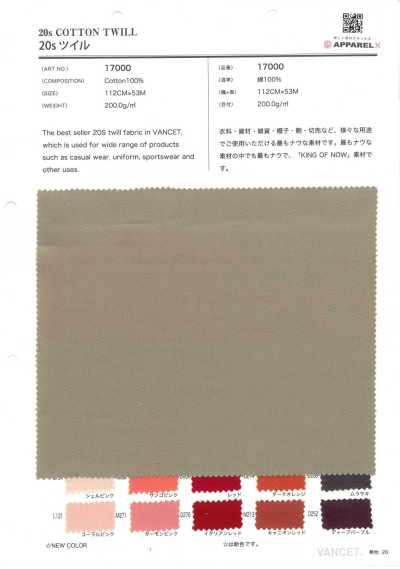
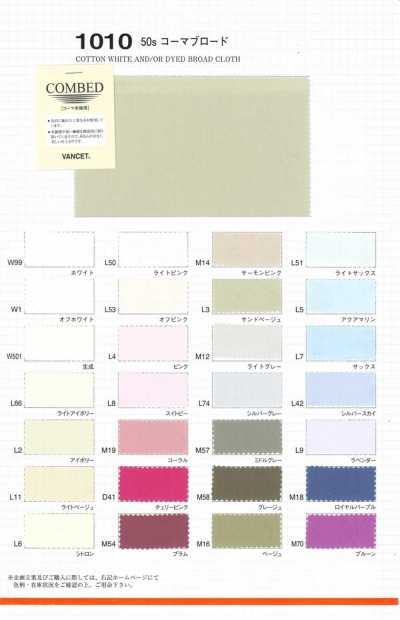
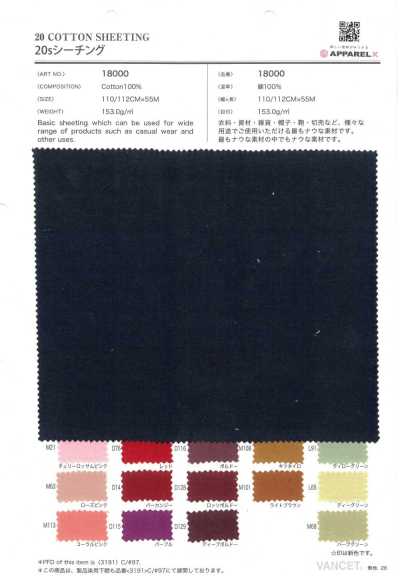
Fabrics handled as Chita cotton include plain weave fabrics, gauze, bleached cloth, broadcloth, and others. The range extends from lightweight fabrics to relatively substantial structures, and the yarn count, density, and finish are selected according to the application.
Applications include underwear, shirts and blouses, pajamas, baby and kids' clothing, and sanitary and household goods. When white fabric is used as the base material for piece-dyed products or printing, it is selected with consideration for compatibility with the subsequent processes.
- Gauze: used for clothing and household goods that make use of softness and breathability.
- Bleached cloth: makes use of whiteness and a clean appearance, and is cut, sewn, and secondary processed according to the application.
- Plain weave fabric: used for shirting, lightweight clothing in place of lining, miscellaneous goods, and more.
Points to Confirm When Purchasing
When using a production-area label, confirm with the supplier whether it refers to the weaving location, the bleaching location, or the final processing location. The scope of the labels "Chita cotton" and "Chita bleaching" may differ depending on the trading partner or product, so it is important not to confuse them with the origin of the material.
For mass production, confirm the length per roll, minimum lot size, whether it is stocked or made to order, and the lead time for additional production. Whiteness, texture, width, fabric weight, shrinkage rate, and dyeability are also easier to verify against sample rolls and specifications, helping reduce misunderstandings during mass production.
- Scope of the production-area label, including weaving location and processing location
- Blend ratio, yarn count, weave structure, width, fabric weight
- Whiteness, need for non-fluorescent treatment, texture, absorbency
- Minimum lot size, roll length, availability of continuous supply, lead time
- Shrinkage rate after washing and suitability for post-processing such as dyeing and printing
Differences from Similar Terms
Chita bleaching refers to bleaching processes developed in the Chita region, or cotton textiles that have undergone that processing. It is sometimes used as a term that focuses more on white fabric and the bleaching process than Chita cotton, but the actual scope of use should be confirmed.
Mikawa cotton is also the name of a cotton textile production area in Aichi Prefecture, but the production area and production background are different. Gauze and broadcloth are types of woven fabric, while cotton is the name of a fiber material. In contrast, Chita cotton is a term based on the production area.
Frequently Asked Questions
Is Chita cotton 100% cotton?
Chita cotton is a term that indicates the production area, and it does not uniformly determine the blend ratio. While it is often handled as a textile made primarily from cotton, the actual blend ratio differs by product number. Be sure to confirm it on the care tag and specifications sheet.
Are Chita bleaching and Chita cotton the same?
They are closely related terms, but their focus differs. Chita cotton broadly refers to the cotton textile production area of the Chita region, while Chita bleaching is an expression that emphasizes bleaching processes and white fabric. In transactions, it is necessary to confirm each company's usage scope and processing details.
What should be checked with a sample roll before mass production?
In addition to color and whiteness, check the width, fabric weight, thickness, sheerness, hand feel, and shrinkage after washing. If piece dyeing or printing will be performed, also verify dye affinity, the texture after processing, and dimensional change through prototypes, and agree on them as the mass-production standard.