


Clasp
A clasp is a general term for a fastener made up of a body and a receiving part that interlock to open and close the opening of clothing, bags, and similar items.
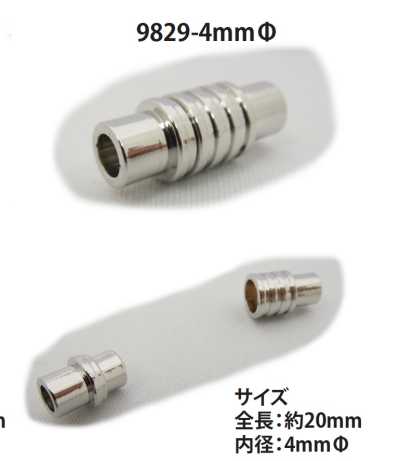
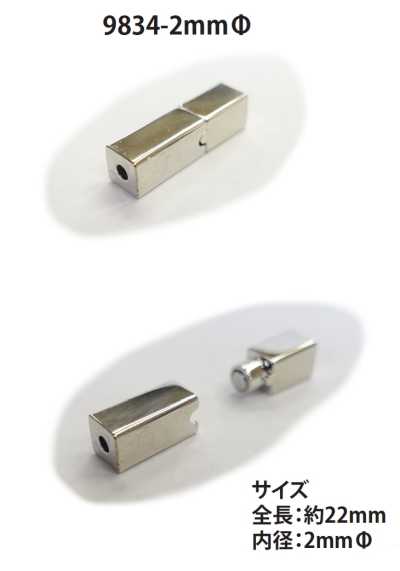
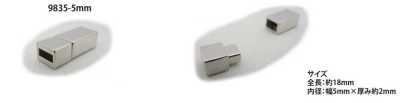
Contents6 sections
Definition and Overview
A clasp is a metal fitting that closes an opening by hooking, inserting, or interlocking two parts. In apparel, it is often treated as a type of hook closure, and it is selected from both functional and design perspectives.
The scope of the term is broad: it may refer to a combination of a sewn-on hook and receiving fitting, or to a snap-in fastener or a decorative fastener. In specifications, listing the shape and installation method together helps prevent misunderstandings.
Materials and Structure
Many are made of metal and consist of a visible main body on the front side and a counterpart part that receives it. Depending on the type, a spring section, claws, washers, and reinforcing button seals are combined to ensure holding force during opening and closing, as well as fastening strength to the fabric.
Sewn-on types are stitched to the main body with holes or rings and the receiving side. Snap-in types are fixed by passing the parts through the fabric and crimping them, then deforming the claws or legs. The surface finish affects not only appearance but also corrosion resistance and the specifications of the part that touches the skin.
- Sewn-on type: A method fixed with needle and sewing thread, making repair and position adjustment easy.
- Snap-in type: A method installed with a setting tool or press machine.
- Main body and receiving side: A pair of parts that interlock when opened and closed.
- Washer and button seal: Parts used to reduce cutting into the fabric and concentrated stress.
Installation Method and Alignment
For sewn-on types, mark the left-right or top-bottom matching positions accurately and install them at the same distance from the opening edge. On thin fabrics or highly stretchable fabrics, it is important to add interfacing or a pressing cloth to the areas under stress to prevent stretching and tearing.
For snap-in types, select the leg length and part combination suitable for the fabric thickness, and use the specified setting tool. Before mass production, check the angle of the part, looseness, surface damage, and hardness of opening and closing with a trial setting.
Main Applications and Selection
Clasps are used at the waist of skirts and pants, the neckline of dresses and blouses, facing sections, and bag openings. They may also be used as a supplementary fastening device for zippers or buttons, and there are versions that are hidden from view and versions intended to be shown as decoration.
When selecting one, confirm the required holding force, opening and closing frequency, fabric thickness, feel against the skin, and resistance to washing or dry cleaning according to the application. In areas subject to high pulling loads, strength design must consider not only the fastener itself but also the fabric and sewn sections.
Notes and Differences from Similar Terms
Because clasp refers to fasteners in a broad sense, its range differs from specific names such as hook and eye closure, skirt hook, spring hook, and snap. For example, hook and eye closure mainly refers to a hook-type fitting used around the waist, while a snap is a fastening type where the male and female sides are pressed together.
For products using metal parts, establish a needle detection plan to check for broken needles or mixed-in parts during the process. Even if the parts are needle detector compatible, that does not mean the needle detection process itself is unnecessary. For applications that require consideration of nickel contact, confirm the surface specification in advance.
Frequently Asked Questions
Are clasp and hook the same?
Clasp is used as a broad term for fasteners in general, while hook often refers to a metal fitting that fastens by hooking together. However, the terminology may overlap depending on the trading partner or product category. When placing an order, confirm the photo, part configuration, and installation method.
Should I choose a sewn-on or snap-in clasp?
If thin fabric or ease of repair is important, or if you want to make fine position adjustments, a sewn-on type is suitable. If you want a stable appearance and fastening method in mass production, a snap-in type is selected. Be sure to verify with a prototype, taking fabric thickness, load, and available equipment into account.
What should I watch for when attaching a metal clasp?
Align the opening direction and left-right positions, and avoid installing it too close to the fabric edge. Reinforce stress-bearing areas with interfacing or a pressing cloth, and for snap-in types, perform a trial setting with a dedicated setting tool. After mass production, check for detachment, deformation, damage, and needle detection.





