


Damask
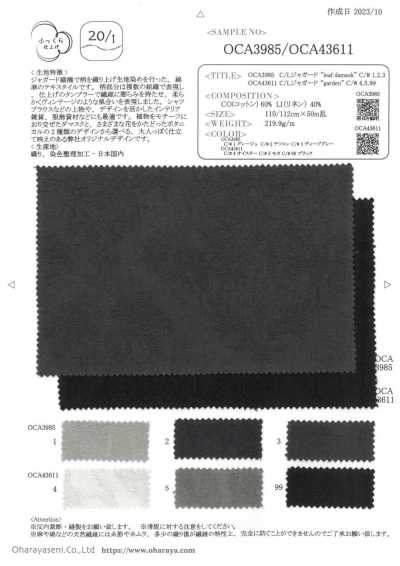
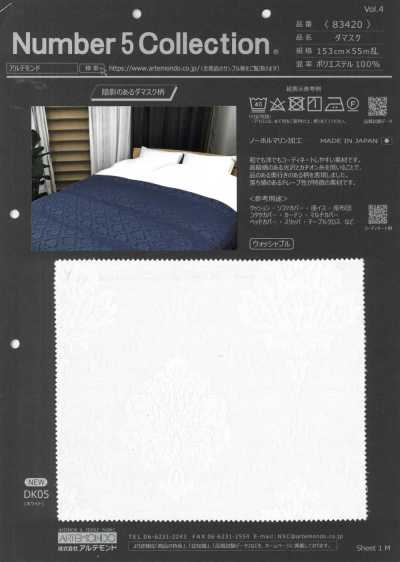
Damask is a lustrous, dimensional woven fabric with a ground pattern woven in on a satin weave base. It has traditionally been made mainly from silk, but today it is produced from a variety of fibers depending on the application.
Contents6 sections
Definition and Overview
Damask is a woven fabric that combines a glossy ground weave created with satin weave and a pattern expressed through changes in structure. Depending on the angle of view and how light hits it, the pattern appears as differences in sheen. In Japan, it has traditionally been known as a silk fabric.
It is a name based mainly on the weave structure and design, rather than on the fiber itself. For that reason, there are damask fabrics made with silk as well as rayon, polyester, and other materials, and their hand feel, drape, and washing methods vary depending on the material.
Features
The surface is smooth and has an elegant luster from the long floating yarns of the satin weave. Many types feature continuous woven patterns such as flowers and arabesque motifs, and they are characterized by the depth of the woven design, unlike prints, and by different appearances on the front and back.
Depending on the size of the pattern, yarn thickness, density, and material, it ranges from light, supple fabrics to crisp, heavy fabrics. The woven design is ornate, but because it is often expressed in the same color, it is a fabric that can more easily create a calm impression than printed patterns.
Main Applications
It has been used in formal Japanese dress fields where a refined appearance is required, such as ceremonial kimono and obi, priestly robes, and Japanese accessories. Today, it is also used for dresses, blouses, skirts, stage costumes, bags, and pouches.
It is suited to applications that make use of sheen and woven patterns, and is especially chosen for formal wear, autumn and winter outfits, and items for ceremonies. However, thin damask may also be used for spring and summer garments, linings, and decorative applications depending on the material and finish.
- Kimono, obi, and haori
- Dresses, skirts, and blouses
- Stage costumes and ceremonial costumes
- Bags, pouches, and interior accessories
Selection and Handling Notes
When selecting, check the composition, thickness, size of the woven pattern, level of sheen, and condition of the back side. If the pattern has a direction or a large repeat, allow for extra cutting length and matched symmetry when planning the layout.
The satin weave areas tend to have long floating yarns, which can be damaged by friction or snagging. In sewing, it is important to choose a fine needle and thread suitable for the fabric, and to test sew on scraps so that needle marks, presser-foot marks, and seam shifting are not noticeable.
Shrinkage, color fading, and changes in texture caused by washing differ according to fiber composition and finishing. Items containing silk or rayon may require caution with water washing, so check the care label for each bolt or product and choose professional cleaning if necessary.
Differences from Similar Terms
Satin often refers broadly to satin weave or smooth fabrics with a satin-weave look, and does not necessarily have a woven pattern. Damask is characterized by being a woven fabric that brings out a ground pattern while making use of satin weave.
Damask is the name for a jacquard woven fabric that expresses patterns through differences in sheen or structure. Damask is a term established in Japan and is used with a meaning close to damask, but the terminology varies depending on material, place of origin, and pattern style. Jacquard is a term relating to the technique and equipment for weaving complex patterns, and is used as one method for weaving damask.
Frequently Asked Questions
What is the difference between damask and satin?
Satin broadly refers to fabrics with a satin weave or satin-like sheen, and some are solid. Damask is a fabric based on satin weave that expresses a ground pattern through differences in structure. In addition to sheen, the main difference is the dimensional appearance of the woven pattern.
Can damask be washed at home?
Whether it can be washed cannot be judged by the weaving method alone; it varies depending on the composition, dyeing, and finishing. In particular, items containing silk or rayon may shrink or change texture when washed with water. Always follow the care instructions on the fabric or product.
What should I be careful about when cutting damask?
If the woven pattern has a direction, align the pattern direction for all pieces. For large patterns, confirm the pattern placement and left-right symmetry, and allow extra material. Also, take care with dirt or snags on the cutting table and tools so as not to damage the floating yarns on the surface.





